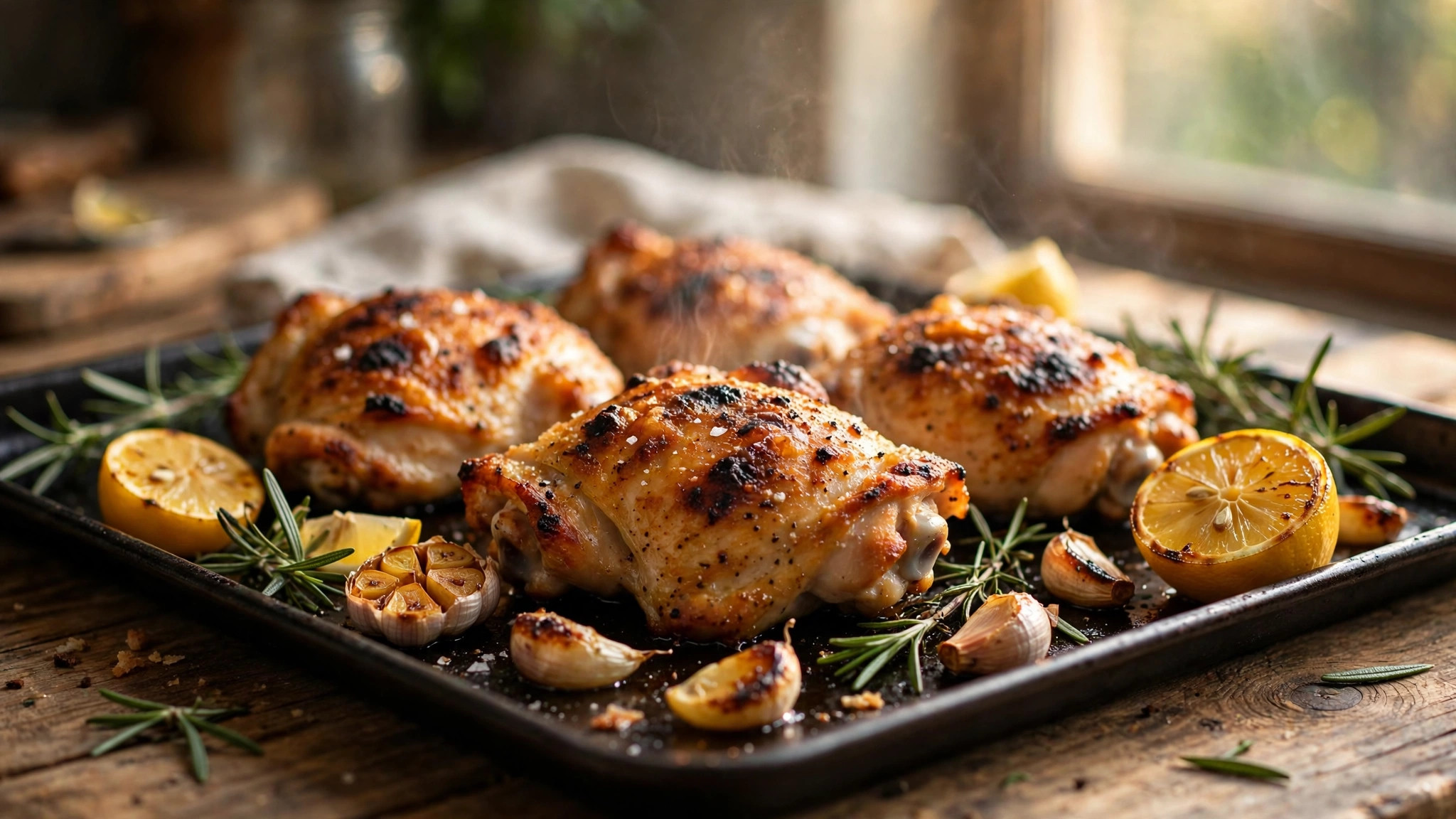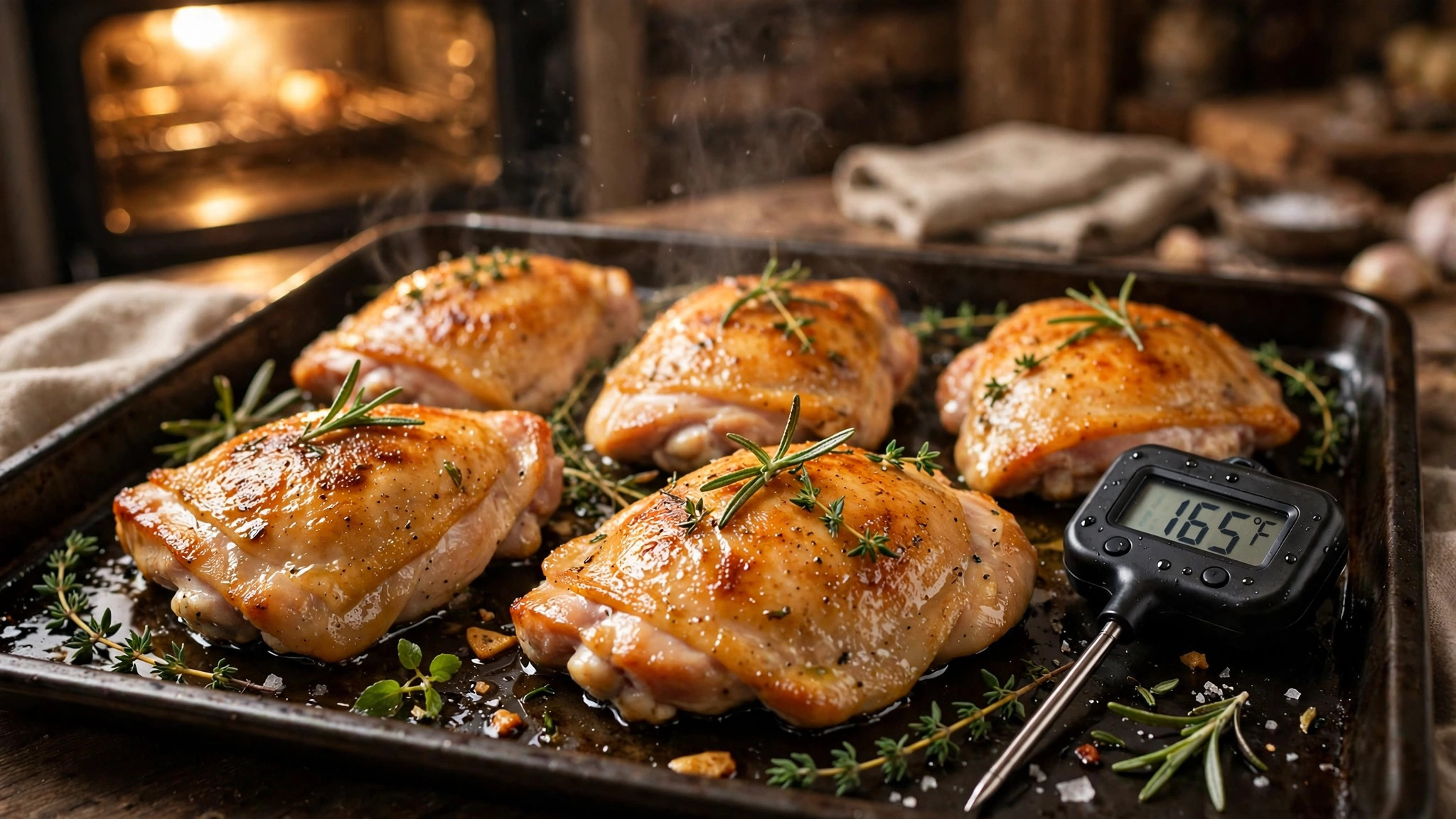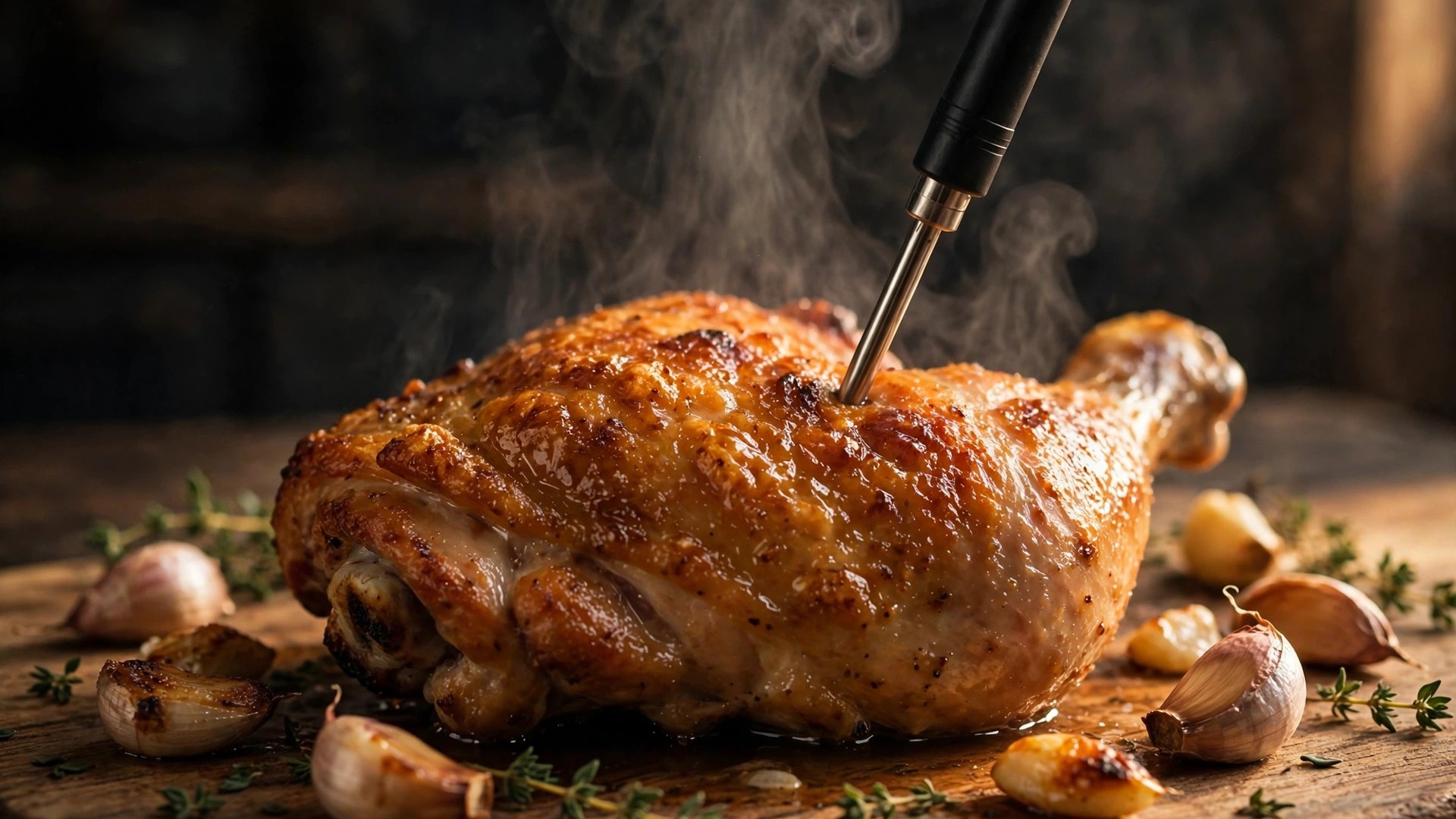
Every chicken argument on the internet boils down to two numbers: 165 and 175. The 165 camp waves the USDA rulebook. The 175 camp waves a fork. Here's the thing — they're both right, and they're arguing about different questions. 165°F answers "is it safe?" 175°F answers "is it good?" And for chicken thighs specifically, those two answers live ten degrees apart, in the most forgiving gap in all of cooking.
This is the dark-meat superpower, and it's why thighs are the weeknight hero cut. Our boneless skinless thigh guide leans on it, our 400°F bone-in thigh chart assumes it, and today we're explaining exactly why thighs get to break the rules that breasts have to follow.
What 165°F Actually Means
Let's give the safety number its due, because it's the foundation everything else stands on. The USDA's Food Safety and Inspection Service sets 165°F (74°C) as the safe minimum internal temperature for all poultry — whole birds, breasts, thighs, wings, ground chicken, all of it. At 165°F, harmful bacteria like salmonella are killed effectively instantly. That's the point of the number: it's simple, it's one number for everything, and a beginner with a thermometer can hit it without doing math about hold times.
So when you pull a thigh at 165°F, it is safe to eat, full stop. No asterisks, no "well, technically." If safety is the only question on the table, 165°F is the answer, and you can stop reading here. But if you've ever eaten a thigh at 165°F and thought "fine, but not amazing" — that's because safety and texture are two different finish lines, and thighs have a second one.
Why Thighs Get Better After 165°F
Here's the science, plain and simple: chicken thighs are dark meat, and dark meat is laced with collagen — the tough connective tissue that holds muscles together. Collagen doesn't melt at 165°F. It starts breaking down into silky gelatin around 160°F and keeps going as the temperature climbs toward 200°F, which is why braised and slow-cooked meats turn spoon-tender. Ten extra degrees at the end of a thigh's cook isn't drying it out — it's finishing the melt that makes dark meat taste like dark meat.
Meanwhile, the fat does its job. Thighs carry significantly more intramuscular fat than breasts, and that fat bastes the meat from the inside as it cooks. A breast pulled at 175°F is cardboard because it has no fat or collagen to protect it — every degree past 165°F just wrings moisture out. A thigh pulled at 175°F is better than at 165°F: the collagen has softened, the fat has rendered, and there's still plenty of juice left. This is exactly why cooking references split the difference — for example, this chicken temperature chart lists 165°F as the USDA safe minimum for thighs but 175–185°F as the preferred texture target, and this poultry chart shows the same split: the USDA chart for safety, the chef chart for texture.
The Pull-Temp Cheat Sheet
Pick your target based on what dinner needs to be:
| Pull temp | What you get | Best for |
|---|---|---|
| 160°F | Risky without a plan — carryover should take it to 165°F, but if it stalls, you're serving undercooked chicken. Not worth it. | Nothing. Skip this. |
| 165°F | Safe and perfectly fine. A touch firm, still a little chew in the connective tissue. Zero food-safety worries. | When someone's nervous about chicken, kids, or you're slicing for a salad. |
| 175°F — the sweet spot | Safe, juicy, and tender. Collagen has softened, fat has rendered, the thigh gives easily under a fork. | Almost everything. This is the default. |
| 185–195°F | Starting to fall apart — shreddy, deeply savory, maximum gelatin. Drier at the edges but incredible mixed into sauce or tacos. | Shredded chicken, tacos, anything with sauce. |
Notice the real headline: thighs have a forgiveness window of roughly 30 degrees. Anywhere from 165°F to 195°F is edible-to-excellent. Compare that to a breast, which goes from juicy to sawdust in about ten degrees. That's not cooking skill — that's anatomy doing you a favor.
Carryover: The Invisible 3–5°F
Chicken keeps cooking after it leaves the oven — residual heat drives the internal temperature up another 3–5°F while it rests (bigger pieces and hotter ovens push the high end). This means your pull temp and your serving temp are different numbers, and smart cooks aim at the pull temp. Want to serve at 175°F? Pull at 170–172°F and let carryover finish the job. Aiming for the 165°F safety line? Pull at 160–162°F and the rest takes you over — that's the margin the USDA's instant-kill number doesn't need but your texture will love. Rest thighs 5–10 minutes tented in foil; the rest is part of the cook, not a suggestion.
How to Temp a Thigh Correctly
The number is only as good as the reading. Four rules:
- Thickest part, no bone. Bone conducts heat differently and gives a false reading — slide the probe into the meatiest section without touching bone. For bone-in thighs, go in from the side, parallel to the bone.
- Check more than one. Ovens have hot spots and thighs vary in size. Temp two or three; the coolest one decides when dinner's ready.
- Calibrate cheap thermometers. The ice-water test takes 30 seconds: a glass of ice water should read 32°F. If yours reads 40°F, every chicken reading is 8 degrees optimistic — and that's a food-safety problem.
- Don't trust the juices. "Clear juices" and pink meat are both unreliable. Pink near the bone can be perfectly safe (it's a pigment thing), and clear juices can still be undercooked. The thermometer is the only vote that counts.
What About Breasts? (Don't Try This)
Quick warning, because someone will ask: none of this applies to chicken breast. Breasts are lean white meat with almost no collagen and very little fat — at 175°F they've given up all their moisture and there's nothing to replace it. Breasts want 165°F and not a degree more; our 375°F breast guide is built around landing exactly there. The 175°F trick is a dark-meat-only superpower. Thighs, drumsticks, wings — go nuts. Breasts — respect the line.
FAQ
Is 165°F really enough for chicken thighs? Yes — 165°F (74°C) is the USDA's safe minimum for all poultry, thighs included. Everything above that is about texture, not safety.
Will 175°F dry out my thighs? No — that's the whole point of dark meat. The fat and melting collagen keep thighs juicy well past 175°F. Breasts would dry out; thighs won't.
What temp for bone-in vs boneless thighs? Same targets — 175°F pull is the sweet spot for both. Bone-in just takes longer to get there (see our 400°F bone-in thigh timing chart), so temp the thickest part near the bone without touching it.
Can I eat chicken thighs at 150°F like some chefs do with breasts? Lower temps can be safe with precise hold times (that's the sous-vide game), but it's advanced territory — and at 150°F a thigh's collagen hasn't melted, so it'd be safe but chewy. 175°F is better in every way that matters at home.
How long should thighs rest? 5–10 minutes tented in foil. Carryover adds 3–5°F, so pull 3–5 degrees below your target.
"165 is the safety line. 175 is the flavor line. Thighs are the one cut where you get to cross both."
Cooking thighs tonight? How Long to Bake Chicken Thighs at 400°F has the exact timing chart, and Baked Boneless Skinless Chicken Thighs covers the 425°F fast method. Baking from frozen instead? How long extra frozen chicken breast takes has the 50%-longer rule.