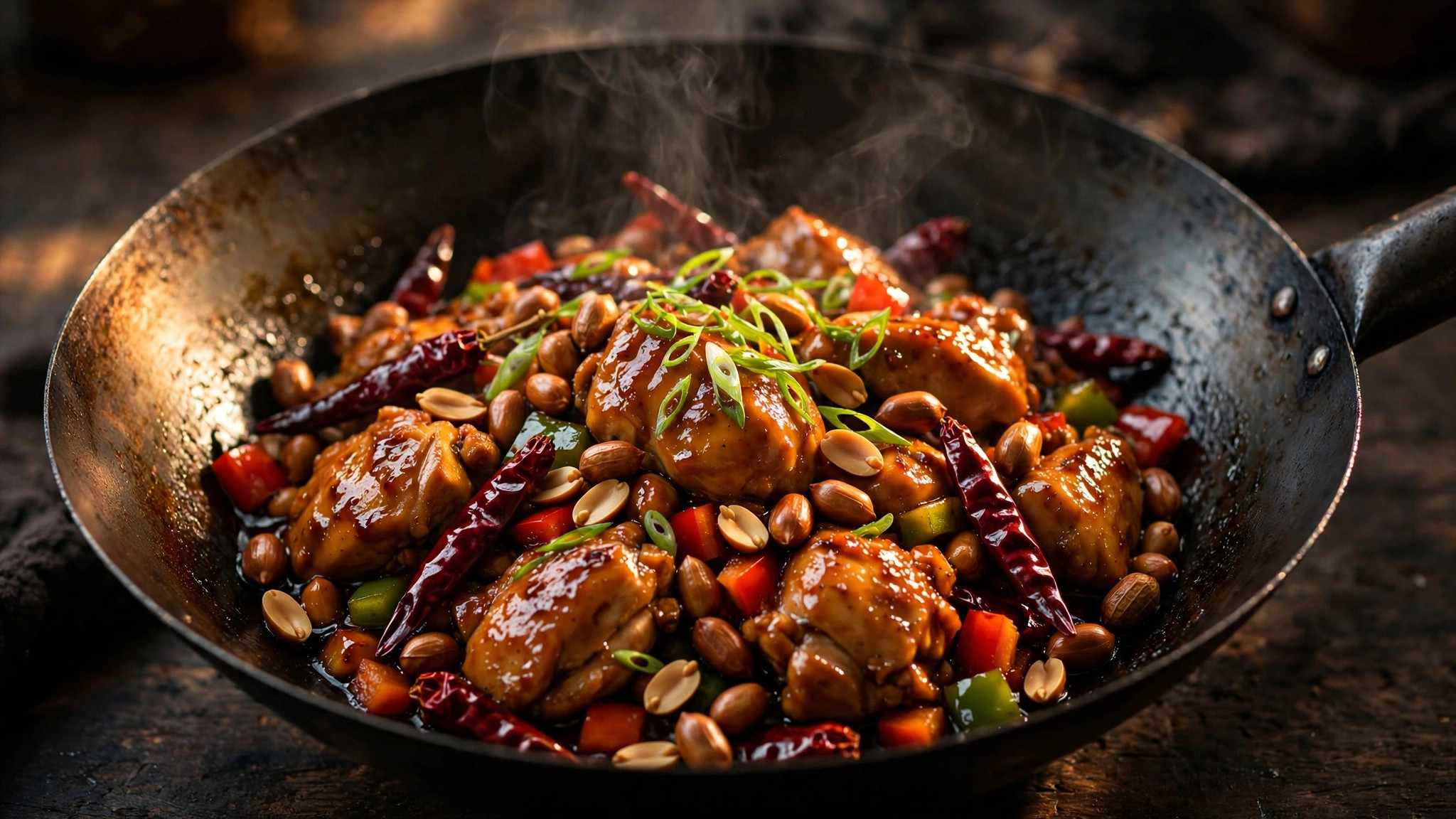
Yes — glossy, numbing-spicy, peanut-crunchy kung pao chicken is genuinely doable in 25 minutes, and it beats most takeout because your chicken was never sitting in a steam tray. Two techniques do all the heavy lifting: velveting (a 10-minute cornstarch marinade that keeps the chicken silky in a screaming-hot pan) and a sauce ratio you can memorize in one line. The dish is Sichuan in origin — gōngbǎo jīdīng, named for a Qing-dynasty official — and its signature is the sweet-sour-savory sauce against the tingle of dried chilies.
Home versions usually fail in exactly two ways: the chicken turns dry and the sauce turns into a watery puddle. Both are fixed by the order of operations below, not by better ingredients. A $12 carbon-steel wok helps, but a 12-inch skillet at full blast gets you 90% of the way there.
The Sauce Formula (Memorize This Ratio)
Kung pao sauce is four things in balance: salty, sour, sweet, and thick enough to glaze. Mix it before you touch the stove — stir-fry moves too fast for measuring mid-cook. Whisk together in a small bowl:
- 3 tbsp light soy sauce
- 1½ tbsp Chinkiang black vinegar (or rice vinegar in a pinch)
- 1½ tbsp sugar
- 1 tbsp cornstarch
- 1 tbsp water
- 1 tsp dark soy sauce (optional — for that deep mahogany color)
- 1 tsp toasted sesame oil
The cornstarch is the whole game: it thickens the sauce into a glaze in under a minute instead of letting it pool at the bottom. Whisk again right before pouring — cornstarch sinks fast.
Velveting: The 10-Minute Step That Changes Everything
Restaurant chicken stays juicy at wok temperatures because of velveting: coating the meat in cornstarch, egg white, and Shaoxing wine before it ever sees heat. The coating sets in the hot oil and locks the juices in — the outside fries while the inside basically steams in its own moisture. Ten minutes of marinating buys you chicken that's impossible to dry out in a 25-minute cook.
- 1 lb (450 g) boneless, skinless chicken breast or thighs, cut into ¾-inch cubes
- 1 tbsp cornstarch
- 1 tbsp Shaoxing wine (or dry sherry)
- 1 egg white, lightly beaten
- ½ tsp fine sea salt
- 1 tsp neutral oil
Toss everything until each cube is coated, and let it sit while you chop the vegetables. Thighs are more forgiving than breast here — use thighs if your stove runs hot.
The Recipe (Serves 4)
Prep: 12 minutes (including the velveting wait) · Cook: 10 minutes · Total: 25 minutes, rice not included — start the rice first.
- 1 batch velveted chicken (from above)
- 1 batch kung pao sauce (from above)
- 2 tbsp neutral oil (peanut or avocado), divided
- 8–10 dried red chilies (arbol or Tianjin), snipped in half with seeds shaken out
- 1 tsp Sichuan peppercorns (optional, but this is the tingle — don't skip if you can find them)
- 3 cloves garlic, thinly sliced
- 1-inch piece fresh ginger, minced
- 4 scallions, cut into 1-inch pieces (white and green parts separated)
- 1 red bell pepper, diced into ¾-inch pieces
- ½ cup roasted unsalted peanuts
- Steamed jasmine rice, for serving
The 6-Step Wok Sequence
- Sear the chicken. Heat 1 tbsp oil in a wok or 12-inch skillet over high heat until it just starts to smoke. Spread the chicken in a single layer and sear 4–5 minutes, turning once, until golden at the edges and cooked through — 165°F (74°C) internal, the safe temperature the USDA Food Safety and Inspection Service recommends for poultry. Transfer to a plate.
- Bloom the heat. Same pan, remaining oil, heat back up. Add the dried chilies and Sichuan peppercorns and stir 30 seconds until fragrant and darkened — not black. This is where the smoky heat comes from.
- Aromatics. Garlic, ginger, and the white scallion pieces go in for 30 seconds, then the bell pepper for 1–2 minutes. You want the pepper still crisp — it finishes in the sauce.
- Sauce. Whisk the sauce once more, pour it in, and stir constantly. It thickens into a glaze in about 45 seconds. If it seizes into lumps, your pan was too hot and the cornstarch cooked before it dissolved — next time, pull the pan off the heat for 10 seconds first.
- Reunite. Chicken back in, plus the peanuts and the green scallion pieces. Toss 1 minute until every piece is glazed and glossy.
- Serve immediately over jasmine rice. Kung pao waits for no one — the glaze sets as it cools, and the peanuts lose their crunch within 15 minutes.
The 3 Mistakes That Ruin Kung Pao
Mistake 1: Sauce into a lukewarm pan. The sauce needs a screaming-hot pan to thicken into a glaze. Pour it into a pan that's merely warm and it pools, steams, and turns the whole dish soupy. Reheat the pan after the chicken comes out.
Mistake 2: Skipping the velveting. Uncoated chicken in a 25-minute stir-fry goes from raw to rubber with nothing in between. The cornstarch coat is the difference between restaurant silk and home-game chew.
Mistake 3: Peanuts in early. Peanuts tossed in at step 2 come out soggy and sad. They go in at the very end so they stay crunchy against the glazed chicken.
3 Remixes (Same Wok, Different Night)
Kung pao cauliflower (vegetarian). Swap the chicken for 1 lb cauliflower florets. Skip the velveting; roast the florets at 425°F for 18 minutes while you prep, then toss them through steps 2–5. Same sauce, same crunch.
Cashew swap. Replace the peanuts with ½ cup roasted cashews for the slightly sweeter version most American-Chinese restaurants serve. Add them at the same step — the end, always the end.
Extra-veg weeknight. Add 1 cup sugar snap peas and ½ cup diced celery with the bell pepper. The celery is traditional in Sichuan versions — it adds the watery crunch that makes the whole dish feel lighter.
"The velveting is the part everyone skips and nobody should: ten minutes of marinating is the entire difference between takeout-tender chicken and the dry cubes that make people order in instead."
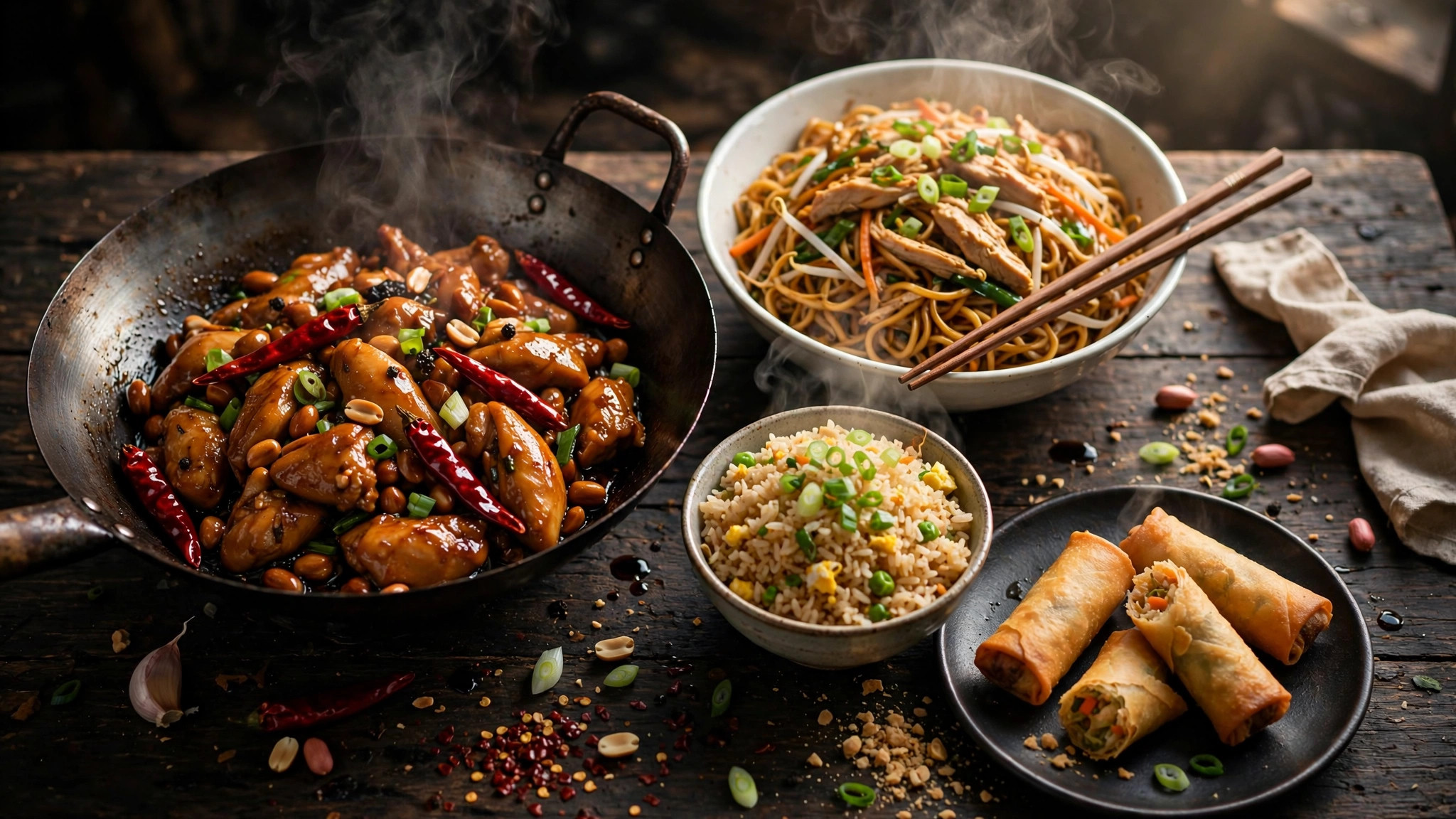
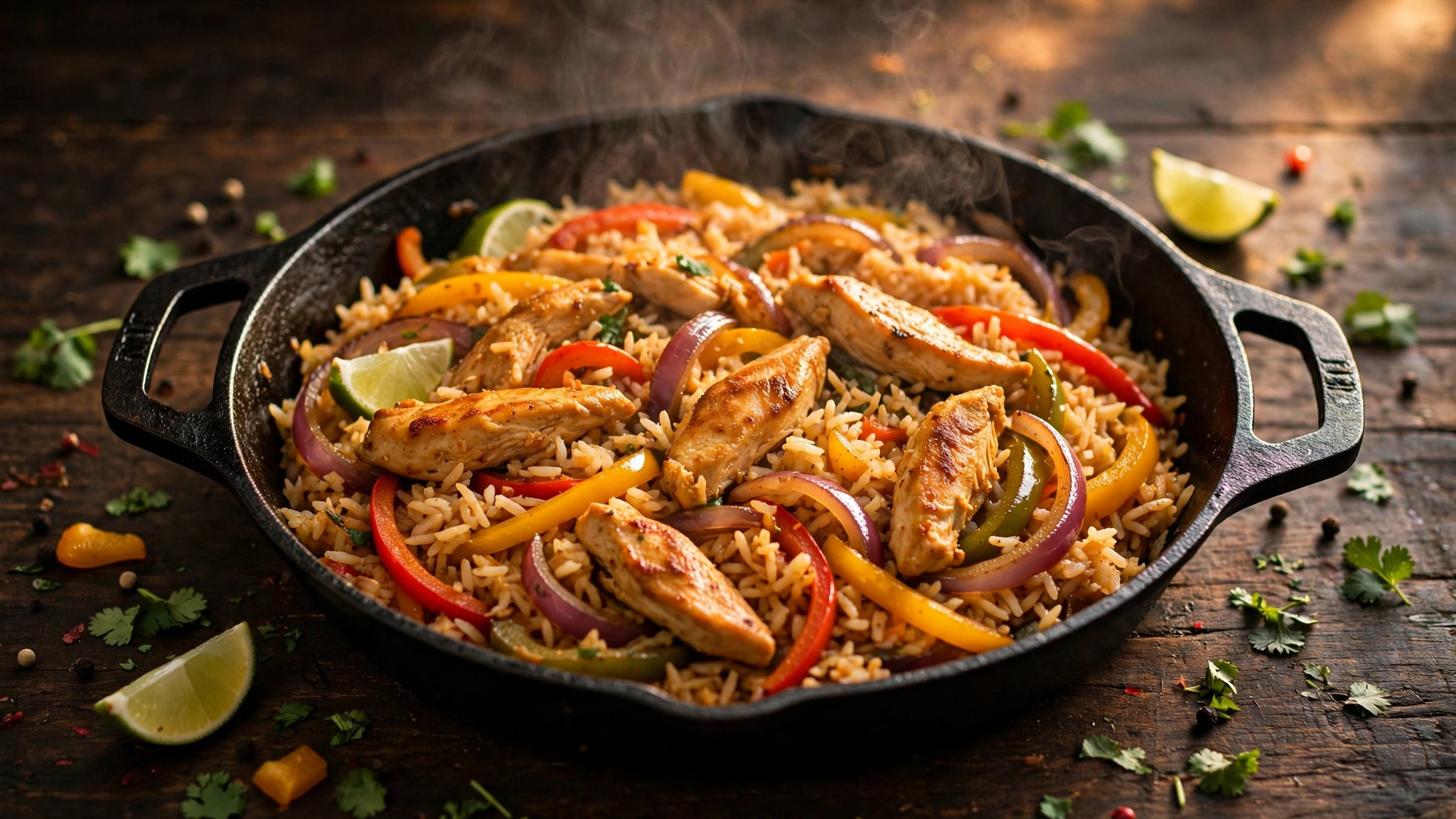
Keep the Takeout Night Going
Kung pao is one of five takeout classics you can beat at home — the full set (lo mein, fried rice, beef and broccoli included) is in 5 Chinese takeout favorites in 25 minutes or less. For the nights you want the same speed with less heat, the one-pan chicken fajita rice skillet uses the same sear-first method, and 9 dinner hacks for busy weeknights will cut your prep time on all of them.