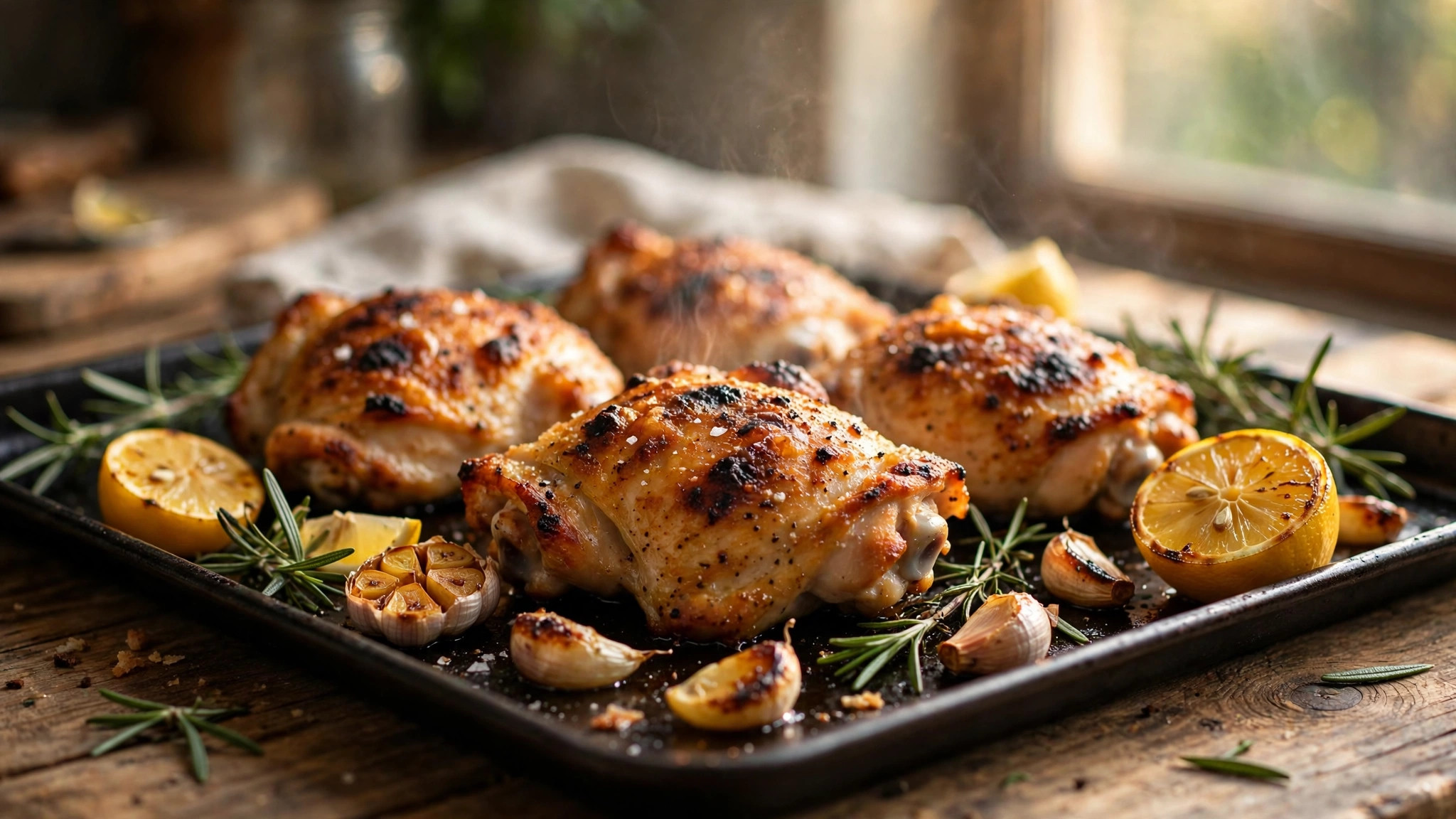
Boneless, skinless chicken thighs are the most forgiving cut of chicken on the planet, and nobody appreciates it enough. Chicken breast needs coddling — even thickness, a thermometer, a little prayer. Thighs? You can overcook them by ten minutes and they still come out juicy. That's not a cooking tip, that's physics: dark meat carries more fat and connective tissue, which melt into moisture instead of wringing out of it. So 425°F for 18–22 minutes is the headline number, and everything below is the detail that turns "fine" into "wait, why is this so good."
A quick word on thickness: these times assume standard boneless, skinless thighs, roughly 5–6 oz each and about an inch thick. If yours are unusually thick or stacked on each other, add 3–5 minutes and check with a thermometer — the clock is a guide, the temp is the law.
The Numbers First: Time & Temp Chart
Oven fully preheated. Times are for boneless, skinless thighs; start checking at the low end of the range.
| Method | Temp | Time | Notes |
|---|---|---|---|
| Oven (hot & fast) | 425°F / 220°C | 18–22 min | The sweet spot — edges brown, insides stay juicy. |
| Oven (classic) | 400°F / 204°C | 20–25 min | Slightly gentler; matches our bone-in thigh timing chart at 400°F. |
| Air fryer | 400°F / 204°C | 14–18 min | Flip halfway; air fryers run hot, so check early. |
| Grill pan / skillet | Medium-high | 5–6 min per side | Get a real sear first, then finish covered if thick. |
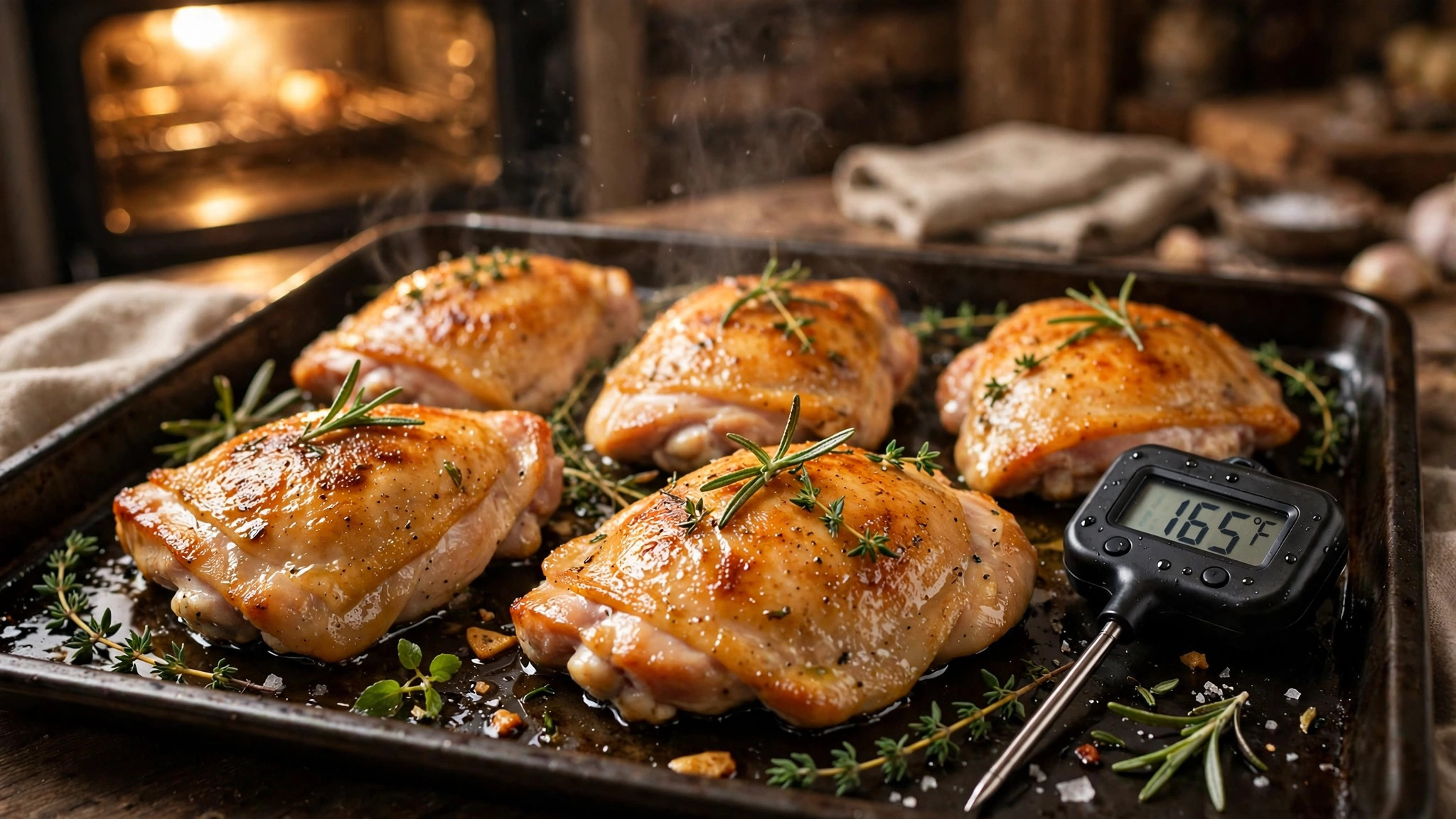
And the number that outranks all of them: 165°F (74°C) internal, the USDA's safe temp for poultry. If you remember nothing else from this chart, remember that pulling thighs at 165°F — not at "looks done" — is the whole game. Here's a fun bonus: thighs actually taste better a few degrees past 165°F than breasts do, because their fat keeps them silky. That's the dark-meat insurance policy at work. (How far past? 175°F is the sweet spot — the full 165-vs-175 breakdown, the pull-temp cheat sheet, and how to temp a thigh correctly.)
Why Thighs Stay Juicy (And Breasts Don't)
It's not your cooking — it's anatomy. Chicken thighs are dark meat, and dark meat is laced with more fat and collagen (the stuff that melts into gelatin when it gets hot). That melted collagen bastes the meat from the inside as it cooks. White-meat breasts are almost all lean muscle with very little fat, so the moment they're overcooked, the moisture squeezes out and there's nothing to replace it.
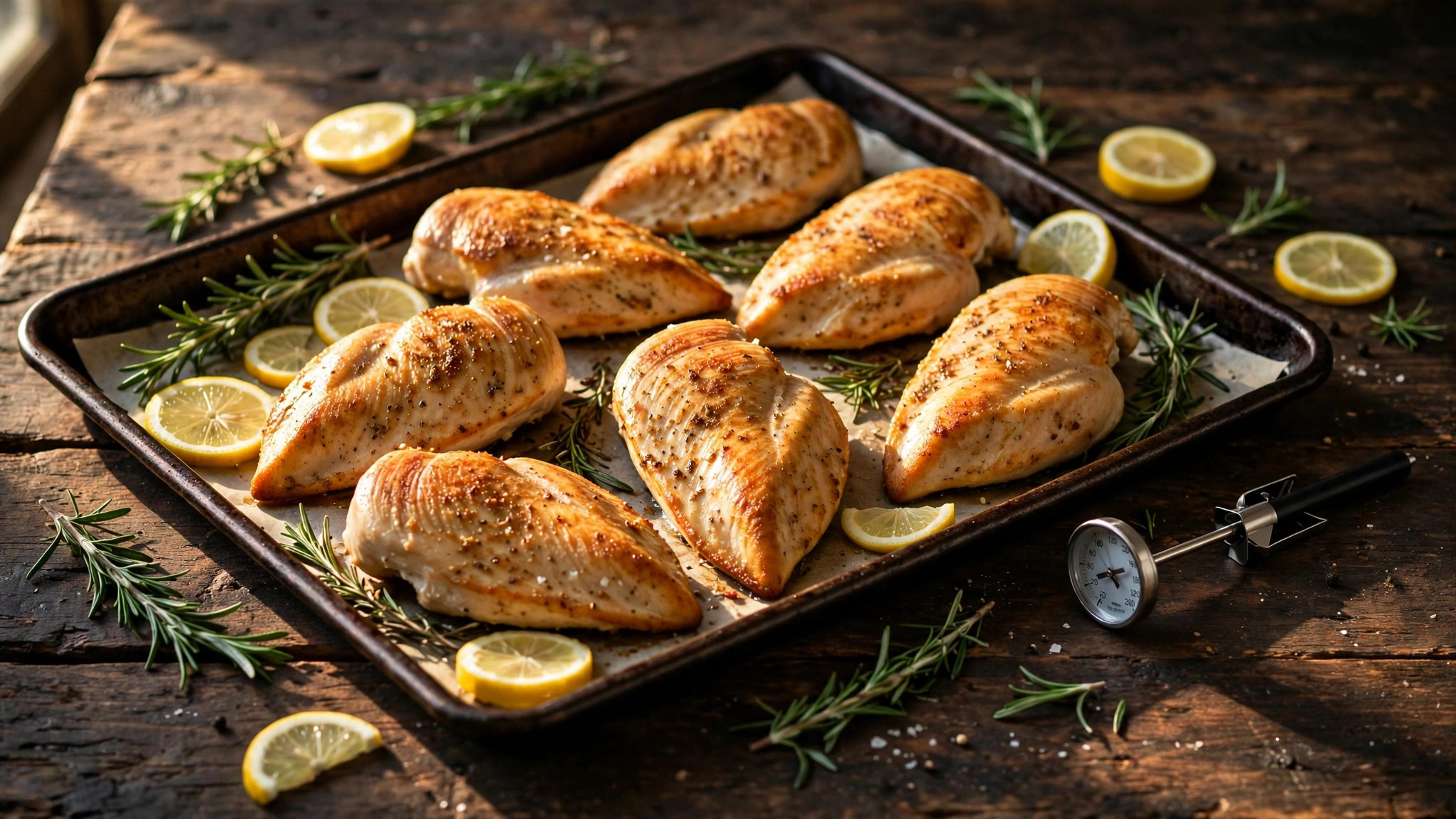
Translation for your dinner: thighs have a forgiveness window of roughly 10–15 degrees. A breast pulled at 175°F is cardboard; a thigh pulled at 175°F is still delicious. That's why this cut is the weeknight hero — if your timing is a little off, if the phone rings, if the oven runs hot, thighs shrug it off. (If you're a breast person anyway, our 375°F chicken breast guide has the method that keeps them juicy.)
Prep in 4 Minutes
Four steps, four minutes, and the oven does the rest:
- Pat them bone dry. Paper towels, both sides. This is the #1 difference between golden, browned thighs and pale, steamy ones. Wet skin steams; dry skin roasts. (Skinless thighs still benefit — that surface moisture has to go somewhere.)
- Oil lightly. About 1 tablespoon of olive oil for 6 thighs. Rub it on so the seasoning sticks and the edges get those crispy brown bits.
- Salt like you mean it. ½ teaspoon of kosher salt per thigh, more than feels right. If you have 15 minutes, salt them and leave them on the counter while the oven preheats — the salt soaks in and seasons deeper than last-second salting.
- Preheat the pan too. Put your rimmed sheet pan in the oven while it preheats. Hot pan + cold-ish chicken = an instant sear underneath instead of a soggy bottom.
3 Seasoning Blends That Never Miss
Quantities are for 6 thighs (about 2 lbs). Mix each blend in a small bowl, rub on after the oil:
- Garlic-herb: 2 tsp garlic powder + 1 tsp onion powder + 1 tsp Italian seasoning + ½ tsp black pepper. The universal crowd-pleaser — works on tacos, salads, pasta, everything.
- Smoky paprika: 2 tsp smoked paprika + 1 tsp brown sugar + 1 tsp garlic powder + ½ tsp chili powder + ½ tsp cumin. The sugar caramelizes at 425°F into a crackly, sweet-smoky crust. Unreal in a grain bowl.
- Lemon-herb: 1 tbsp lemon pepper seasoning + 1 tsp dried oregano + zest of 1 lemon. Bright, punchy, and it makes the chicken taste like something you'd order at a restaurant instead of making on a Tuesday.
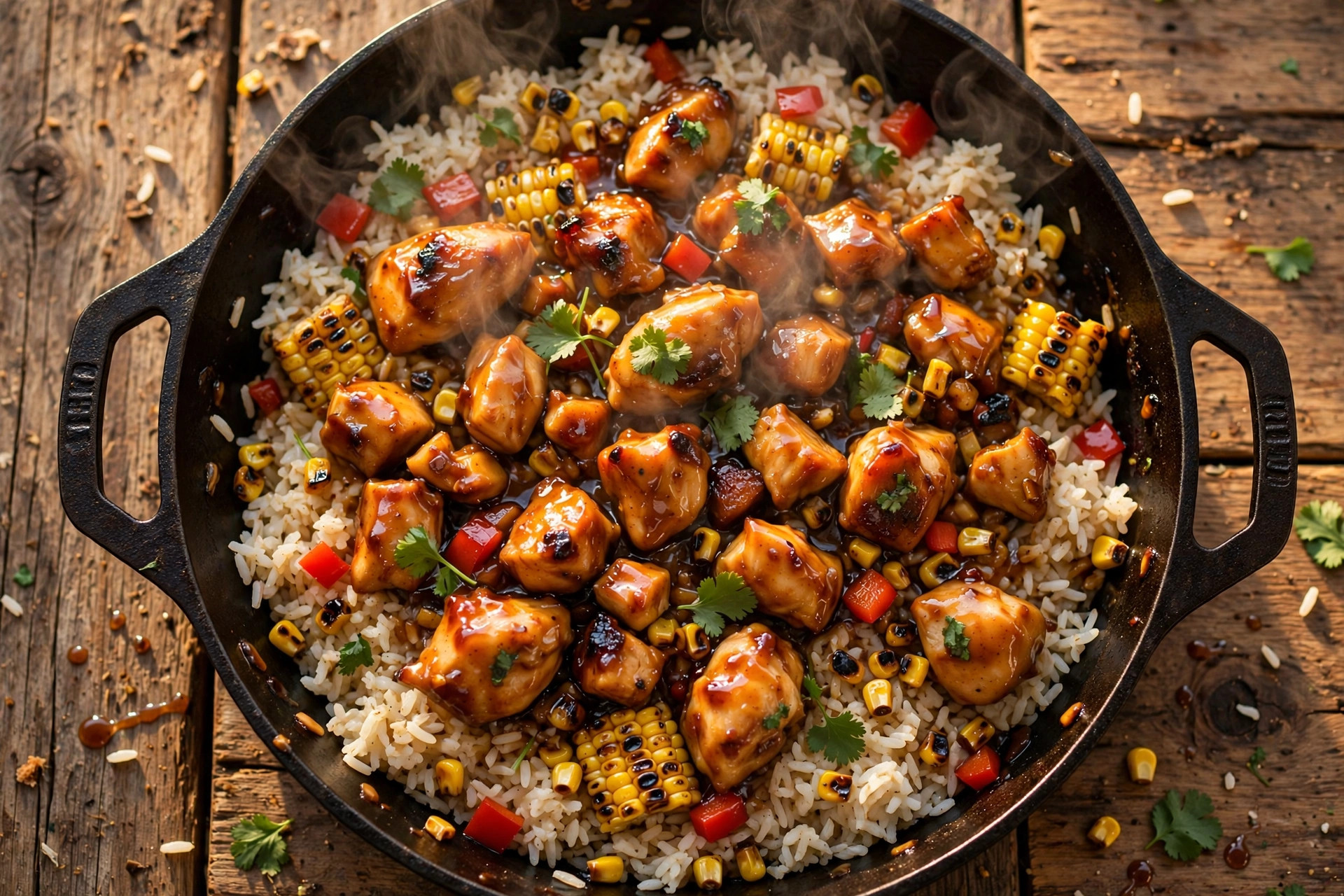
Making a double batch? Toss the extra thighs into the one-pan honey BBQ chicken rice skillet later in the week — the sticky glaze covers any "I'm tired of plain chicken" feelings.
The 3 Ways People Still Ruin Thighs
Yes, thighs are forgiving. No, they're not invincible. These are the three sins that actually manage to ruin them:
1. Crowding the pan
Packing 10 thighs onto a sheet pan built for 6 means they steam in each other's juices instead of roasting. You get gray, rubbery chicken and zero browning. Give each thigh at least an inch of space — use two pans if you have to. Hot, circulating air is doing the cooking here; the thighs need room to breathe.
2. Skipping the thermometer
"They look done" is how you get raw centers or chalky edges. Most home ovens run 15–25 degrees off their dial, so your 425°F might be anyone's guess. An instant-read thermometer costs about $10 and tells you the one number that matters: 165°F in the thickest part, not touching the pan. No thermometer? At least cut the thickest thigh open and check for pink — it's the stone-age version, but it works.
3. Slicing them the second they come out
You pull perfect thighs from the oven and immediately slice them because they smell incredible. All the juices flood the cutting board instead of staying in the meat. Rest 5 minutes under loose foil — the juices redistribute, carryover cooking finishes the job (thighs climb another 3–5°F while resting), and what you slice is juicy instead of dry. Five minutes. You can wait five minutes.
FAQ
Can I bake chicken thighs at 350°F instead? You can, but it's a worse result — about 28–32 minutes, and the lower heat gives you less browning for your trouble. The high heat is what makes the edges crispy and delicious.
Do I need to flip boneless thighs while baking? No. They're thin enough to cook through without flipping, and flipping means opening the oven and losing heat. One exception: if your oven has notorious hot spots, rotate the pan once at the halfway mark.
Can I bake them from frozen? The USDA says cooking poultry from frozen is safe as long as it reaches 165°F throughout — expect roughly 50% more time (around 30–35 minutes at 425°F) and weaker browning. Thawing overnight in the fridge is still the better play.
Why are my thighs rubbery? Two usual suspects: they're undercooked (rubbery = connective tissue hasn't fully melted yet — yes, undercooked dark meat is rubbery, not raw-tasting), or the pan was crowded and they steamed. Thermometer to 165°F+ and space between thighs fixes both.
How long do baked thighs keep? 3–4 days in the fridge in a sealed container, per USDA leftovers guidance. They reheat beautifully — slice cold over salads or microwave covered with a splash of water.
"Thighs are the only cut of chicken that forgives your mistakes. Respect the 165°F line, give them space on the pan, and 425°F does the rest."