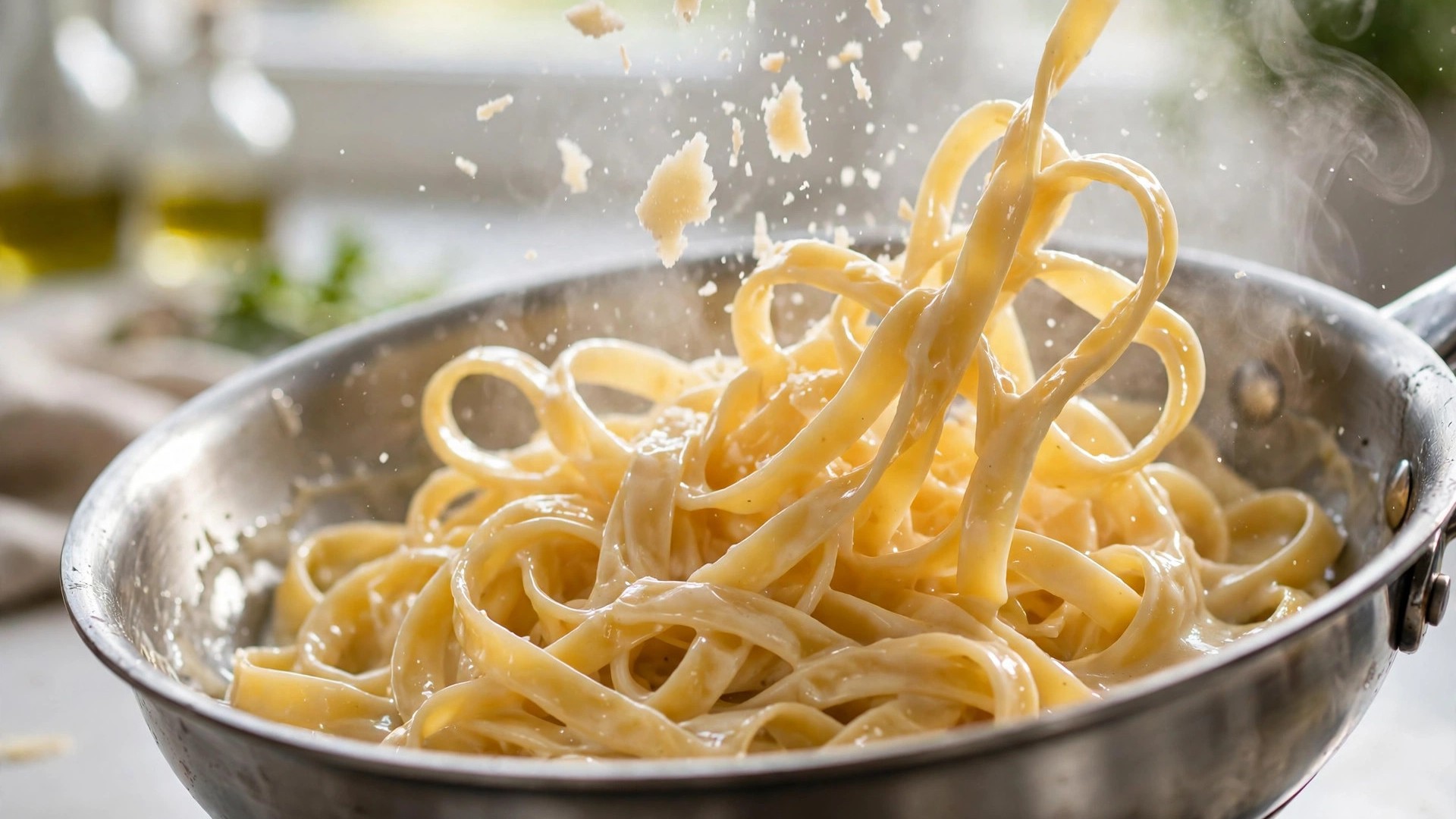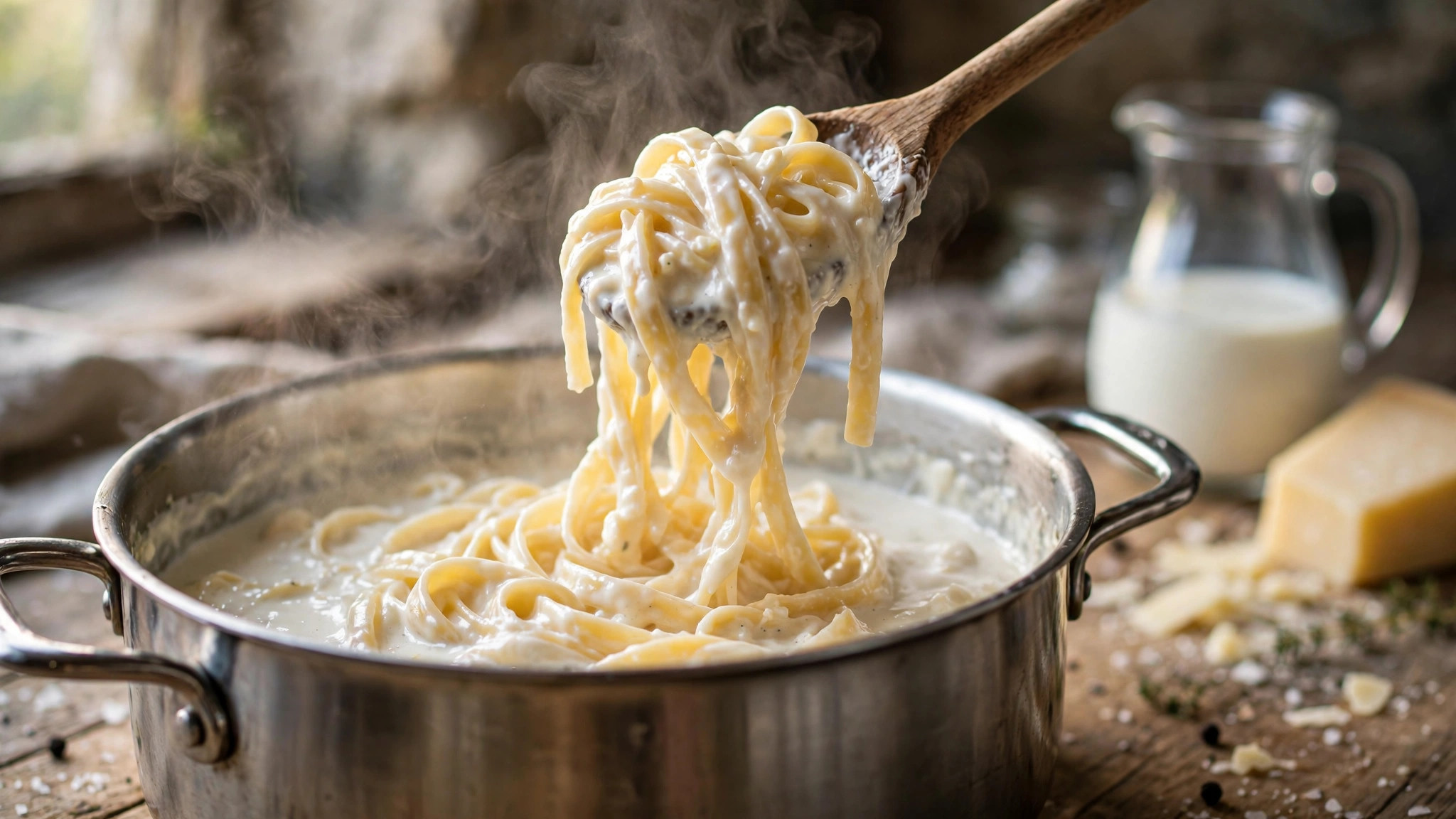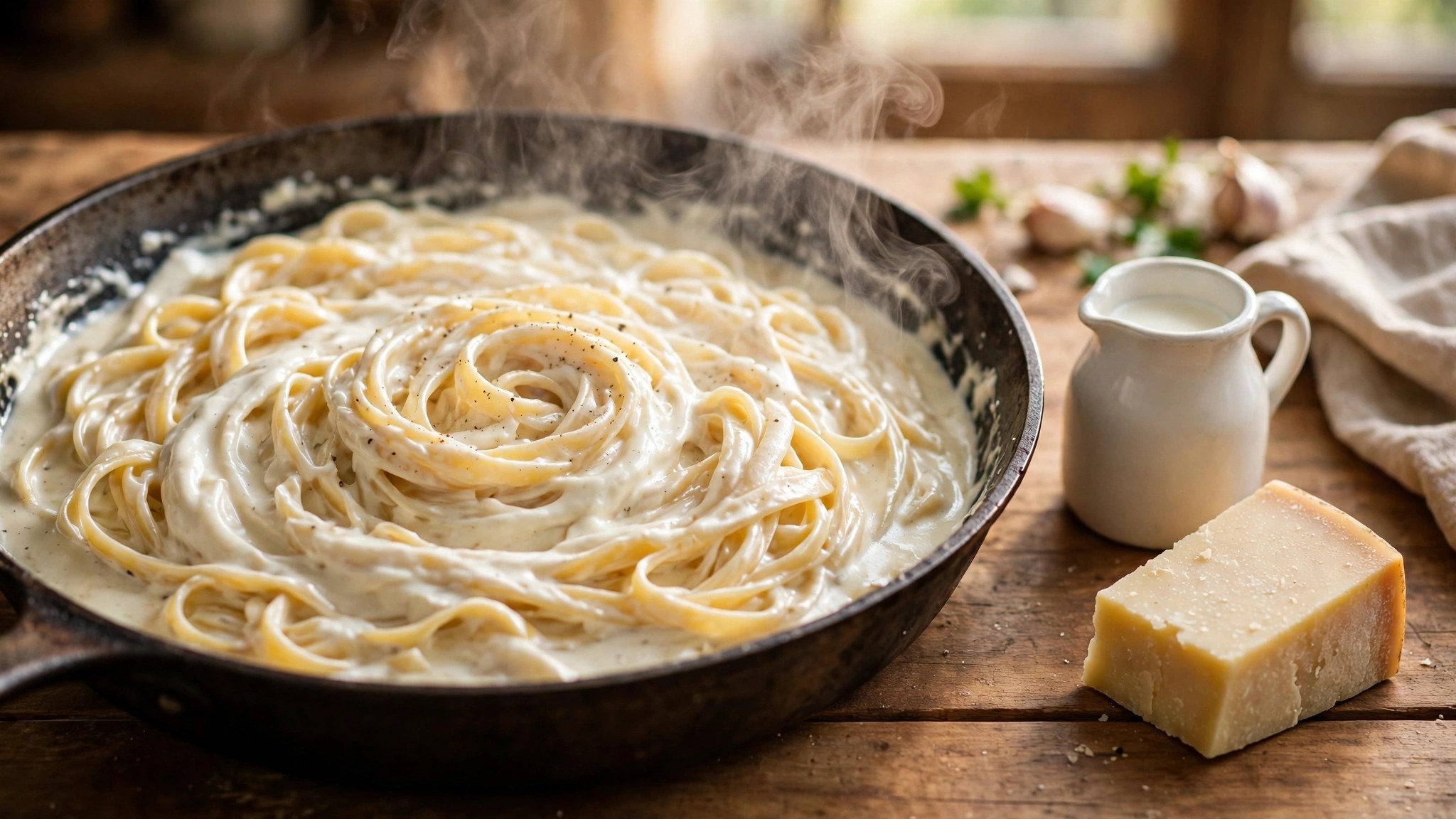
It is 7 p.m., the pasta water is already boiling, and then you open the fridge: no heavy cream. There is a carton of milk, a wedge of Parmesan, and butter — and a recipe that very specifically says "1 cup heavy cream." This is the moment most people either drive to the store or make a sad, watery sauce and pretend it is fine.
Neither is necessary. Milk can carry an Alfredo sauce beautifully, as long as you understand why cream works in the first place and give milk a little help doing the same job. The difference is fat, and fat is fixable.
Why Milk Alone Fails (and Cream Does Not)
Heavy cream is about 36% fat. That fat is what makes Alfredo thick, glossy, and forgiving: it coats the pasta, holds the cheese in suspension, and does not panic when the pan gets hot. Whole milk is only about 3.5% fat — roughly a tenth as much. Pour it straight into a hot pan with cheese and you get exactly what the fat numbers predict: a thin, milky liquid that can curdle into grainy bits instead of a sauce.
So the job is not to pretend milk is cream. The job is to give milk the body it lacks, before the cheese ever goes in. That is what the roux does: butter and flour cooked together thicken the milk into a smooth base that behaves a lot like cream, and the Parmesan finishes the job.
The Recipe: Milk Alfredo That Actually Works (4 Servings)
This makes enough sauce for 12 oz (about 340 g) of fettuccine — dinner for four, or two very committed pasta lovers with leftovers.
You need: 12 oz fettuccine; 2 tablespoons butter; 2 tablespoons all-purpose flour; 1 1/2 cups whole milk, at room temperature; 1 cup (about 100 g) finely grated Parmesan, plus more to serve; 2 garlic cloves, minced (optional but recommended); 1/2 teaspoon salt; 1/4 teaspoon black pepper; a pinch of nutmeg (optional).
Step 1 — Cook the pasta. Boil the fettuccine in well-salted water until 1 minute shy of the package time. Before draining, save 1 cup of the pasta water — its starch is your emergency thickener. Drain the pasta.
Step 2 — Make the roux. In a large skillet over medium heat, melt the butter, add the garlic, and cook for 30 seconds until fragrant. Sprinkle in the flour and stir constantly for 1 full minute. It should smell nutty, not raw, and look like a smooth paste. Do not let it brown.
Step 3 — Add the milk slowly. Pour in the milk a splash at a time, whisking constantly so no lumps form. Once it is all in, keep stirring over medium-low heat for 3–4 minutes until the sauce coats the back of a spoon. It should look like thin cream at this point — it thickens more with the cheese.
Step 4 — Cheese, off the boil. Turn the heat to low. Add the Parmesan a handful at a time, stirring until each handful melts before adding the next. Never let the sauce boil hard after the cheese goes in — high heat is what makes cheese sauces grainy. Season with salt, pepper, and nutmeg, then taste.
Step 5 — Toss and adjust. Add the drained pasta to the sauce and toss for 1–2 minutes. If the sauce feels too thick, loosen it with a splash of the reserved pasta water. If it feels too thin, let it sit in the warm pan for 2 minutes — it thickens as it cools slightly. Serve immediately with extra Parmesan.
The whole sauce takes about 10 minutes, which is less time than the pasta needs. That is the real point: no store trip, no sad sauce, dinner still on time.
Which Milk Works Best?
| Milk | Verdict | What to change |
|---|---|---|
| Whole milk | Best choice | Use the recipe exactly as written |
| 2% milk | Works fine | Add an extra tablespoon of butter to the roux |
| Skim milk | Use only if you must | Increase flour to 3 tablespoons and expect a lighter sauce |
| Half-and-half | Even better than milk | Skip the flour — it is rich enough on its own with the Parmesan |
| Oat milk (unsweetened) | Decent backup | Use the full roux; avoid sweetened oat milk, which tastes wrong in Alfredo |
If you have half-and-half in the fridge, use it instead — it sits between milk and cream in fat, so it needs no roux at all. But if all you have is milk, the roux version above is the one to make. And if you want more ways to get creaminess without cream, our guide to how to make pasta sauce creamy without cream covers seven tricks, from pasta water to blended cottage cheese.
3 Mistakes That Ruin Milk Alfredo
1. Boiling the sauce after the cheese goes in. This is the number-one cause of grainy Alfredo, milk or cream. Cheese proteins tighten and squeeze out fat at high heat. Keep it at a gentle simmer, or just warm, once the Parmesan is in.
2. Dumping all the cheese in at once. A cold mountain of cheese cools the sauce unevenly and clumps. Handful by handful, stirring between each, gives you a smooth melt every time.
3. Skipping the roux and hoping. Milk plus cheese plus hope equals milky pasta water with cheese bits. The two minutes the roux takes are the whole difference between "this worked" and "why did I bother." For a related milk experiment that also needs one careful step, see can you cook pasta in milk instead of water.
Does It Taste the Same as Real Alfredo?
Honestly? Close, not identical. A milk-and-roux Alfredo is a little lighter and a little less silky than the heavy-cream version, because it simply has less fat — no trick fully replaces that. What it is: creamy, cheesy, properly thick, and genuinely good, not a compromise you apologize for. Most people served it blind would call it Alfredo without hesitating.
If you want it richer without cream, two upgrades help: stir in 2 tablespoons of cream cheese with the Parmesan, or use half milk and half evaporated milk. Both add body without a store trip. And if the no-cream constraint is about ricotta rather than cream, the same swap logic applies to baked pasta — our easy baked ziti without ricotta ranks three substitutes with exact ratios.
FAQ: Milk in Alfredo
Can I use milk instead of heavy cream in Alfredo sauce? Yes — use whole milk thickened with a butter-and-flour roux, keep the heat low, and add Parmesan gradually. Milk alone, with no thickener, makes a thin sauce that can split.
How much milk replaces 1 cup of heavy cream? Use 1 cup of whole milk plus the roux from 2 tablespoons butter and 2 tablespoons flour (for a sauce serving four, scale to 1 1/2 cups milk with the same roux). Do not swap cup-for-cup with no other change.
Will skim milk work in Alfredo? It can, with 3 tablespoons of flour in the roux instead of 2, but the sauce will be noticeably lighter. Whole milk or 2% gives a much better result.
Why did my milk Alfredo turn grainy? Almost always heat: the sauce boiled after the cheese went in, or the cheese was added too fast. Next time, keep the heat low, add cheese by the handful, and pull the pan off the heat if it starts to bubble hard.
Can I make milk Alfredo ahead of time? Not happily — like all cheese sauces, it thickens and can split when reheated. Make it fresh, and if you must reheat, do it gently with a splash of milk, stirring constantly.
The rule to remember: milk is not cream, but milk plus a roux plus low heat plus Parmesan is a proper Alfredo. The fridge already had everything you needed — it just needed two extra minutes and a whisk.