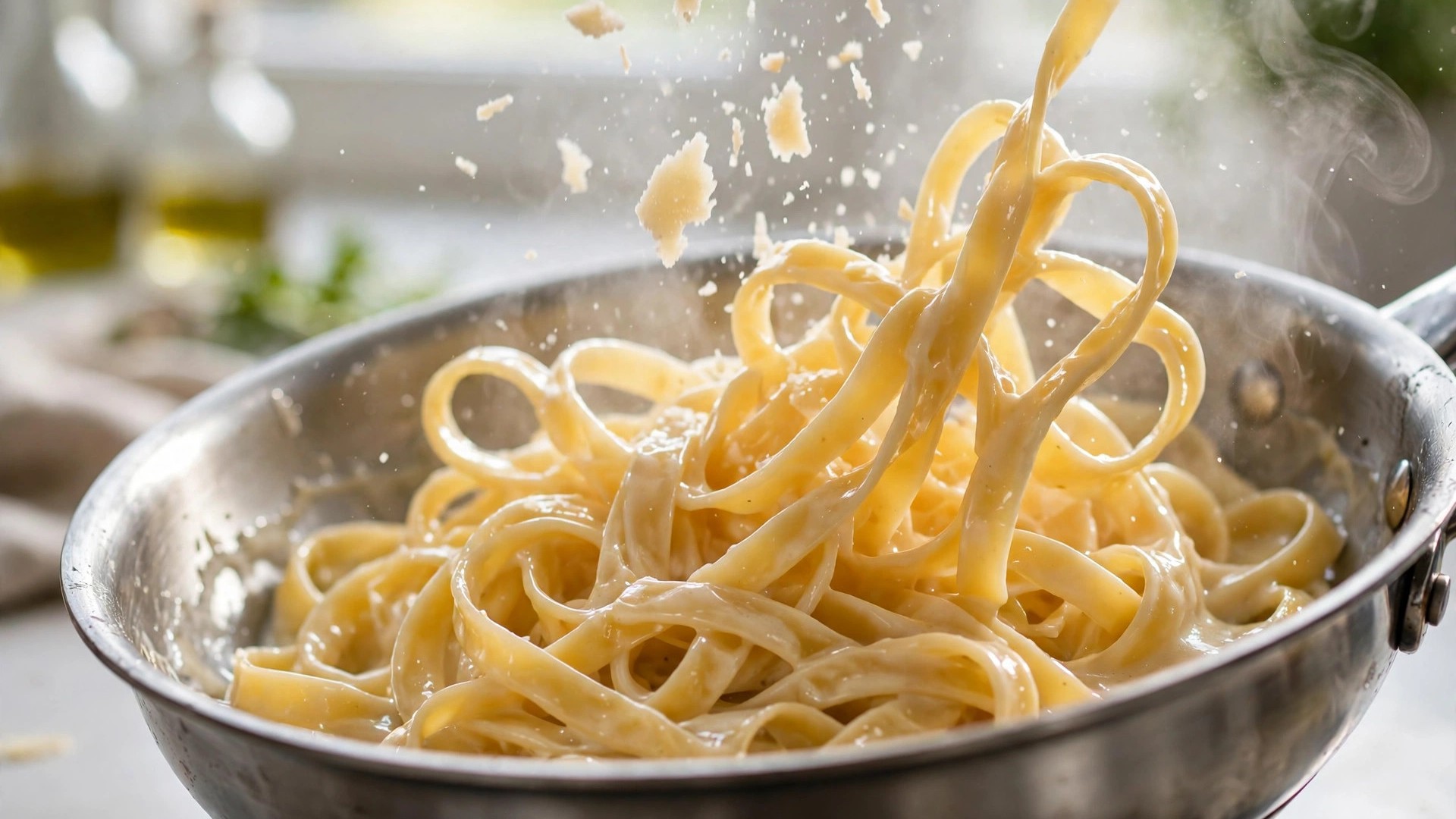
Yes, you can make a pasta sauce taste creamy without a drop of heavy cream. The secret isn't a substitute — it's starch plus fat plus heat control. Save 1 cup of the starchy pasta water before you drain, whisk it with butter or cheese off the fiercest heat, and the sauce turns glossy and rich on its own. Everything below is a variation on that one idea, ranked from "you already have this" to "pantry hero."
No fake promises here: none of these taste exactly like heavy cream. They taste like something better — a sauce with actual depth instead of dairy blandness. Trick #5 is the one that converts skeptics.
Why sauces turn creamy: the 30-second science
Creaminess is an emulsion — tiny droplets of fat suspended in liquid so smoothly your tongue reads it as silk. Heavy cream just hands you that emulsion pre-made. Every trick below builds it from scratch: starch (from pasta water, beans, or flour) thickens the liquid, fat (butter, cheese, yolk) gives the richness, and gentle heat keeps the two from splitting. Break the emulsion with screaming heat and you get grease, not silk. Keep that in mind — it's the difference between trick #2 working and failing.
Trick 1: Pasta water — the gold you're pouring away
Before draining any pasta, scoop out 1 cup of the cooking water. That cloudy liquid is full of dissolved starch, and it's the single most powerful creaminess tool in your kitchen. Add it ¼ cup at a time to your sauce, tossing over medium heat, and watch a thin sauce turn glossy and clinging. This costs nothing, works every time, and fixes more "watery sauce" emergencies than anything else on this list. If you're cooking one-pot style, our guide to exactly how much liquid 8 oz of pasta needs keeps the starch concentration right where you want it.
Trick 2: Butter + parmesan, the restaurant way (mantecatura)
This is how Italian kitchens finish pasta every night, and there's no cream in sight. Drain your pasta 1 minute shy of done, reserving that cup of pasta water. Return the pasta to the pan over medium-low heat with 3 tbsp cold butter, ½ cup finely grated parmesan, and ¼ cup pasta water. Toss vigorously for 60–90 seconds. The butter melts into the starch and cheese into a glossy coating that looks like it came from a cream carton. The keys: grate the parmesan fine (pre-shredded won't melt smoothly) and keep the heat moderate — boiling heat makes cheese seize into clumps.
Trick 3: A spoonful of cream cheese or mascarpone
Stir 2–3 tbsp of cream cheese or mascarpone into a finished tomato or garlic sauce off the heat. It melts in completely, adding body and a gentle tang that heavy cream can't match. This is the fastest rescue move on the list — one spoonful transforms a thin marinara into something that coats the pasta. Full-fat works best; the low-fat versions can turn grainy.
Trick 4: Blended white beans or cashews
Blend 1 cup drained cannellini beans (or ½ cup soaked cashews) with ½ cup of your sauce until completely smooth, then stir back in. Beans disappear into the sauce — no beany taste, just body — and cashews give an almost dairy-like richness. This is the trick behind most "creamy" vegan pasta sauces, and it works in regular cooking too. One honest note: blend it longer than you think. Any grit at all ruins the illusion.
Trick 5: Tempered egg yolk — the carbonara move
The skeptic-converter. Whisk 2 egg yolks with ½ cup grated pecorino or parmesan and a ladle of hot pasta water. Take the pasta off the heat entirely, pour in the yolk mixture, and toss fast for 60 seconds. The residual heat cooks the yolk just enough to thicken into a golden, silky sauce — this is real carbonara technique, and it's pure luxury with zero cream. The one rule that matters: off the heat. Add yolks to a ripping-hot pan and you get scrambled eggs, not sauce.
Trick 6: Evaporated milk, the pantry hero
A 12 oz can of evaporated milk has about half the water of regular milk, so it behaves much more like cream in a sauce — richer body, far less risk of curdling. Swap it 1:1 for heavy cream in any recipe. It keeps for months in the pantry, which is exactly why it belongs on the emergency shelf next to the canned tomatoes. Slightly sweet, so taste and adjust salt.
Trick 7: A 2-minute light roux
For sauces that need real thickness — mac-style cheese sauces, creamy garlic sauces — melt 2 tbsp butter, whisk in 2 tbsp flour, and cook 2 minutes until it smells nutty. Then whisk in 1½ cups warm milk gradually. You get a proper béchamel base with no cream anywhere. Our 15-minute creamy garlic pasta is built on exactly this kind of thinking, and it lands on the table faster than delivery.
"Cream is a shortcut. Starch, fat, and patience are the actual recipe — and they were in your kitchen the whole time."
Which trick for which sauce? A quick decision guide
Seven tricks is a lot to hold in your head at 7pm on a Tuesday, so here's the cheat sheet. Making a tomato sauce? Start with trick #1 (pasta water), and if it still feels thin, hit it with trick #3 (cream cheese) — tomato's acidity loves that tang. Garlic-butter or olive-oil sauce? Trick #2 (butter + parmesan) was practically invented for it. Cheese sauce gone grainy or thin? Trick #7 (roux) rebuilds it properly, while trick #5 (yolk) is the move when you want luxury without heaviness. Cooking for someone dairy-free? Trick #4 (blended beans or cashews) is your answer, and it also happens to add protein. And when the recipe specifically calls for heavy cream and you have an unopened can in the pantry — trick #6 (evaporated milk) is the honest 1:1 swap. The pattern: match the trick to what your sauce is missing — body, richness, or smoothness — instead of defaulting to the same one every time.
3 mistakes that break your sauce
Mistake 1: Cheese into screaming heat. Parmesan added to a boiling sauce seizes into rubbery clumps. Take the pan down to medium-low first — every time.
Mistake 2: Salting nothing. Pasta water should taste like the sea (about 1 tbsp salt per 4 quarts). Unsalted pasta plus an unsalted sauce equals bland, no matter how "creamy" the texture is.
Mistake 3: Draining every drop. The number of creamy sauces murdered by a colander is uncountable. Scoop the cup of pasta water before you drain. Make it muscle memory.
Put it to work tonight
Pick one trick and use it on whatever pasta you're already making — trick #1 costs nothing and works on literally any sauce. Then level up: our 9 15-minute dinners include two pasta recipes built around these exact moves, and the one-pot pasta liquid guide keeps your starch ratios perfect when everything cooks in a single pot. Cream had a good run. You don't need it anymore.