Here's your answer: 8 oz (half a pound) of dry pasta needs 2 to 2.5 cups of liquid for one-pot pasta. That's it — for penne, rotini, shells, and other short shapes simmered directly in their sauce. If you want one line to memorise: 1 cup of liquid for every 4 ounces of pasta, plus a small splash for insurance. Below is the why, the exceptions, and a 15-minute recipe that runs on exactly this ratio.
Most of the confusion comes from boiling logic. The classic method uses quarts of water and drains almost all of it. One-pot pasta never drains — so it needs a fraction of that. Get the number right and the pasta's own starch turns the liquid into sauce. Get it wrong and you're eating soup with noodles in it.
Why One-Pot Pasta Needs Far Less Liquid
Two things happen in a one-pot pasta that don't happen in a boiling pot. First, nothing gets drained, so every drop you add either ends up inside the pasta or inside the sauce. A full pound of pasta needs roughly 4 cups for a whole recipe — half that box means half that liquid, which is where our 2 to 2.5 cups comes from.
Second, starch does the heavy lifting. As the pasta simmers, it releases starch directly into the cooking liquid, thickening it into something that behaves like a sauce rather than a broth. This is the same reason the starchy water trick works in our 15-minute creamy garlic pasta — except here, you never pour that liquid away. Less liquid means more concentrated starch, which means a glossier, clingier finish.
One more factor: evaporation. Cooking uncovered (or mostly uncovered) lets steam escape, which concentrates flavour and reduces the liquid as you go. That's why a covered pot and an uncovered pot need slightly different amounts — the lid-on version traps steam, so stay closer to 2 cups; the lid-off version loses more, so lean toward 2.5.
The Ratio Cheat Sheet
This table covers the standard dry pasta amounts you'll actually cook. It assumes short shapes (penne, rotini, rigatoni, shells) in a pot wide enough that the liquid mostly covers the pasta — if a lot of pasta sits above the liquid line, the pot is too small, not the ratio too low.
| Dry pasta | Liquid to add |
|---|---|
| 4 oz (about 1 cup dry) | 1 to 1¼ cups |
| 8 oz (half a pound) | 2 to 2½ cups |
| 12 oz | 3 to 3¾ cups |
| 16 oz (a full pound) | 4 to 4¾ cups |
Long pasta like spaghetti uses the same ratio — but use a wide pot or skillet so the strands lie flat and submerge; strands poking above the liquid cook unevenly no matter how precise your measuring cup is.
How does this line up with the big recipe sites? Barilla's own one-pot rotini recipe uses 3 cups of broth plus 1 cup of milk for 12 oz of pasta — right inside the 3 to 3.75 range. The Kitchn's one-pot pasta method combines 12 oz of pasta with at least 4½ cups of liquid and cooks uncovered, which lands just above the table since all the steam escapes. And Tasting Table cites The Kitchn's guidance of 4 cups of liquid per pound of pasta — half a pound's 2 cups, exactly where our rule sits. Same neighbourhood, every time.
The 3 Mistakes That Make It Gummy or Soupy
1. Too much liquid. This is the number-one killer. If the pasta is swimming, the starch dilutes into thin broth instead of concentrating into sauce, and the noodles go soggy before the excess reduces. Measure with an actual cup. Eyeballing it is how dinner becomes noodle soup.
2. Lid on the whole time. Trapped steam can't escape, so the liquid never reduces and the pasta steams in diluted sauce. Cook mostly uncovered; only cover briefly if the top noodles are stubbornly dry, and pull the lid the moment they soften.
3. Walking away. All that starch is glue — and glue settles. If you don't stir, the pasta welds itself to the pot bottom in a layer that no amount of scraping fixes. Set a mental timer: stir every 2 to 3 minutes, making sure to scrape the bottom. This single habit prevents more one-pot disasters than anything else.
Broth vs Water vs Milk: Which Liquid to Pour In
Broth is the default winner. Chicken or vegetable broth turns the cooking liquid into flavoured sauce base instead of plain noodle water, which is the whole point of the one-pot method. One caution: broth is already salted, so season at the end, after you've tasted — undersalted pasta can be fixed in seconds, oversalted sauce can't.
Water is fine when the sauce carries the weight. If you're adding a jar of marinara, a can of tomatoes, or a mountain of cheese and garlic, water does the job perfectly well. Save your broth for the recipes where the liquid itself has to taste good. Need weeknight inspiration? Our 7 one-pan dinners that taste better than takeout all run on this exact philosophy.
Milk and cream are powerful — add them late. Dairy enriches the sauce beautifully, but dairy proteins seize and scorch over sustained high heat. The safe move: cook the pasta in broth or water, then stir milk or cream in during the last 2–3 minutes, off the hardest heat. Our one-pan chicken fajita rice skillet uses the same trick. And skip skim milk — it thins the sauce without adding anything; whole milk or cream only.
The 15-Minute Worked Example: One-Pot Garlic Parmesan Pasta
Time to prove the ratio. This uses exactly 8 oz of penne and 2¼ cups of liquid — the middle of our range — and it's on the table in 15 minutes.
Ingredients (serves 2 generously, or 3 as a side):
- 8 oz penne (half a standard box)
- 2¼ cups chicken or vegetable broth
- 2 tbsp unsalted butter
- 4 cloves garlic, thinly sliced (about 1½ tbsp)
- ½ tsp kosher salt — taste before adding more, since the broth is salted
- ½ tsp black pepper
- ¼ tsp red pepper flakes (optional)
- ⅓ cup heavy cream, stirred in at the end
- ¾ cup freshly grated Parmesan, plus extra for serving
- 2 tbsp chopped fresh parsley
Method:
- Bloom the aromatics (2 min). Melt the butter in a large pot or deep skillet over medium heat. Add the garlic and red pepper flakes; cook, stirring, until fragrant and just turning golden — about 60 to 90 seconds. Not brown.
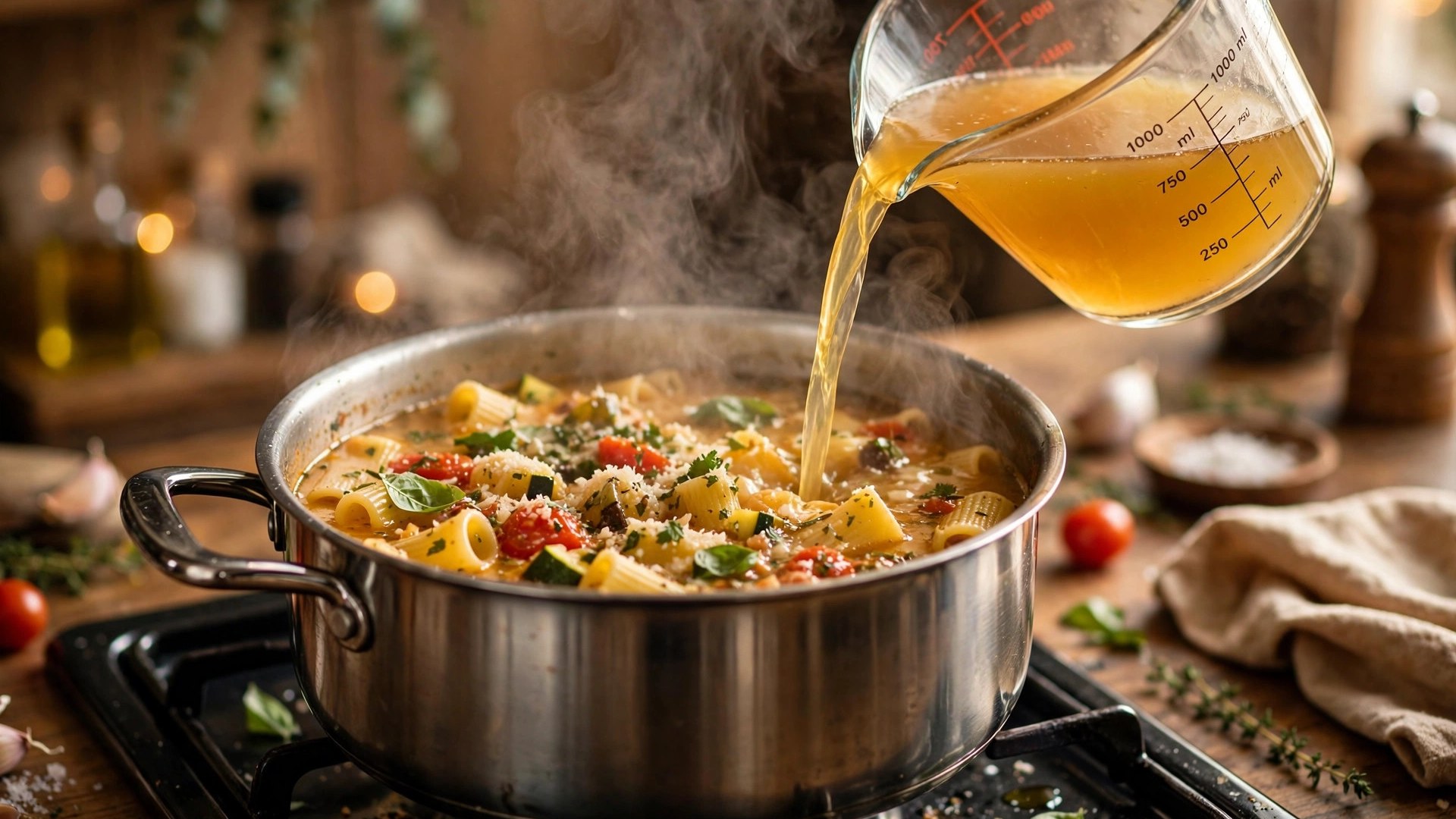
- Add pasta and liquid (1 min). Pour in the 2¼ cups of broth, add the salt and pepper, and stir in the penne. The liquid should just about cover the pasta. Bring to a boil.
- Simmer uncovered (8–9 min). Reduce to a steady simmer and cook uncovered, stirring every 2 to 3 minutes and scraping the bottom, until the penne is al dente and most of the liquid has turned into a creamy sauce. If it looks dry before the pasta is done, splash in ¼ cup water.
- Finish (2 min). Drop the heat to low. Stir in the cream, then the Parmesan a handful at a time, stirring until each melts. Shower with parsley, serve immediately, pass extra cheese. Done — 15 minutes, one pot.
Troubleshooting: 3 Fixes in Under 3 Minutes
Too soupy? Leave the lid off and simmer 2–3 more minutes, stirring — the extra liquid reduces and the starch keeps thickening it. Don't drain it; draining pours your sauce down the sink.
Too dry? The pasta absorbed everything before it finished cooking. Splash in ¼ cup of water or broth, stir well, and give it another minute or two. Repeat once if needed.
Gummy or clumped? That's under-stirring, not bad ratios. Next time, stir every 2–3 minutes without exception. For tonight's batch, a drizzle of olive oil and a firm toss will loosen it up.
"One-pot pasta isn't a shortcut version of real pasta. It's a different recipe with a different rule: half the pasta, half the liquid, and the starch does the saucing."
Read These Next
If this ratio just unlocked weeknight cooking for you, keep going: our 15-minute creamy garlic pasta uses the same starchy-water magic in a classic two-pot version, 7 one-pan dinners that beat takeout applies the one-pan formula to everything from fajitas to fried rice, and our one-pan chicken fajita rice skillet cooks the rice the same way — right in the pan juices.