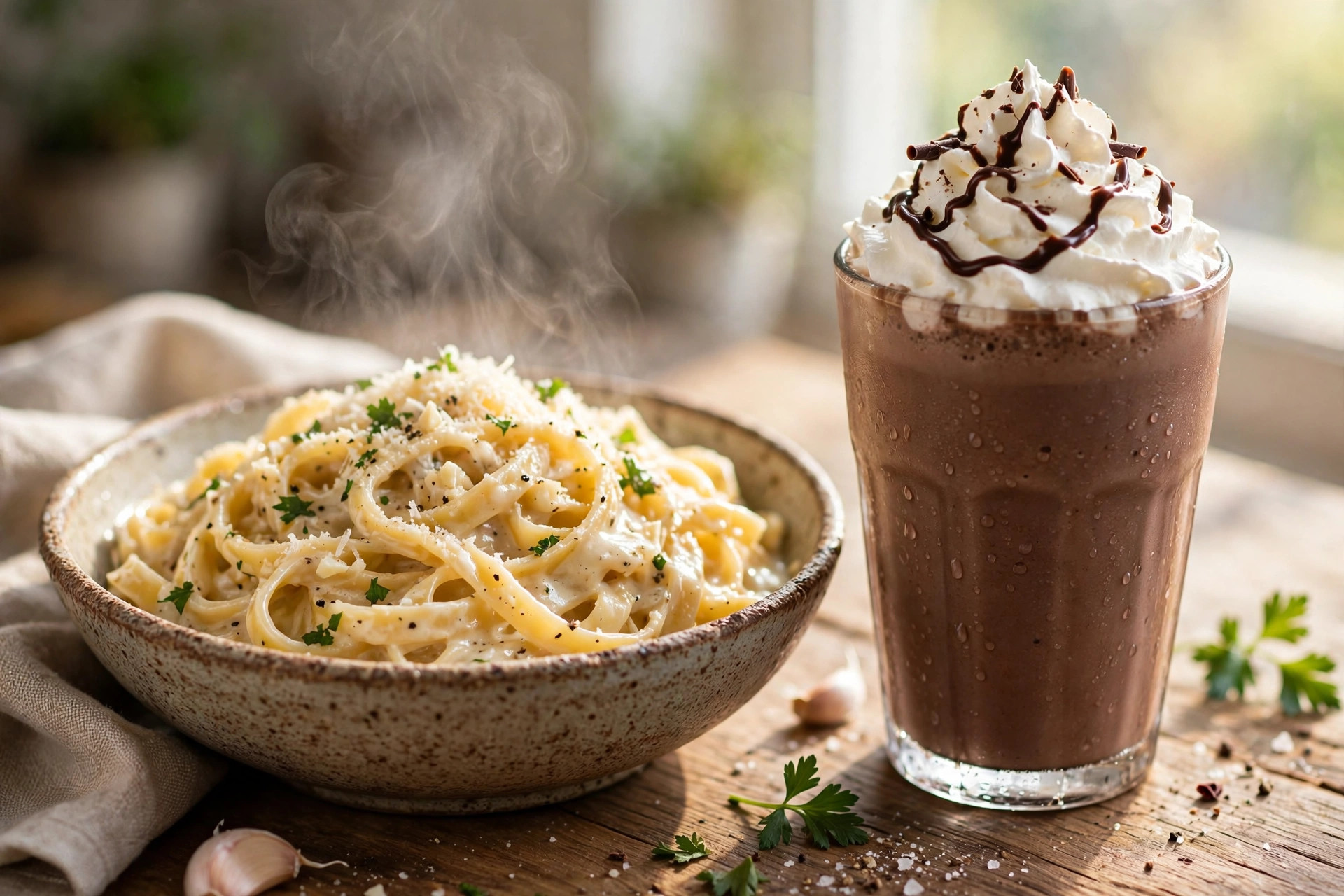
At minute three, the garlic hits the butter and your whole kitchen smells like you've hired a personal chef. By minute fifteen, you're twirling fettuccine through a sauce so glossy it should be illegal — the kind that clings to every strand like it was born there. And here's the wild part: this costs about four bucks a plate and uses stuff already sitting in your kitchen.
Restaurant pasta isn't magic. It's technique — specifically, one technique most home cooks skip without even knowing it exists. Keep reading, because step 5 is the one that separates "pretty good pasta" from "wait, YOU made this?" And the pro tips section? Tip #3 alone will change how you cook every creamy sauce for the rest of your life. In a hurry? There's also a one-pot shortcut below — same dinner, one pan to wash.
The One Step Restaurants Never Skip
Here's the secret: starchy pasta water. When pasta boils, it releases starch into the water, turning that cloudy liquid into liquid gold. Restaurants scoop it out and whisk it into their sauces, and it's the reason their sauces coat instead of pool at the bottom of the bowl.
The starch acts like glue between the fat (butter, cream) and the water, creating an emulsion — a sauce that hugs every noodle instead of sliding off. No pasta water? You get oily noodles sitting in a puddle. With it? Silk.
So before you drain anything: dip a mug in and save about a cup of that cloudy water. That's your insurance policy. This single habit will upgrade literally every pasta you make from now on.
What You'll Need
Serves 4. Pantry-friendly, no specialty store run required.
- 8 oz fettuccine (or spaghetti, linguine — whatever's in the box)
- 4 tbsp unsalted butter
- 6 cloves garlic, minced (about 2 tbsp — don't be shy)
- 1 cup heavy cream
- 1 cup freshly grated Parmesan, plus extra for serving
- 1 tsp Italian seasoning
- ¾ tsp salt, divided
- ½ tsp freshly cracked black pepper
- ¼ tsp red pepper flakes (optional, but the tiny kick is elite)
- 2 tbsp fresh parsley, chopped
- 1 cup reserved pasta water (the secret weapon)
The 15-Minute Playbook
Timing matters here, so read the steps once, then cook. Everything moves fast.
- Boil the pasta. Big pot, generously salted water (it should taste like the ocean), fettuccine in for 8–10 minutes until just shy of al dente. Before draining, scoop out 1 cup of pasta water. Then drain.
- Bloom the garlic. While the pasta cooks, melt the butter in a large skillet over medium heat. Add the minced garlic and cook 60–90 seconds, stirring constantly, until fragrant and just turning golden. Not brown — brown garlic is bitter garlic.
- Build the sauce. Pour in the heavy cream, add Italian seasoning, ½ tsp salt, black pepper, and red pepper flakes. Simmer gently for 2 minutes, stirring, until it thickens slightly and coats the back of a spoon.
- Cheese, off the heat. Drop the heat to low. Sprinkle in the Parmesan a handful at a time, stirring until each melts before adding the next. Dumping it all at once = clumps. Patience here pays off.
- The emulsion step. Add the drained pasta to the skillet with ½ cup of the reserved pasta water. Toss vigorously for a full minute. Watch the sauce transform from "sauce near pasta" to "sauce married to pasta." Add splashes more pasta water until every strand glistens.
- Finish and serve. Shower with parsley and extra Parmesan. Serve immediately — creamy pasta waits for no one.
Pro Tips That Separate Good From Unforgettable
1. Grate your own Parmesan. The pre-shredded stuff in the green can is coated in anti-caking powder, which means it will never melt into a silky sauce. A wedge of real Parmigiano-Reggiano and a box grater take 30 seconds and change everything.
2. Salt the pasta water aggressively. This is the only chance to season the noodles themselves. Unsalted pasta + great sauce = still bland. This is non-negotiable.
3. Warm your cream slightly before adding it. Cold cream hitting a hot pan can shock and separate. Let it sit on the counter while the water boils, or warm it 20 seconds in the microwave. Silky sauce, every time.
4. Undercook the pasta by one minute. It finishes cooking in the sauce during step 5, drinking up flavor instead of just wearing it.
The One-Pot Shortcut (Same Dinner, One Pan to Wash)
Hate washing the extra pot? Make this whole recipe one-pot style: skip the separate boiling water and cook the 8 oz of fettuccine directly in the sauce. The key is the liquid ratio — for 8 ounces of dry pasta you need 2 to 2.5 cups of liquid total (broth plus cream), since nothing gets drained. Our full breakdown of exactly how much liquid one-pot pasta needs has the cheat sheet for every pasta amount, plus the three mistakes that turn it gummy.
To adapt this recipe: break the fettuccine in half so it fits, pour in 2¼ cups of chicken or vegetable broth along with the cream in step 3, and simmer everything together for 10–12 minutes, stirring often so nothing sticks. The starch stays in the pot, which means the sauce practically makes itself — you may not even need the reserved-pasta-water trick.
"Anyone can boil noodles. The sauce is where you prove you meant it."
5 Variations That Slap
Mastered the base? Now play with it. Each of these builds on the same recipe with one or two swaps.
Cajun Chicken: Season 1 lb sliced chicken breast with 1 tbsp Cajun seasoning, sear in the skillet before the garlic, set aside, then slice and toss back in at the end.
Shrimp Scampi-Style: Sear ¾ lb shrimp (peeled, deveined) in the butter for 2 minutes per side before adding garlic. Squeeze half a lemon over everything at the end.
Mushroom Lover's: Sauté 8 oz sliced cremini mushrooms in the butter until deeply golden (about 6 minutes) before the garlic goes in. Earthy, rich, unreal.
Sun-Dried Tomato: Stir in ⅓ cup chopped sun-dried tomatoes with the cream. Sweet-tart pops against the garlic. Add a handful of baby spinach at the end if you're feeling virtuous.
Lemon-Pepper Bright: Add the zest of 1 lemon and an extra ½ tsp black pepper with the cheese. Lighter, zingier, dangerously easy to inhale.
What to Serve Alongside It
This pasta is rich, so the sides should be simple and bright. A crisp green salad with a sharp lemon vinaigrette cuts through the creaminess perfectly — arugula, shaved Parmesan, lemon juice, olive oil, done. Warm crusty bread is non-negotiable; you'll want it for dragging through the last of the sauce, and anyone who leaves sauce in the bowl is doing it wrong.
For drinks, keep it easy: sparkling water with lemon, a cold lager, or a simple Pinot Grigio if that's your thing. The garlic is the star here — don't pair it with anything that tries to steal the spotlight.
Storing and Reheating (Because Leftovers Happen)
Cream sauces are at their peak fresh, but leftovers are absolutely salvageable. Store in an airtight container for up to 3 days. To reheat, warm it gently in a skillet over low heat with a splash of milk or cream, stirring until it loosens back into silk. The microwave works in a pinch — 50% power, 90-second bursts, stir between each — but the skillet method keeps the sauce from breaking.
One thing: don't freeze it. Cream-based sauces separate when frozen and thawed, and no amount of stirring fully brings them back. This is a make-it-fresh situation, which is fine — it's 15 minutes.
Mistakes That Ruin It (Don't Be That Cook)
Rinsing the pasta. Rinsing washes off the surface starch your sauce needs to cling. Drain, don't rinse. Ever.
Cranking the heat with cream in the pan. High heat + dairy = broken, grainy sauce. Medium to low, gentle simmer, always.
Walking away from the garlic. Garlic goes from golden to burnt in about 15 seconds. Stay at the stove. Your phone can wait.
Letting it sit. Cream sauces tighten as they cool. This dish has a five-minute window of peak glory — plate it, photograph it if you must, then eat.
The No-Cream Emergency Version (Pantry Only)
No heavy cream in the fridge? You can still get 90% of the way there. Swap the cream for 1 cup whole milk plus 2 tbsp butter, and whisk 1 tbsp cornstarch into the cold milk before it hits the pan — the starch compensates for the missing fat and keeps the sauce from turning thin and sad. Simmer 2–3 minutes longer than usual so it has time to thicken, and be extra generous with the Parmesan, which does real structural work here. It won't be as rich as the real thing, but on a Tuesday with an empty fridge, it's a genuine rescue, not a compromise. (Updated Oct 9, 2026 — tested twice, because the first attempt taught us the cornstarch lesson the hard way.)
Your Turn
Fifteen minutes. One pan, one pot, one mug of cloudy pasta water. That's the whole difference between Tuesday-night noodles and a meal that makes people text you about it the next day. Try it tonight — and when someone asks for the recipe, send them here.
And if weeknights are your eternal enemy, you need our 9 Dinner Hacks for Busy Weeknights next. No cream in the fridge? Our guide to making pasta sauce creamy without cream has 7 tricks that build silk from starch, cheese, and technique. Craving the same one-pan magic with a Tex-Mex twist? Our one-pan chicken fajita rice skillet sears the chicken first, then cooks the rice in the pan juices — 30 minutes, one skillet to wash. And when the pasta streak needs a break, our homemade kung pao chicken in 25 minutes brings the same speed with real wok heat.