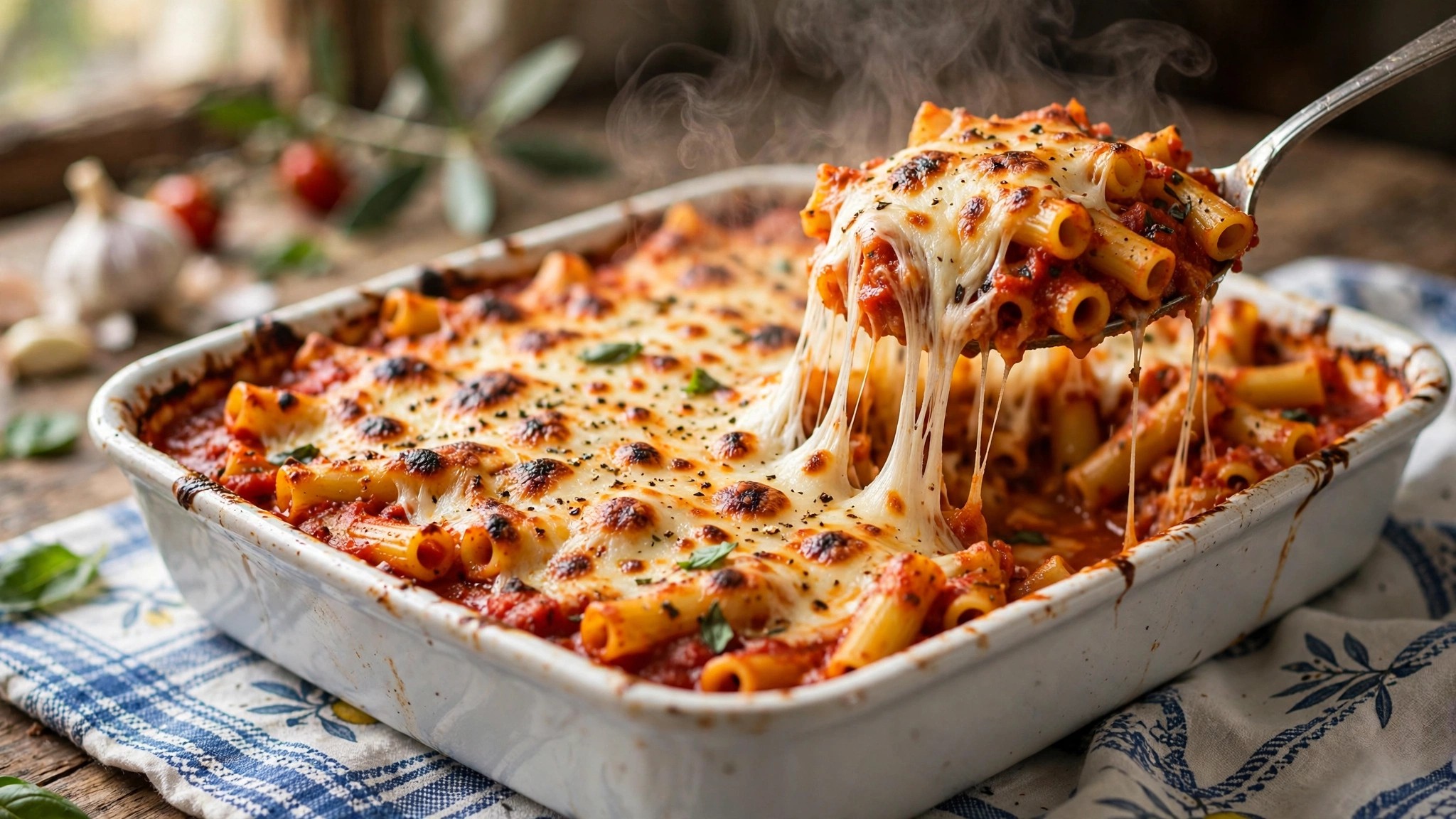
You're standing in the kitchen with a pound of ziti, a jar of marinara, and one devastating realization: no ricotta. Every recipe on the internet assumes you have it, the store run sounds terrible, and your guests arrive in an hour. Good news: the ricotta was never the point. Baked ziti is a baked pasta casserole — what it actually needs is a creamy layer between the noodles, and three common ingredients do that job as well or better.
Here's the honest ranking. Cottage cheese — blended smooth — is the closest thing to a drop-in ricotta replacement in both texture and flavor, and it's usually the one already in your fridge. Béchamel (a simple white sauce) gives you the creamiest, most luxurious result, the way fancy Italian-American restaurants do it. Mascarpone is the rich wildcard: silkier than ricotta, slightly sweet, and the one that makes people ask what your secret is. Pick your fighter below — then the full recipe walks you through the assembly that makes any of them work.
Swap #1: Blended Cottage Cheese (The 1:1 Replacement)
This is the swap to reach for 90% of the time. Cottage cheese has a similar milk-sweet flavor to ricotta — the difference is the curds, which turn grainy in the oven. The fix is 45 seconds in a blender. Once smooth, it behaves like ricotta in every way that matters: it stays creamy, it holds its layer, and nobody at the table will identify it.
The exact ratio: 16 oz (2 cups) whole-milk cottage cheese, blended, replaces 16 oz of ricotta 1:1. Whisk in 1 large egg (this is the insurance policy — it helps the layer set instead of sliding), plus ½ cup Parmesan and your seasonings. Use whole-milk cottage cheese; the low-fat kind releases more water and the layer weeps.
Swap #2: Béchamel (The Creamiest Option)
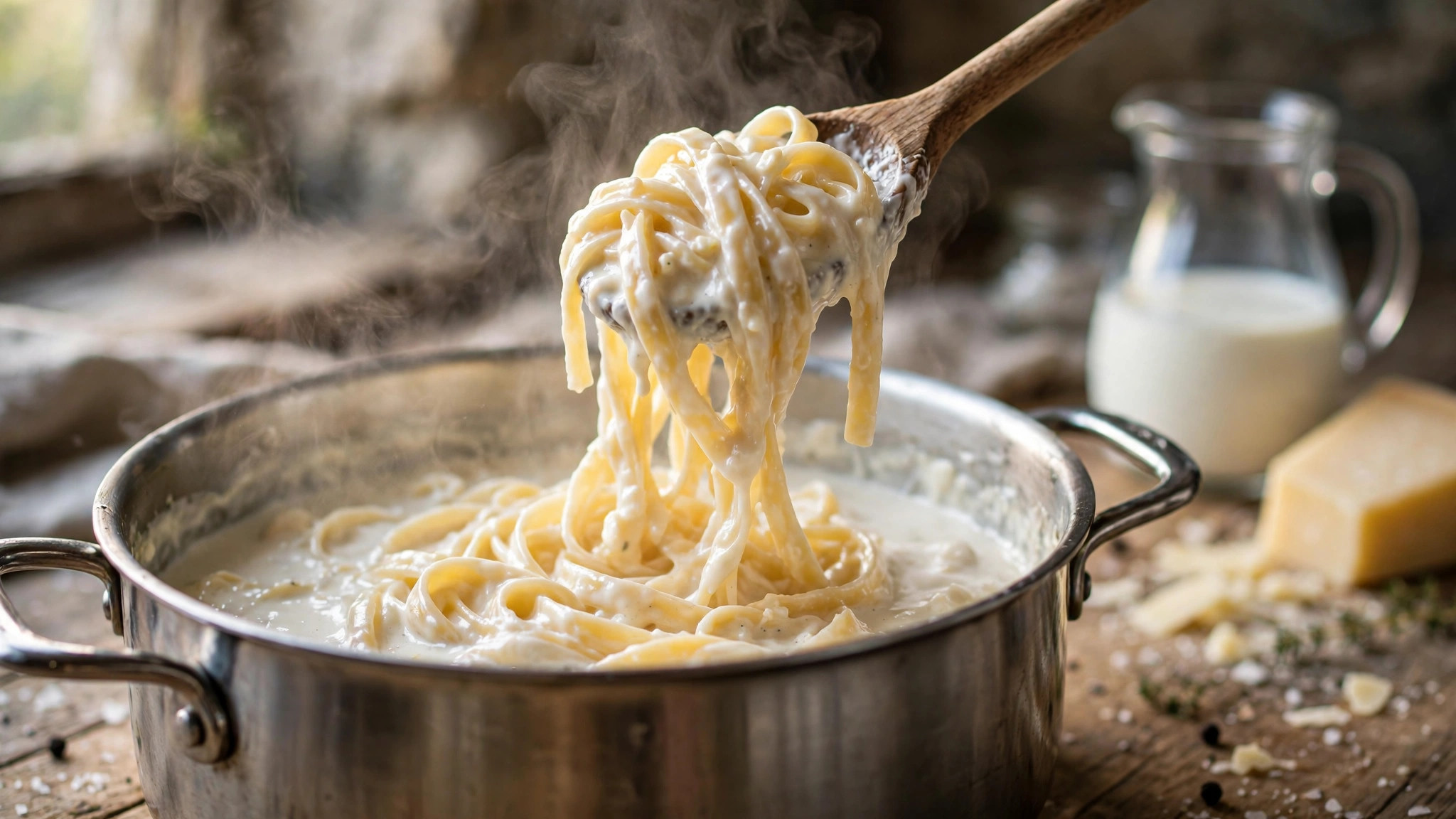
Béchamel is just milk thickened with a butter-flour roux — the mother sauce behind mac and cheese, lasagna, and half of France. It takes 5 minutes and it makes the richest, most cohesive baked ziti of the three, because the sauce is already silk when it goes in the oven. This is the swap for when you want the casserole to taste expensive.
The exact ratio: 3 tbsp butter + 3 tbsp flour, whisked over medium heat for 2 minutes until it smells nutty, then 2 cups warm milk whisked in a splash at a time. Simmer 2–3 minutes until it coats a spoon, then season with 1 tsp salt, ¼ tsp nutmeg, and ½ cup Parmesan. Use it in place of the ricotta mixture at a 1:1 volume (about 2½ cups). One caution: béchamel keeps thickening as it cools, so pour it over the pasta while it's still warm and pourable. (If cooking pasta in milk sounds wild to you, it isn't — our milk-instead-of-water pasta guide proves starch and milk are old friends.)
Swap #3: Mascarpone (The Rich Wildcard)
Mascarpone is ricotta's fancier cousin: cream-based, silk-smooth, and slightly sweet. It doesn't need blending, it doesn't need an egg, and it melts into the sauce like it was designed for the job. The trade-off is cost — it's the priciest of the three — and richness, which means a little goes a long way.
The exact ratio: 8 oz mascarpone replaces 16 oz of ricotta (it's denser and richer, so half the volume). Whisk it with ½ cup Parmesan, the same seasonings, and 2 tbsp of the marinara to loosen it. No egg needed — mascarpone sets on its own. If you want more creaminess lessons, our guide to creamy pasta sauce without cream runs through seven tricks that work on baked dishes too.
The Full Recipe: Easy Baked Ziti (Cottage Cheese Method)
The swaps above are plug-and-play, but here's the complete build so there's no guesswork. Feeds 8, or 4 with serious leftovers.
- 1 lb ziti (or penne) — boiled 2 minutes SHY of the package directions; it finishes in the oven
- 24 oz marinara (about 3 cups) — one big jar, nothing fancy required
- 16 oz whole-milk cottage cheese, blended until completely smooth
- 1 large egg — whisked into the cottage cheese so the creamy layer sets
- 1 cup grated Parmesan, divided
- 2 cups shredded whole-milk mozzarella, divided
- 1 tsp Italian seasoning, ½ tsp garlic powder, 1 tsp kosher salt, ½ tsp black pepper, ¼ tsp red pepper flakes (optional)
- 2 tbsp olive oil for the dish; fresh basil or parsley for finishing
- Heat the oven to 375°F (190°C) and oil a 9x13-inch baking dish.
- Undercook the pasta. Boil the ziti in well-salted water for 2 minutes less than the package says, drain, and return to the pot. Pasta that goes into a casserole fully cooked comes out as mush. This is the #1 baked-ziti mistake, ricotta or not.
- Build the creamy layer. Whisk the blended cottage cheese with the egg, half the Parmesan, and all the seasonings.
- Toss, don't just layer. Add 2 cups of marinara to the drained ziti and toss to coat — every tube gets sauced. Then add half the cottage cheese mixture and toss again. Tossing beats layering because it distributes the creaminess evenly instead of leaving dry pockets.
- Assemble: half the ziti in the dish → dollop the rest of the cottage cheese mixture over it and spread gently → the remaining ziti → the remaining 1 cup marinara → mozzarella → remaining Parmesan.
- Bake covered, then uncovered. Foil on, 20 minutes; foil off, 12–15 minutes more, until the cheese is golden and bubbling at the edges.
- Rest 10 minutes. The layers set up and it cuts cleanly. Serve it straight from the dish and it slumps. Patience is an ingredient.
If weeknight speed matters more than a casserole, the 15-minute creamy garlic pasta delivers the same comfort hit in a third of the time — no oven, no assembly, one pan.
"Ricotta was never the point. Baked ziti needs a creamy layer — and the fridge usually has a better one already."
Make-Ahead & Freezer Notes
Make-ahead (up to 24 hours): assemble completely, cover tightly, and refrigerate. Bake straight from the fridge, but add 10–15 minutes to the covered phase — cold casserole needs the extra time. The cottage cheese layer actually holds up beautifully to an overnight rest.
Freezer (up to 3 months): assemble in a foil or freezer-safe dish, wrap in plastic then foil, and freeze unbaked. Thaw overnight in the fridge, then bake as directed with 10 extra minutes covered. Or bake from frozen: cover with foil and bake 50 minutes at 375°F, then uncover for 15. The cheese may brown a little faster on the thawed-baked version, so watch the last 5 minutes.
Leftovers keep 3–4 days refrigerated. Reheat covered at 350°F (175°C) for 15–20 minutes — the microwave works for single portions but the edges never crisp.
Quick Questions
Can I skip the egg? With the cottage cheese swap, no — the egg is what keeps the creamy layer from turning into a puddle. With mascarpone or béchamel, yes, they're unnecessary.
My cottage cheese layer turned watery. Why? Two suspects: it wasn't blended smooth enough (curds release water in the oven), or it was low-fat cottage cheese. Blend 45 full seconds and use whole-milk.
Can I use penne or rigatoni? Absolutely. Any short tube works. Avoid long shapes — they don't layer, they tangle.
Does it taste like cottage cheese? No. Once blended, baked, and seasoned, it reads as a mild creamy cheese layer — closer to ricotta than to anything you'd put on toast.
The comfort-food run doesn't stop here: bookmark this one for the weekend, grab the 15-minute garlic pasta for Tuesday, and the next time your sauce needs silk without a cream carton, these seven tricks have you covered.