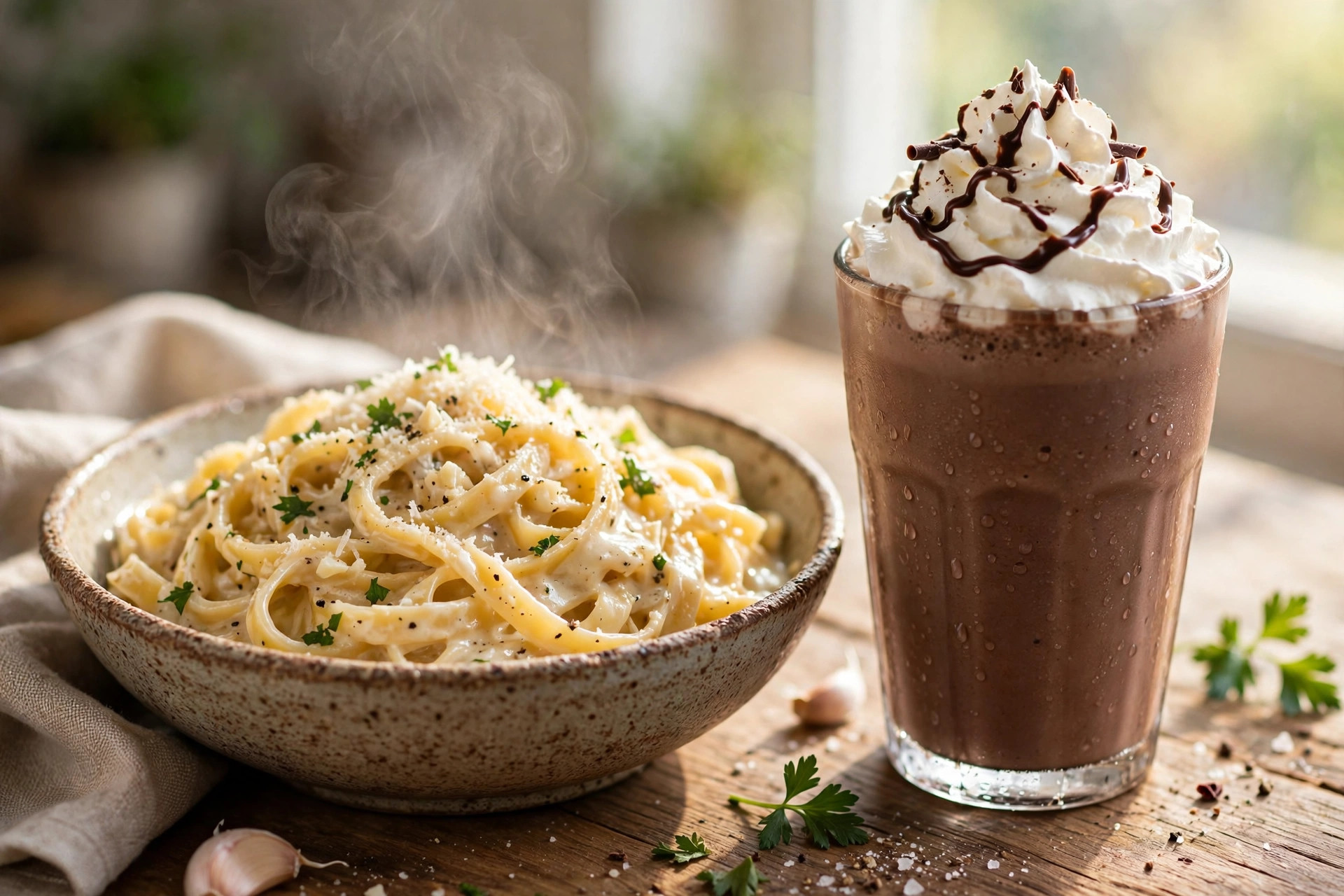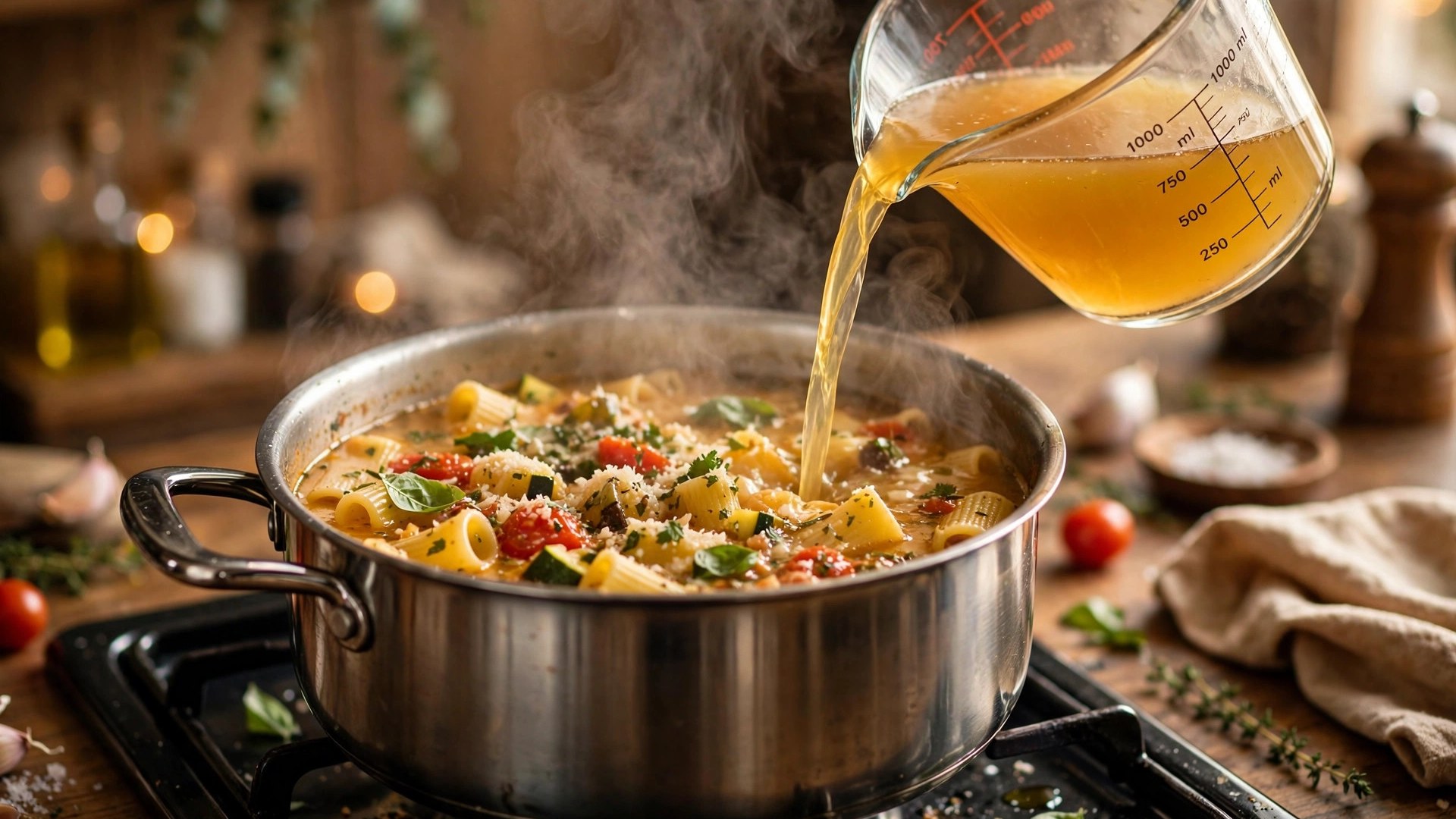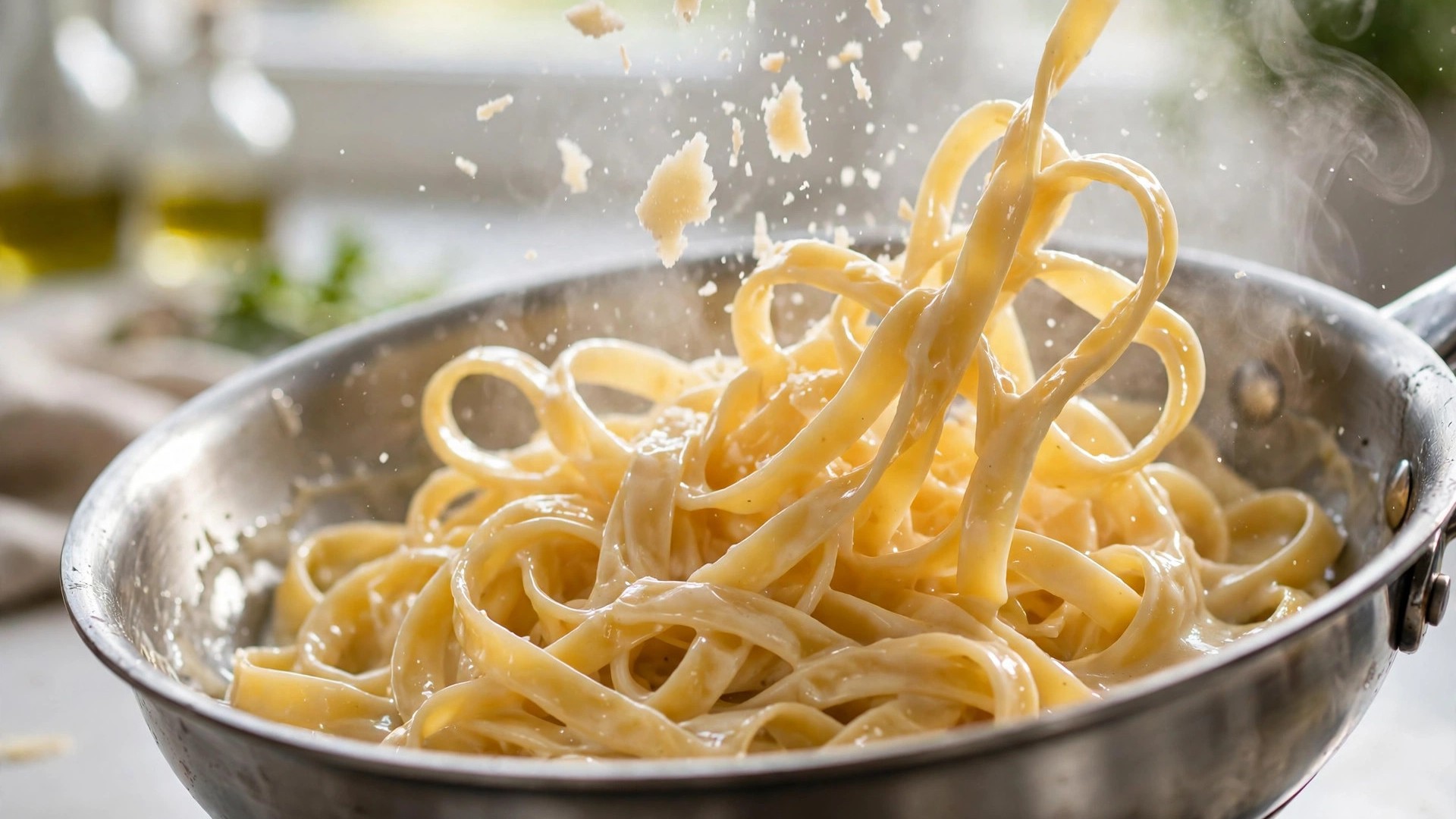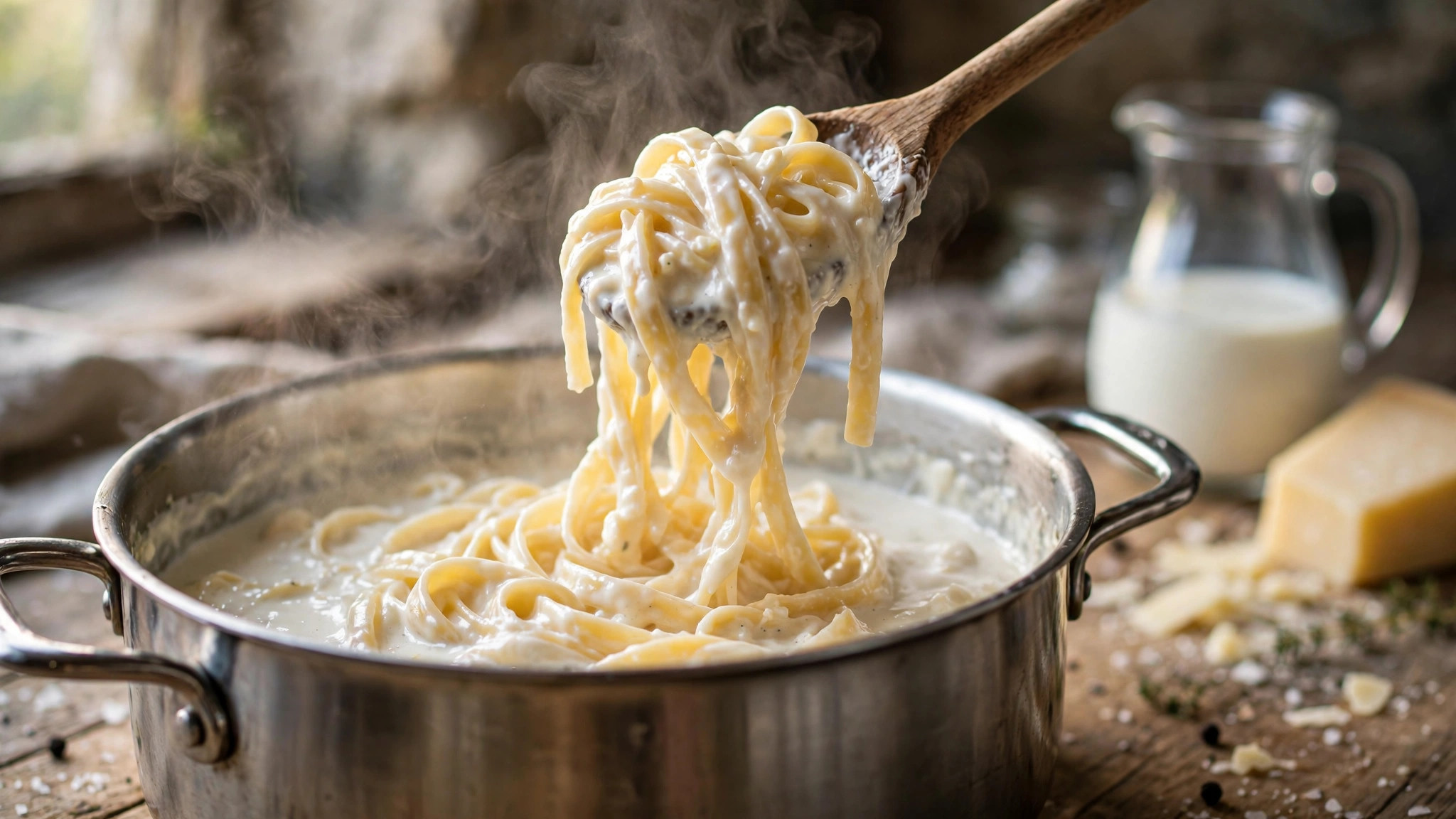
Sounds like a prank your roommate would play, right? Dump dry pasta straight into milk instead of water. But yes — pasta cooks perfectly well in milk, and it comes out better in one specific way: the milk never gets drained, so the starch the pasta releases thickens it into a silky sauce right in the pot. One pan, zero straining, dinner in about 15 minutes. The only real enemy is scorching — milk solids stick and burn on hot pan bottoms much faster than water does. Cook it low, stir it like you mean it, and you'll never boil a separate sauce pan again.
It is not new, either. Milk-cooked pasta is basically the backbone of classic mac and cheese — the same idea, minus the blue box. Once you see how it works, you'll start spotting the trick in creamy one-pot dinners everywhere.
Why It Works (The 30-Second Science)
Pasta is mostly starch. When it boils in water, some of that starch washes into the water — and you pour the whole thing down the drain. That is why restaurant cooks save their pasta water: it is starch-flavored gold that thickens sauces. Our 15-minute creamy garlic pasta is built on exactly that trick.
Cooking the pasta directly in milk skips the middleman. The starch releases into the milk, the milk thickens around it, and you get a creamy coating without pouring in a carton of heavy cream. The fat in whole milk helps too — more fat means a richer, more stable sauce. Skim milk works, but the sauce stays thinner, so whole or 2% is the sweet spot.
The No-Burn Method (Step by Step)
Everything below assumes a heavy-bottomed pot — thin pots are where scorching nightmares begin. For 8 oz of dry pasta:
- Pick your pasta and your milk. 8 oz pasta + about 3 cups whole or 2% milk + ½ tsp salt. The milk should just barely cover the pasta. Small shapes (penne, rotini, elbows) are easiest; long noodles work too — break fettuccine in half so it fits flat.
- Cold start, medium heat. Put the pasta, milk, and salt in the pot cold and bring it up together over medium heat, stirring as it warms. Starting cold keeps the pasta from sticking in a clump at the bottom before the milk is moving.
- Lower it the second it simmers. The moment you see small bubbles around the edges, drop to medium-low. This is the whole game: a gentle simmer, never a rolling boil. Milk boils over with zero warning, and boiling hard cooks the milk proteins into browned bits on the pot floor. Gentle bubbles, that is all.
- Stir every 2 minutes, scrape the bottom. Set a timer if you are a wanderer. Milk starch settles, and settled starch becomes scorched starch. A wooden spoon or spatula reaching the very bottom is non-negotiable.
- Cook 10–14 minutes until just tender. Taste it — pasta is done when it is done. The milk will look thin while it is hot and thicken as it stands. That is normal. Do not "fix" it by boiling it down.
- Cheese off the heat. Pull the pot off the burner, stir in a handful of grated Parmesan or shredded cheddar, and let the residual heat melt it in. Cheese added over active heat goes grainy — same rule as every cream sauce on the planet. More ways to build silk without cream live in our guide to making pasta sauce creamy without cream.
- Rest 2 minutes, serve. The sauce tightens as it stands. If it gets too thick, splash in a little warm milk to loosen it.
Timing nerds: the liquid math is nearly identical to regular one-pot pasta — our 8-oz one-pot liquid guide explains why 2–3 cups of liquid is the magic range for 8 ounces of dry pasta, no matter what the liquid is.
The 4 Things That Go Wrong (And How to Dodge Them)
1. Scorched milk on the pot bottom. The classic failure. Brown flecks, burnt smell, game over. Prevention is the method above: heavy pot, gentle simmer, scrape the bottom every couple of minutes. If it happens, do not stir the scorched bits up into the sauce — pour the un-scorched pasta into a clean pot instead.
2. Boil-over. Milk foams and climbs the pot like it is personally offended. Never fill the pot more than two-thirds, never walk away during the first 5 minutes, and the second it foams up, lift the pot off the heat for ten seconds. A wooden spoon across the top does nothing here, despite what the internet says.
3. Curdled sauce from acid. Milk + acid = curds. That means no tomatoes, no lemon juice, no wine in the pot while the milk is hot. If you want a tomato-cream vibe, cook the pasta in milk first, then stir the tomato part in off the heat — or use the cream trick from our no-cream guide, which sidesteps the chemistry entirely.
4. Mushy pasta. Milk hides doneness — the pasta looks paler and softer than water-boiled pasta at the same stage. Start tasting at 10 minutes and pull it the moment it is tender with a tiny bit of bite. It keeps cooking in the hot milk off the heat, so aim one minute early.
Best (and Worst) Pastas for Milk-Cooking
The all-stars: elbows, penne, rotini, shells, orecchiette. Short shapes cook evenly in shallow milk, their nooks trap the thickened sauce, and they are the reason mac and cheese exists in this universe.
Fine with care: fettuccine, linguine, spaghetti. Break them to fit, stir more often, and accept that the ends sticking up will cook a minute later than the middle. Still delicious.
Skip: very thin pasta like angel hair (disintegrates into mush before the milk thickens) and stuffed pasta like tortellini (the filling overcooks while the milk is still getting its act together).
Milk vs. Water: When Each One Wins
Milk is not a water replacement — it is a different tool. Reach for milk when:
- You want a creamy one-pot dinner with no separate sauce and no draining.
- You are making mac and cheese, alfredo-style pasta, or tuna-noodle vibes — anything where milk was going in anyway.
- You want one pot to wash and you own a heavy-bottomed saucepan.
Stick with water when:
- The pasta gets tossed with a separate sauce — the milk flavor fights marinara, pesto, and anything acidic.
- You need pasta water for the sauce (see the creamy garlic pasta trick above) — milk-cooked pasta gives you no starchy water to steal.
- You are cooking a huge batch. Milk-cooking scales badly; big pots scorch faster and stir worse.
Leftovers: The Honest Verdict
Milk-cooked pasta keeps 3–4 days in the fridge in an airtight container — but reheat it gently, because dairy sauces tighten and can break under high heat. Warm it in a skillet over low heat with a splash of fresh milk, stirring until it loosens back into creaminess. The microwave works at 50% power in short bursts with a stir between each. And since this is a dairy dish sitting around for days, reheat leftovers until they are steaming hot throughout — the USDA Food Safety and Inspection Service (fsis.usda.gov) advises reheating leftovers to 165°F (74°C) internal.
Do not freeze it. Milk-based sauces separate in the freezer and stir back into something sad, never something silky. This is a make-it-fresh dish — which is fine, because it takes 15 minutes.
"Water cooks pasta. Milk cooks pasta and makes the sauce. The price of that two-for-one deal is a wooden spoon that never leaves your hand for 14 minutes."