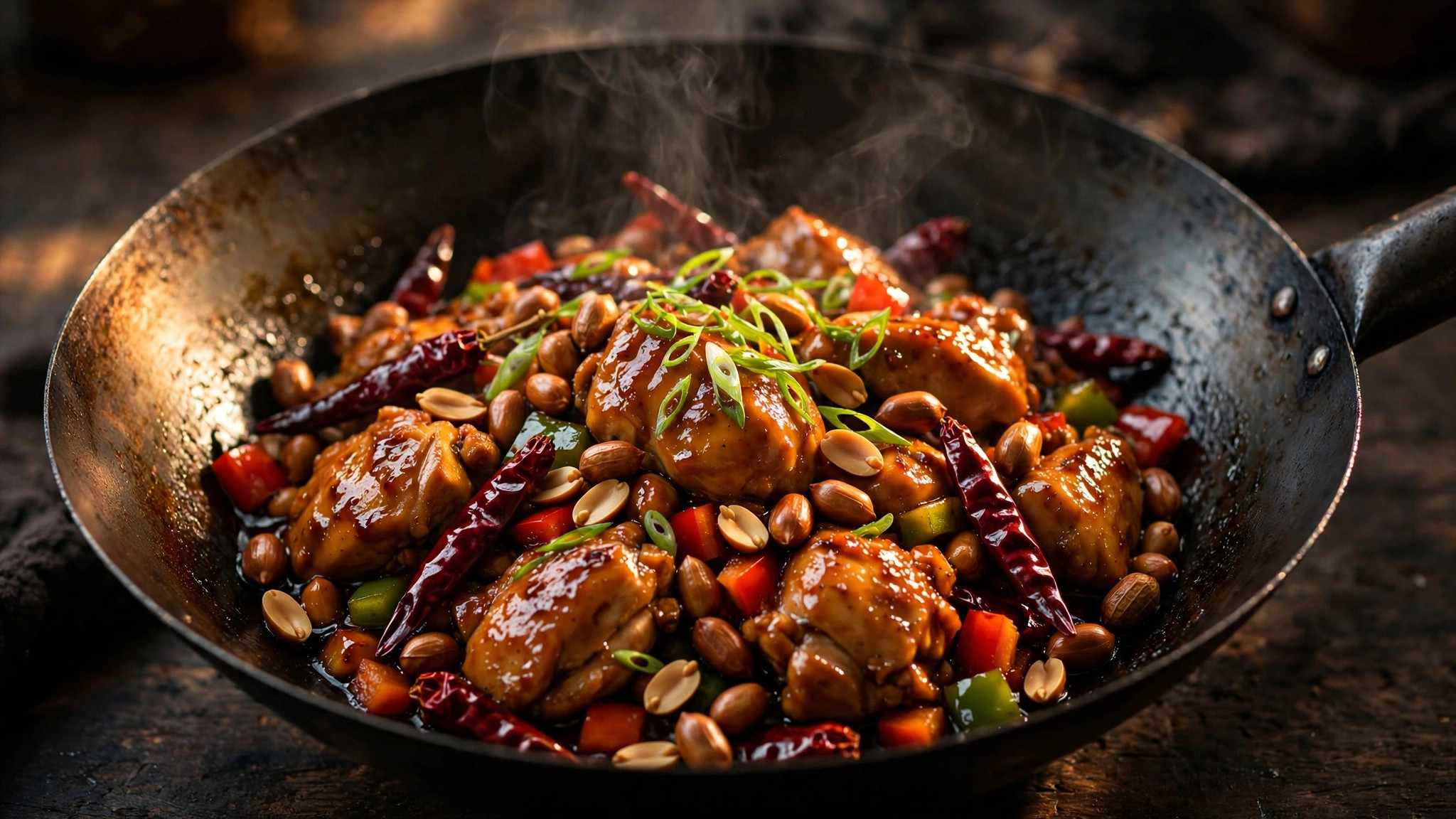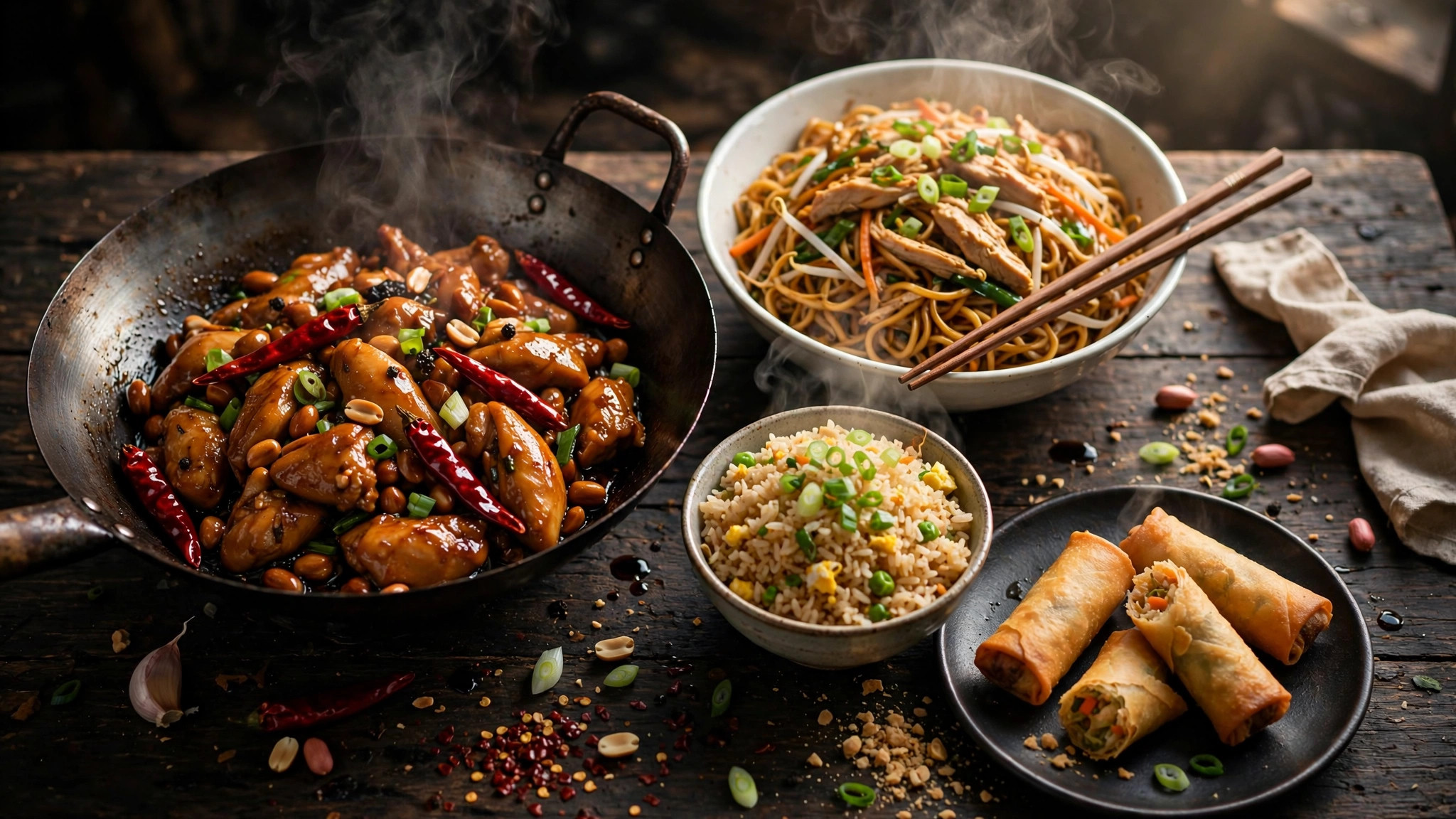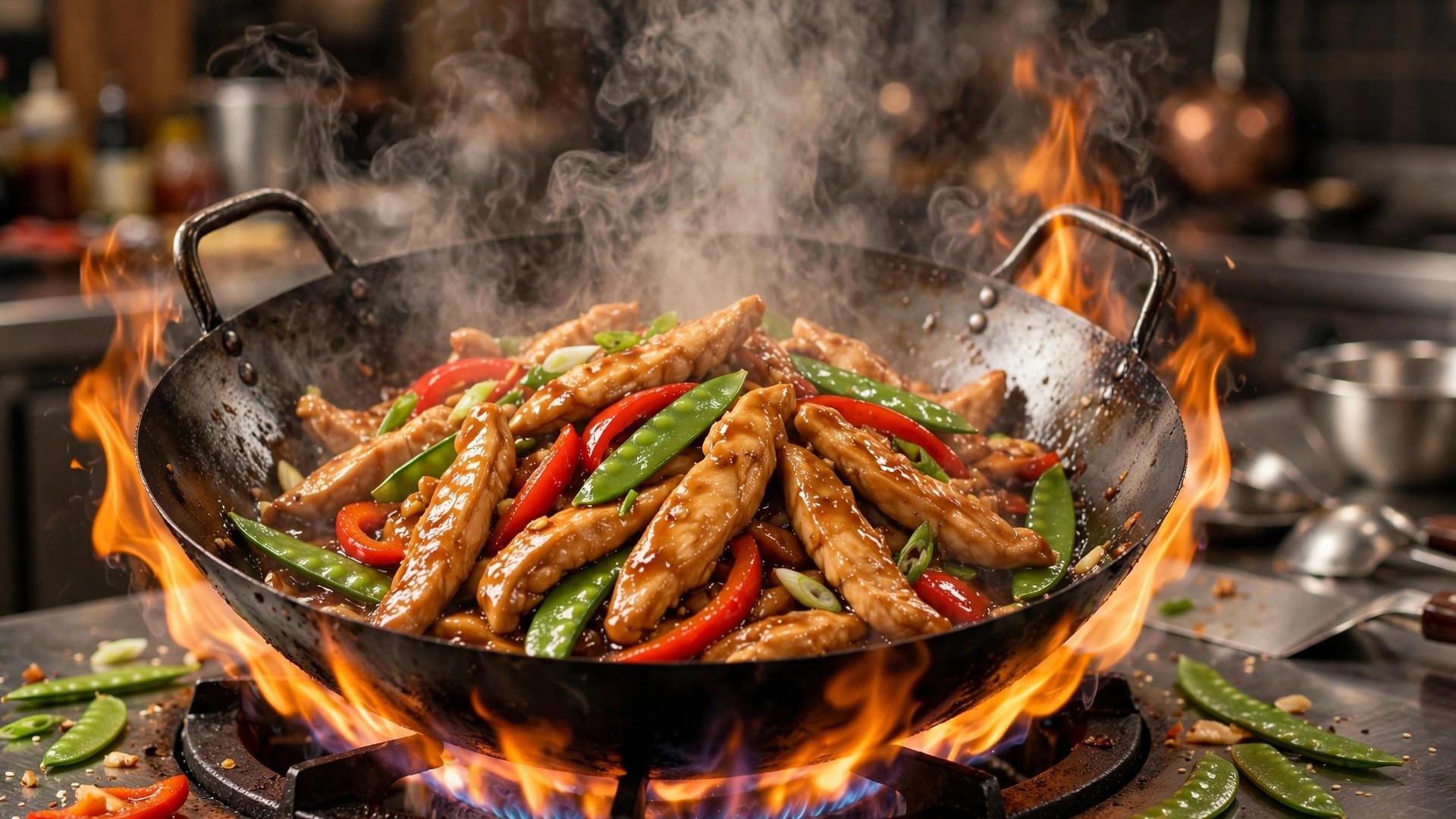
Toss 1 pound of chicken breast sliced 1/4-inch thick with 1 teaspoon baking soda and 2 tablespoons water, rest exactly 15 minutes, rinse very well under cold water, pat completely dry, then stir-fry in a screaming-hot pan. That's velveting — the reason restaurant chicken is silky and juicy while home stir-fries turn chewy. Below: both restaurant methods with exact quantities, the stir-fry itself, and a full 15-minute demo recipe.
Here's what nobody tells you: the cooking is the easy part — a stir-fry is over in six minutes. The difference between great and sad happens before the chicken hits the pan. Home cooks throw raw slices straight into the heat and get flip-flop chicken. Restaurants prep first. You're about to do the same.
What "Velveting" Actually Means
Velveting is a classic Chinese technique that protects delicate proteins — chicken, pork, shrimp — from a wok's brutal heat. Done right, the meat feels like velvet: soft, silky, slippery in the best way.
Two ways to do it. The baking-soda method is a mild alkaline soak that stops the meat from squeezing out all its juice the second heat hits. The egg-white-and-cornstarch method wraps each slice in a thin protective slurry — a raincoat that keeps the chicken tender while it sears. Both take minutes, and both use ingredients you already own.
Why Restaurant Chicken Is Silky and Yours Is Rubbery
Here's your current routine: slice a chicken breast, drop the pieces into a hot pan. Thin meat plus high heat is a brutal combination — the proteins seize up instantly and wring themselves out like a sponge. All the juice leaves. What's left is dense, chewy, and faintly disappointing.
Restaurants dodge this entirely: they velvet first, and many flash-pre-cook in hot oil or simmering water, so the chicken enters the wok half-done and protected. Then it needs just 2–3 minutes of real stir-fry instead of five minutes slowly turning to leather.
The second killer is heat: restaurant burners are ferocious, yours is a gentle house cat. That gap matters less if the chicken is velveted — unprotected chicken in a crowded pan just steams in its own sad juices. Want the payoff this technique was born for? These Chinese takeout favorites you can make at home all get better with velveted chicken.
Method 1 — The Baking Soda Velvet (15 Minutes, Fastest)
The weeknight method: 15 minutes, one extra ingredient, juicy chicken. Follow the quantities exactly — "a little extra" baking soda is how chicken ends up tasting like soap.
You need, per 1 pound of chicken: 1 teaspoon baking soda, 2 tablespoons water, then after the rinse: 1 tablespoon cornstarch and 1 tablespoon neutral oil (vegetable, avocado, or peanut).
Step 1: Slice thin, against the grain. Cut 1 pound of chicken breast or thighs into 1/4-inch strips across the grain — look for the faint lines in the meat and cut through them. Thin and even is everything.
Step 2: Toss with baking soda and water. Add the slices to a bowl with 1 teaspoon baking soda and 2 tablespoons water; toss with your hands until every piece is coated.
Step 3: Rest for exactly 15 minutes. Set a timer — past 20 minutes, the texture turns mushy and chalky.
Step 4: Rinse like you mean it. The step people skip — and the whole deal. Rinse under cold running water for a full minute, rubbing the pieces, until the water runs clear and nothing feels slippery. Leftover baking soda tastes soapy and metallic, and no sauce hides it.
Step 5: Pat dry, then coat. Press the pieces between paper towels until no surface moisture remains — wet chicken steams instead of sears. Toss the dry pieces with 1 tablespoon cornstarch and 1 tablespoon oil: the cornstarch forms the silky coating, the oil keeps them from sticking. Done — cook now, or refrigerate up to a day. Nervous? Start with thighs: more fat, more forgiving.
Method 2 — The Egg White & Cornstarch Slurry (The Classic)
The old-school restaurant method: a coating slurry instead of an alkaline soak. Slightly more fiddly and it takes 30 minutes, but it gives chicken breast an almost custardy tenderness that's hard to beat.
You need, per 1 pound of chicken (sliced 1/4-inch against the grain): 1 egg white, 1 tablespoon cornstarch, 1 tablespoon Shaoxing wine (or dry sherry), 1/2 teaspoon salt.
Whisk the egg white, cornstarch, Shaoxing wine, and salt until smooth, then massage it into the chicken with your hands. Cover and refrigerate 30 minutes — longer and the egg white starts breaking down the surface.
The optional restaurant pre-cook: simmer the coated chicken in barely bubbling water 45–60 seconds until just opaque, then drain. Now it's about 60% cooked and protected, ready to finish in the wok in under 2 minutes.
Which method should you pick? Method 1 for speed — it's the one you'll use on a Tuesday. Method 2 when you want the silkiest chicken breast you've ever made. Both crush un-velveted chicken, so start with Method 1.
The Stir-Fry Itself (Don't Wing This Part)
Velveted chicken is half the battle — heat management is the other half. Follow this order on a normal home stove.
1. Get the pan stupidly hot. Use your biggest skillet or wok over high heat until a drop of water evaporates on contact — the pan should be just about smoking.
2. Oil it. Swirl in 2 tablespoons of neutral oil. It should shimmer immediately.
3. Chicken in a single layer — then don't touch it. Lay the pieces flat in one uncrowded layer. Sear untouched 60–90 seconds, flip, cook 1–2 minutes more until the thickest piece reads 165°F. About 2–3 minutes total.
4. Chicken out, vegetables in. Move the chicken to a plate. Same hot pan, another drizzle of oil if needed: peppers and onions 2–3 minutes, then garlic and ginger for the last 30 seconds so they don't burn.
5. Sauce, then reunion. Pour in the sauce, bubble and thicken about a minute, then return the chicken for a final 30–60 second toss until glossy. Serve immediately over rice — this no-soy-sauce fried rice makes a killer base from pantry staples alone.
"Velveting isn't a fancy chef trick — it's insurance. Fifteen minutes of prep buys you chicken that stays tender no matter how hot your stove runs."
Put It to Work: 15-Minute Velvet Chicken & Peppers
The full demo recipe — velveting included, about 15 active minutes.
The chicken: 1 lb chicken breast, velveted with Method 1 above — start it first, since it needs its 15-minute rest while you prep.
The vegetables: 2 bell peppers cut into 1-inch squares, 1/2 yellow onion sliced, 3 garlic cloves thinly sliced, 1 tablespoon grated fresh ginger, 4 scallions cut into 2-inch pieces.
The sauce (stir together in a small cup before cooking): 2 tablespoons soy sauce, 1 tablespoon oyster sauce, 1 teaspoon sesame oil, 1 teaspoon sugar, 2 tablespoons water, 1 teaspoon cornstarch.
Cook it: Rinse, dry, and coat the velveted chicken per Method 1. Heat your biggest skillet over high until nearly smoking; add 2 tablespoons oil. Sear the chicken in a single layer 60–90 seconds per side until it hits 165°F — about 2–3 minutes total — then move it to a plate. Same pan, a teaspoon more oil: peppers and onion 3 minutes until the edges char, then garlic and ginger 30 seconds. Pour in the sauce, bubble 1 minute until thick and glossy. Chicken and scallions back in, toss 60 seconds, serve over hot rice. Done. Next step: the 25-minute homemade kung pao chicken — same technique, bigger flavor payoff.
5 Mistakes That Ruin Velveting
1. Skipping the rinse. Leftover baking soda tastes like soap with a metallic aftertaste, and no sauce covers it. Full minute, cold water, rub the pieces.
2. Marinating too long. Past 15 minutes (baking soda) or 30 (slurry), the texture turns mushy and chalky. Set a timer.
3. Slicing too thick. Over 1/4-inch and the outside finishes before the inside catches up. Sharp knife, thin slices, against the grain — or freeze the chicken 20 minutes first for easier slicing.
4. A lukewarm pan. If the oil doesn't shimmer instantly, the chicken steams instead of sears. Wait for the near-smoke point.
5. Crowding the pan. Too much chicken at once drops the temperature and everything stew-simmers. Single layer or nothing — sear in two batches if needed.
Quick FAQ
Can I velvet chicken thighs too? Absolutely — thighs are more forgiving than breast. Same quantities, same timing.
Do I really have to rinse off the baking soda? Yes — skipping it is the #1 way to ruin this technique. The chicken tastes soapy and metallic.
Can I velvet chicken the night before? No — past the 15-to-30-minute window the texture turns mushy. Velvet right before cooking.
What if I don't have Shaoxing wine? Use dry sherry, 1 tablespoon for 1 tablespoon. Or just use Method 1 — no wine needed.
Three questions. Zero wrong answers. One brutally accurate stir-fry personality.
1. Your wok situation?
2. Your sauce personality?
3. The chicken's job in the dish?
Up Next: Put That Velveted Chicken to Work
You've got the technique — now use it. The 25-minute homemade kung pao chicken is where velveting shines brightest, the Chinese takeout favorites roundup gives you a whole week of dishes to practice on, and the no-soy-sauce fried rice is the perfect base to serve everything over.