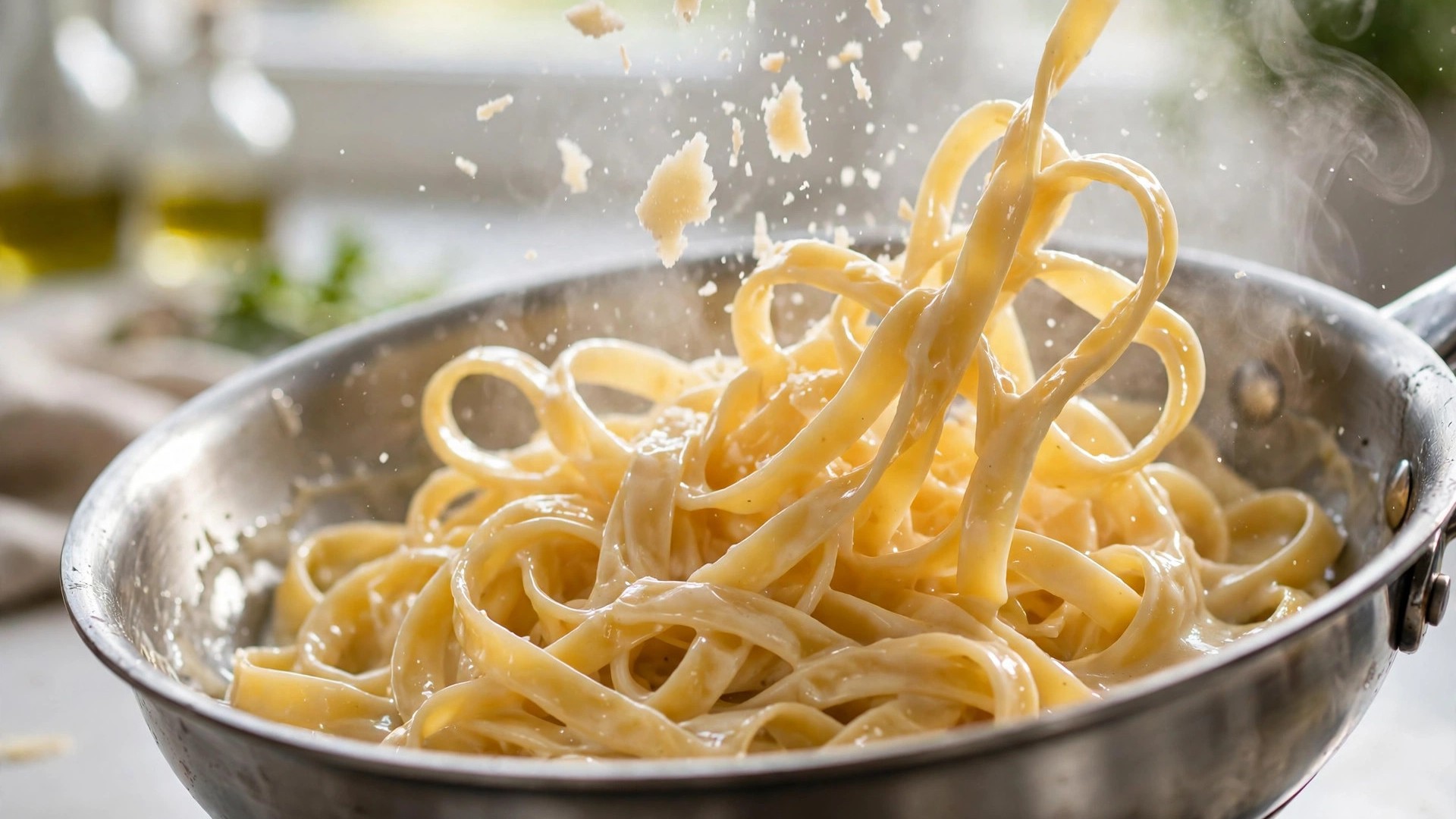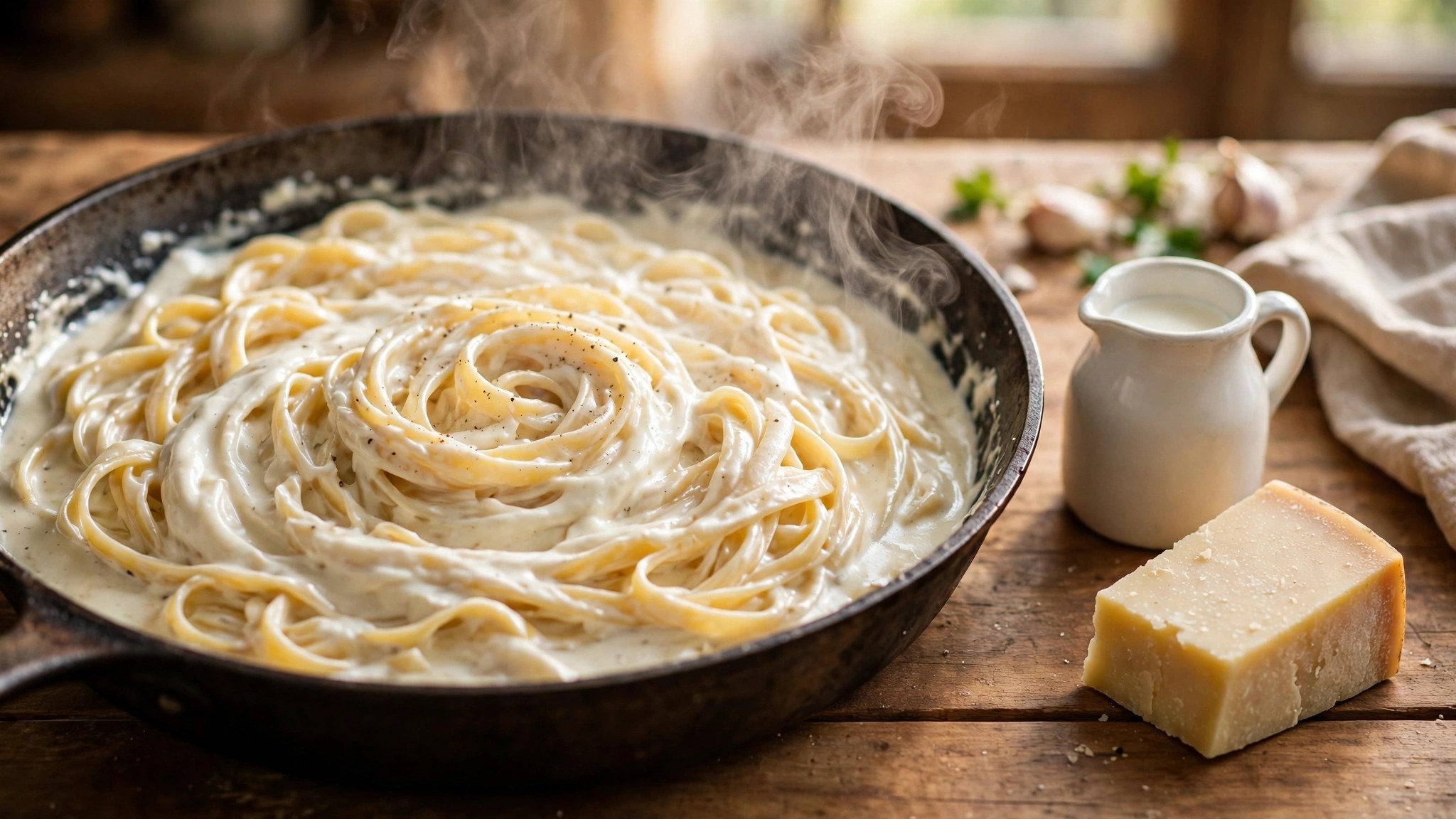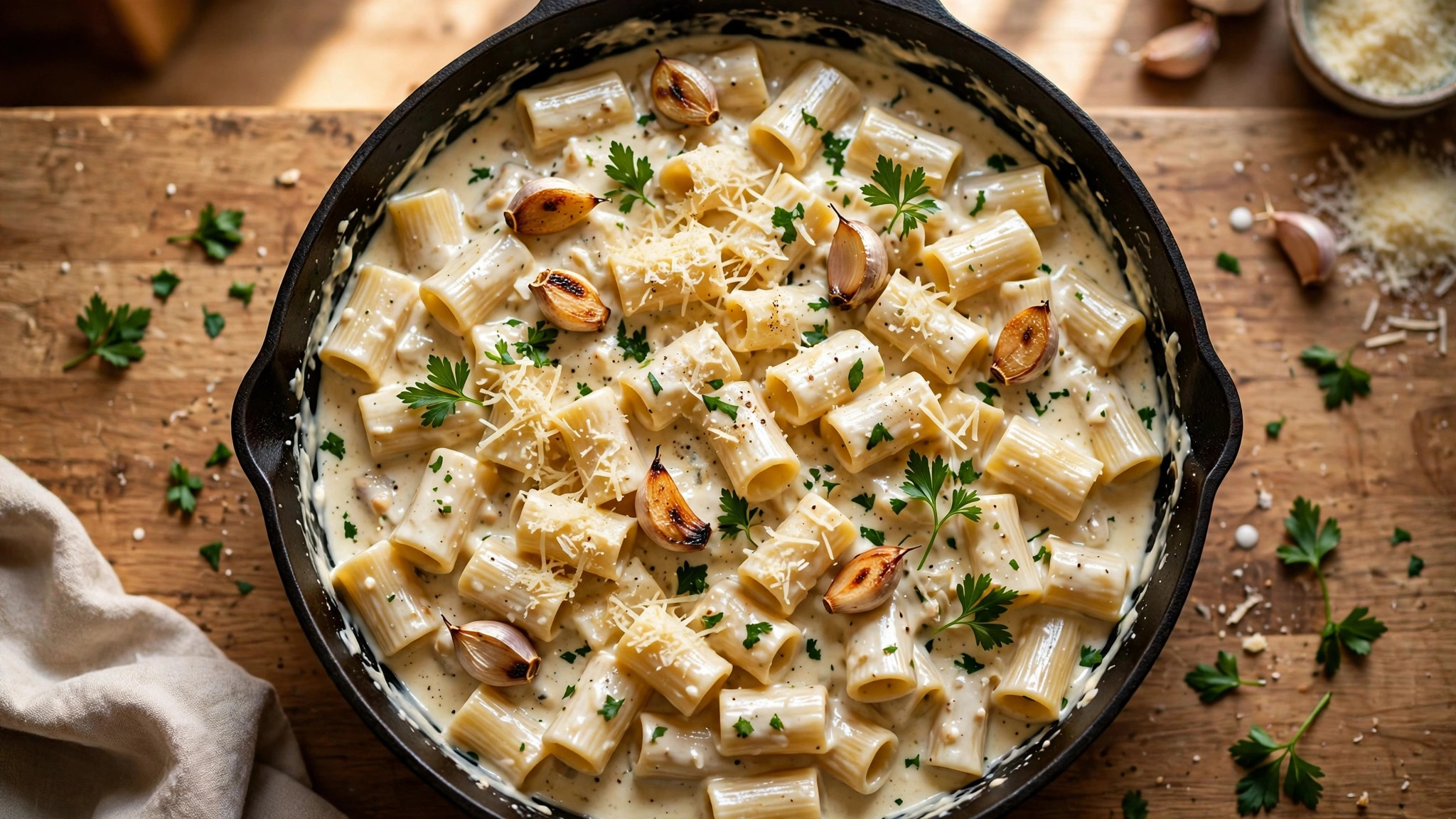
Yes — you can make a genuinely creamy one-pot pasta with no heavy cream at all, and it takes 25 minutes from a cold pan to the table. The trick is not a single swap: it is whole milk for body, a block of cream cheese for silk, and the pasta's own starch to thicken the sauce as it cooks. Nothing gets drained away, so nothing creamy leaves the pan.
This is the recipe for the night you want the comfort of a cream sauce without a special shopping trip. One pot, 340 grams of rigatoni, and a sauce that coats instead of pooling. If you have ever ended up with a thin, milky pasta that tasted like warm milk, the rules below are the difference — low heat, constant stirring in the last five minutes, and cheese added off the heat.
What You Need (Exact Quantities, 4 Servings)
- 340 g rigatoni (or penne — a short, ridged shape holds the sauce best)
- 2 tablespoons olive oil and 2 tablespoons butter
- 6 garlic cloves, thinly sliced (about 2 tablespoons)
- 480 ml whole milk — not skimmed, which thins out and splits more easily
- 480 ml vegetable or chicken stock
- 120 g full-fat cream cheese, cut into cubes
- 60 g finely grated Parmesan, plus extra to serve
- 1 teaspoon fine salt, ½ teaspoon black pepper, ¼ teaspoon nutmeg
- A small handful of flat-leaf parsley, chopped, to finish
That liquid total — 960 ml for 340 g of pasta — is deliberate. Rigatoni drinks a lot as it cooks, and the last 120 ml or so becomes the sauce. If you cut the liquid, the pasta sticks; if you add much more, you get soup. Trust the ratio, and keep a mug of hot water nearby only as insurance.
The Method, Step by Step
- Bloom the garlic. Warm the oil and butter in a large, deep pan over medium heat. Add the garlic and cook for 60 to 90 seconds until pale gold and fragrant. Do not let it brown — brown garlic turns bitter and no amount of cheese fixes it.
- Add pasta and liquids. Tip in the rigatoni, milk, stock, salt, pepper and nutmeg. Stir once, bring to a gentle simmer, then turn the heat down so it barely bubbles.
- Stir like it matters — because it does. Cook for 12 to 14 minutes, stirring every 2 minutes at first and almost constantly in the last 3 minutes. The starch coming off the pasta is your thickener, and it only works if it stays moving instead of settling and catching.
- Take it off the heat, then add the cheese. When the pasta is just past al dente and the sauce coats a spoon, remove the pan from the heat. Stir in the cream cheese until it melts, then the Parmesan a handful at a time. This order matters: cheese added over high heat goes grainy.
- Rest for 2 minutes, then serve. The sauce tightens as it cools slightly. If it looks too thick, loosen it with a splash of hot water, not more milk. Finish with parsley and extra Parmesan.
The whole thing is 25 minutes: 5 minutes of prep, 14 minutes of cooking, a few minutes of resting and serving. One pan to wash, and that pan is not even scorched if you kept the heat gentle.
Why It Stays Creamy (and When It Splits)
Three things keep this sauce together. First, whole milk has enough fat to feel rich without cream's heaviness. Second, cream cheese is an emulsifier in disguise — it binds milk, stock and starch into one smooth sauce. Third, the pasta water never leaves the pan, so the starch that would normally go down the drain stays in the sauce. Our guide to making pasta sauce creamy without cream explains the same tricks in a regular two-pot sauce, if you want the full technique behind the shortcut.
It splits for exactly three reasons: the heat was too high, the cheese went in while the pan was still boiling, or skimmed milk was used. All three are fixable mid-cook — take the pan off the heat, stir in a tablespoon of cream cheese, and stir until it comes back together. If it still looks grainy, a splash of hot water and vigorous stirring usually rescues it.
5 Variations That Keep the Same Base
- Mushroom and thyme: fry 250 g sliced mushrooms in the butter first, add 1 teaspoon of thyme with the garlic, and finish with extra Parmesan.
- Spinach and lemon: stir in 100 g baby spinach with the cream cheese, plus the zest of half a lemon. The lemon goes in last, off the heat.
- Spicy garlic: add ½ teaspoon of chilli flakes with the garlic. It wakes the whole sauce up without changing the method.
- Chicken, if you want protein: stir in 300 g of sliced cooked chicken with the cream cheese. Do not cook raw chicken in the milk — it clouds the sauce and the timing goes wrong.
- Broccoli, for a one-pot dinner: add 200 g of small broccoli florets for the last 5 minutes of cooking. They steam in the sauce and need no extra pan.
If you are choosing between swaps for another recipe, our ranked list of what to substitute for heavy cream in pasta covers seven options with exact ratios, and the alfredo version of this same idea — can you use milk instead of heavy cream in alfredo — uses a butter-and-flour roux instead of cream cheese. Different fix, same principle: fat plus starch, not cream.
3 Mistakes That Break One-Pot Pasta
Walking away. One-pot pasta is not a set-and-forget dinner. Two minutes of sticking at the bottom is enough to scorch the starch and flavour the whole pan. Stay close, especially after minute 8.
Using the wrong shape. Long pasta like spaghetti tangles and cooks unevenly in a shallow pan, and tiny shapes like orzo overcook before the sauce thickens. Short, sturdy shapes — rigatoni, penne, fusilli — are the right call here.
Serving it straight from the boil. Sauce straight off high heat looks thin and tastes loose. Two minutes of resting off the heat is when it becomes the glossy coating in the photo. For another lazy-but-real dinner when even this feels like effort, our zero-effort dinners list has the same no-fuss logic.
Quick Questions
Can I use skimmed milk? You can, but the sauce will be thinner and more likely to split. If skimmed is all you have, add an extra 30 g of cream cheese and keep the heat lower.
Does it reheat well? Yes, for one day in the fridge. Reheat gently with a splash of milk or water, stirring constantly. It will never be quite as glossy as fresh, but it will still be creamy.
Can I make it gluten-free? Gluten-free rigatoni works, but it releases starch differently — start checking at 10 minutes, and keep extra hot water ready, because gluten-free pasta can go from firm to mushy fast.
Is this lighter than a cream sauce? Honestly, somewhat — whole milk and cream cheese carry less fat than an equal volume of heavy cream — but this is still a cheese pasta, not a health food. The win is convenience and taste, not a diet claim.