You are standing in the kitchen at 7am, staring at the coffee maker, wondering if a green juice could do the same job. It is a fair question, and the honest answer is more useful than the hype: green juice can replace a lot of what coffee does for your morning, but it cannot replace the caffeine itself.
A typical 8-ounce cup of brewed coffee has about 95 milligrams of caffeine. A green juice made from spinach, cucumber, apple and lemon has essentially none. So if the thing you actually need at 7am is caffeine, juice will not give it to you, and no amount of spinach changes that. What juice can replace is everything else around the coffee: the ritual, the hydration, the bright start, and the crash-free energy that comes from water, natural sugars and a proper breakfast alongside it.
What Green Juice Replaces — and What It Does Not
Think of your morning coffee as three separate things bundled into one mug. First, the caffeine: a stimulant that blocks sleepiness for a few hours. Second, the ritual: a warm drink, a pause, a signal that the day has started. Third, the habit: the taste, the cafe stop, the thing your hands do while your brain wakes up.
Green juice replaces the second and third items completely, and the first one not at all. That is why so many people who "switch to juice" end up back on coffee by day three: they replaced the ritual but kept the caffeine withdrawal, then blamed the juice. If you want the switch to stick, you have to deal with the caffeine separately — taper it down over a week, or keep a small cup of green tea in the plan (green tea has roughly 30 milligrams of caffeine per cup, about a third of coffee) while the juice takes over the ritual.
What juice does give you, that coffee does not, is hydration and volume. A 12-ounce green juice is mostly water, and most people wake up mildly dehydrated. That glass of water in disguise is part of why juice mornings feel fresher, even before any vitamins enter the conversation. It is not magic; it is water, plus flavour, plus a routine that does not leave you jittery at 10am.
The 7-Day Switch That Actually Works
Do not quit coffee cold on a Monday and expect juice to carry you. Try this instead, one change a day:
Days 1–2: Juice first, coffee second. Drink your green juice when you wake up, then have your normal coffee 30 minutes later. You are building the new habit before you remove the old one.
Days 3–4: Halve the coffee. Same juice first, then half your usual coffee. If you normally drink two cups, drink one. Headaches here mean you cut too fast, not that juice "doesn't work" — go back to the full cup for a day and halve it again more slowly.
Days 5–6: Swap to green tea. Juice first, then one cup of green tea instead of coffee. You still get some caffeine, but far less, and the crash is gentler.
Day 7: Juice only — and judge it fairly. By now your body has tapered, and you can tell whether you actually miss coffee or just miss the ritual. If you still want caffeine, that is a perfectly good answer: plenty of people keep one small coffee and add a juice beside it, and that is a better morning than either one alone.
3 Green Juices That Taste Good (Exact Recipes)
Most green juice fails because it is all greens and no balance. Every recipe below makes one large glass (about 12 ounces), and each one follows the same rule: two vegetables, one fruit, one bright note.
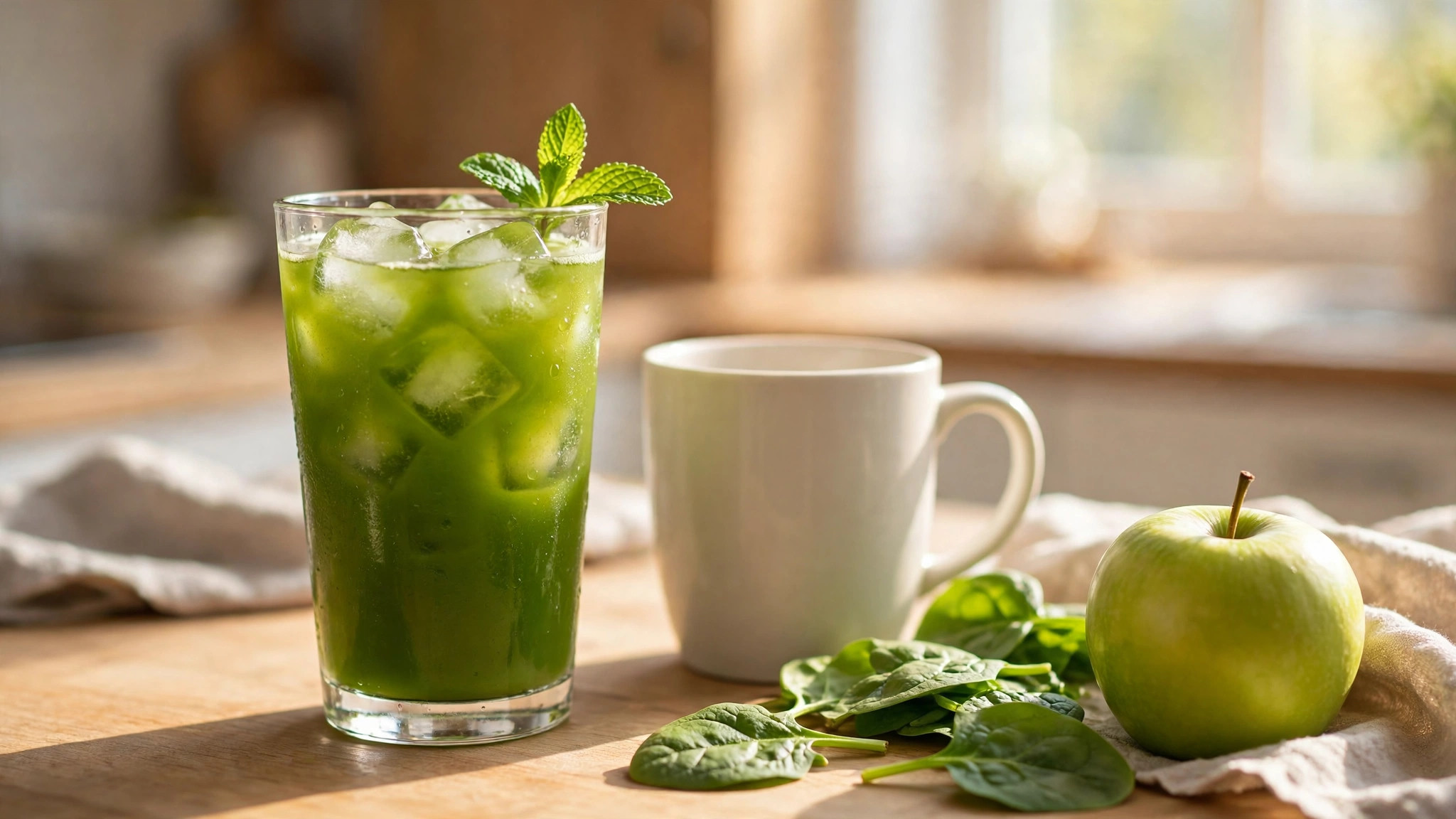
1. The Beginner: Spinach Apple. 2 big handfuls of spinach, 1 green apple (cored and quartered), half a cucumber, juice of half a lemon. Sweet enough to enjoy, green enough to count. This is the one to start with.
2. The Fresh One: Cucumber Mint. 1 whole cucumber, 1 big handful of mint leaves, 1 pear (cored), juice of 1 lime, a thumb of ginger if you like a little heat. Lighter and colder-tasting than the spinach version — the best one for hot mornings.
3. The Filling One: Kale Pineapple. 1 big handful of kale (stems removed), 1 cup of pineapple chunks, half a cucumber, juice of half a lemon. The pineapple makes it taste like a treat, and the kale keeps it properly green. Drink this one with breakfast, not instead of it.
Two practical notes. First, a juicer removes most of the fibre; a blender keeps it, but gives you a smoothie, not a juice — if staying full matters to you, blend instead of juicing and call it a green smoothie. Second, juice is best drunk within 15 minutes of making it. It does not "go bad" in an hour, but it oxidises, tastes flatter, and loses the fresh flavour that makes the habit stick.
What to Watch Out For
Sugar. A juice made from three fruits and no vegetables is dessert, not a health drink. Keep fruit to one piece per glass and let vegetables do the rest. If your juice tastes like fruit punch, it is fruit punch.
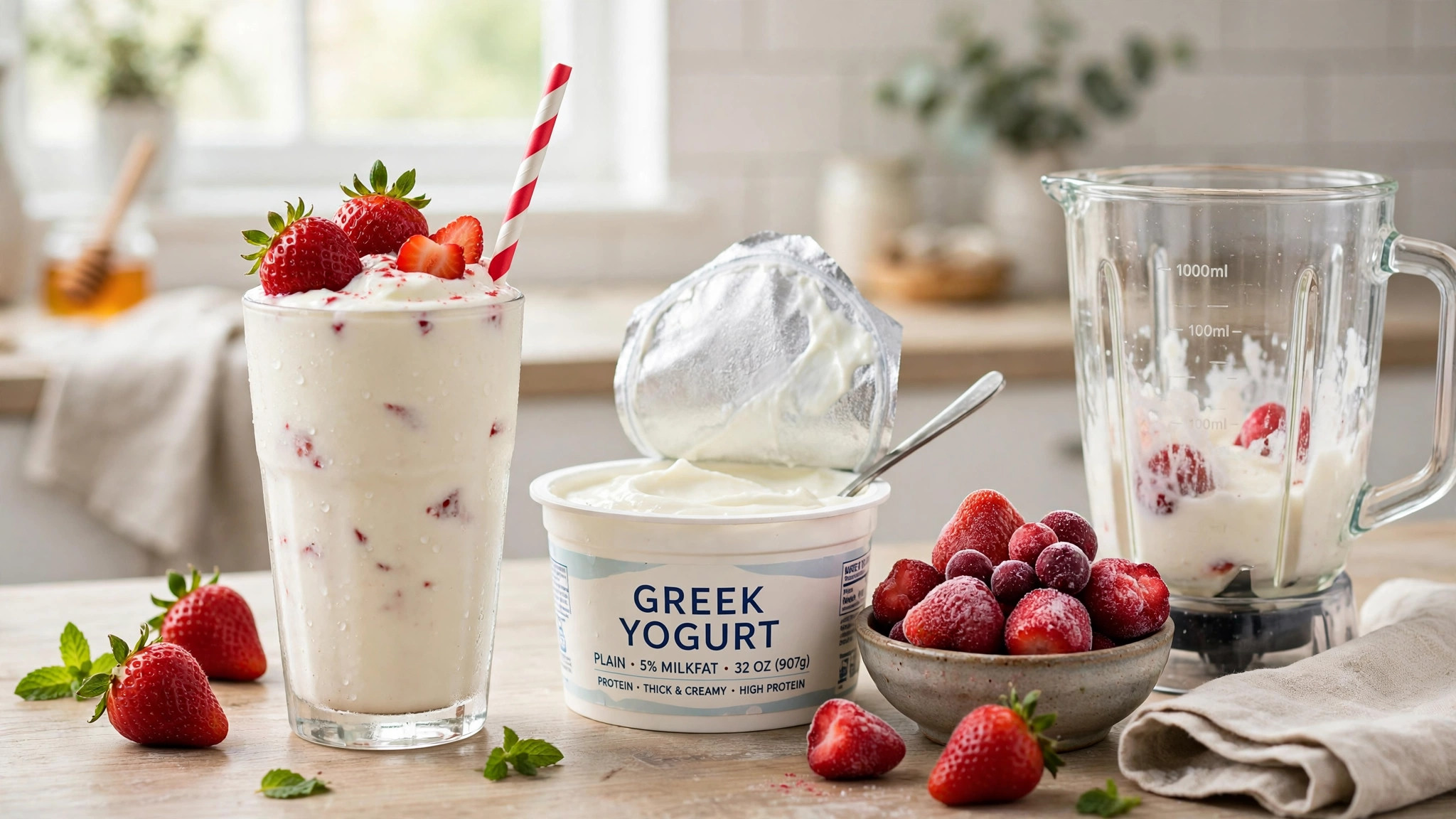
Skipping breakfast. Juice alone is not a meal. Pair it with something with protein — eggs, Greek yoghurt, peanut butter on toast — or you will be hungry by 9am and blaming the juice for a problem breakfast caused. Our Greek yoghurt shake guide is a good high-protein partner for a juice morning.
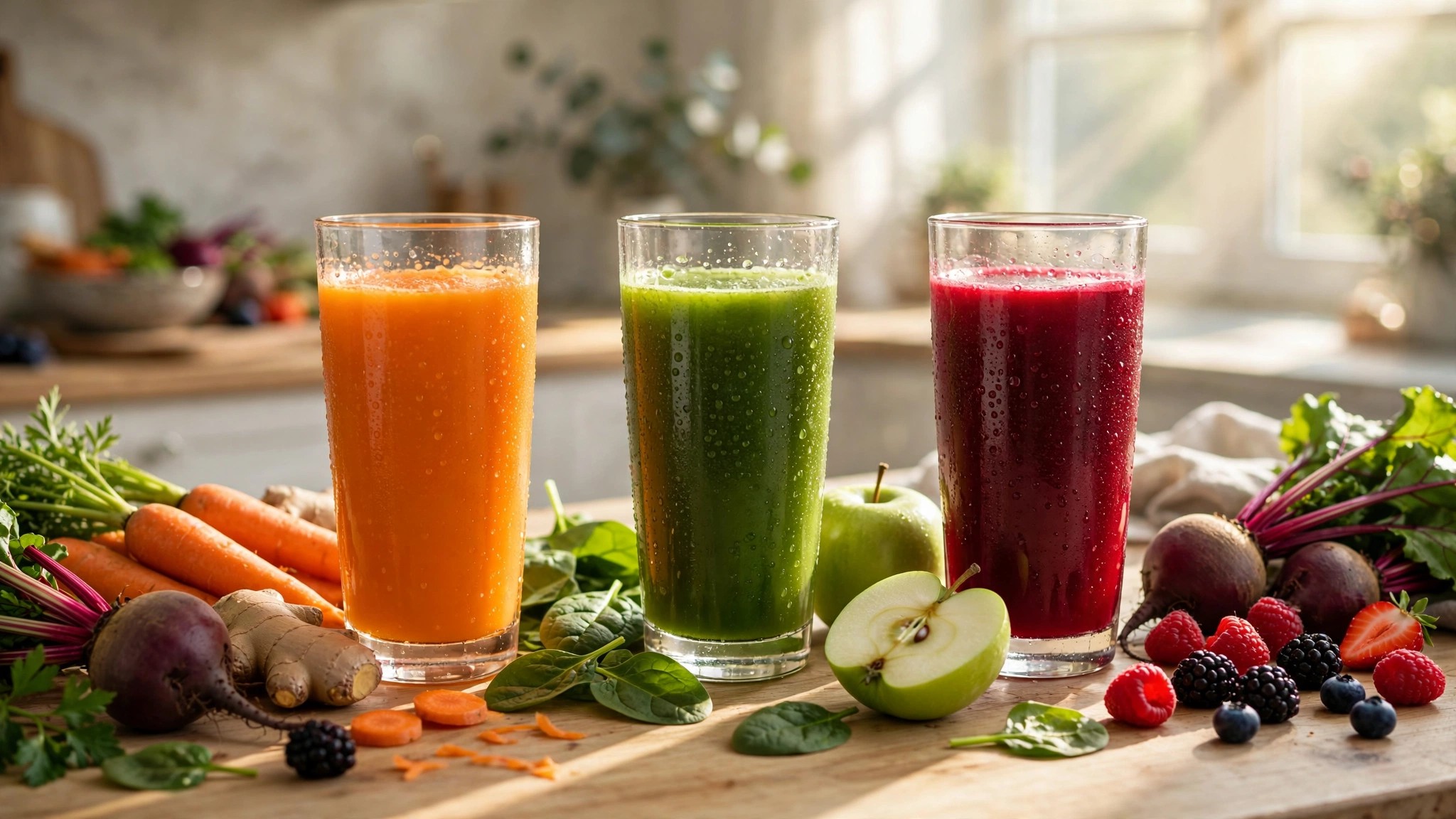
Cost and effort. A daily juice habit costs real money in produce and real minutes in washing up. That is the honest reason most people quit, not taste. Make juice three mornings a week, not seven, and it stays a treat instead of a chore. For more no-coffee morning ideas, see our 7 morning juices that might replace your coffee.
Your teeth. Fruit juice is acidic. Drink it with a straw, rinse your mouth with water afterwards, and wait 30 minutes before brushing — brushing straight after an acidic drink wears enamel faster.
The Honest Verdict
Can green juice replace morning coffee? As a caffeine replacement, no. As a morning replacement, yes — if you taper the caffeine instead of quitting it overnight, keep fruit to one piece per glass, and eat a real breakfast with it. The people who succeed at this switch are not the ones with the strongest willpower; they are the ones who replaced the ritual first and let the caffeine fade second.
And if you try it for a week and decide you still love coffee? Keep the coffee, add the juice beside it. A morning with both is still a better morning than a morning with only one. If you want a thicker, more filling morning drink instead, our guide to thickening a shake without ice cream covers five methods that work.
FAQ: Green Juice vs Coffee
Does green juice give you energy like coffee? Not the same kind. Coffee gives you caffeine stimulation; juice gives you hydration, natural sugars and a fresh start. The energy feels steadier and shorter — which is the point for some people and a deal-breaker for others.
How much caffeine is in green juice? Essentially none, unless you add matcha or green tea to it. A matcha-green juice blend is a genuine middle ground, with roughly 30–70 milligrams of caffeine depending on how much matcha you use.
Is it cheaper to juice at home than to buy coffee? Usually not, if you buy coffee beans at home too. Home juicing costs more in produce per glass than home coffee costs in beans. The saving is against cafe coffee, not home coffee.
Can I drink green juice every day? Yes, as part of a varied diet — just keep the fruit to one piece per glass, rinse after drinking, and do not let juice replace meals or vegetables you would otherwise chew.