Every chicken-and-rice recipe tells you to sear first. Sear the chicken, set it aside, sauté the aromatics, put the chicken back — it's a whole choreography, and on a Tuesday it's the part that makes you order tacos instead. So here's the question nobody asked until now: what happens if you just... skip the sear? Answer: dinner. Dinner happens, in 30 minutes, with one pan and about five decisions.
This is the lazy genius of the no-sear method. Instead of building flavor through a hard sear, you build it through seasoned fat and spice blooming — the chicken browns lightly in the same pan while the onions soften, and the rice soaks up every drop. You trade the deep crust of a proper sear for something else entirely: speed, one-pan simplicity, and a creamier, cozier pan of rice. Fair trade, every single weeknight.
The 30-Minute Promise (and Why Skipping the Sear Works)
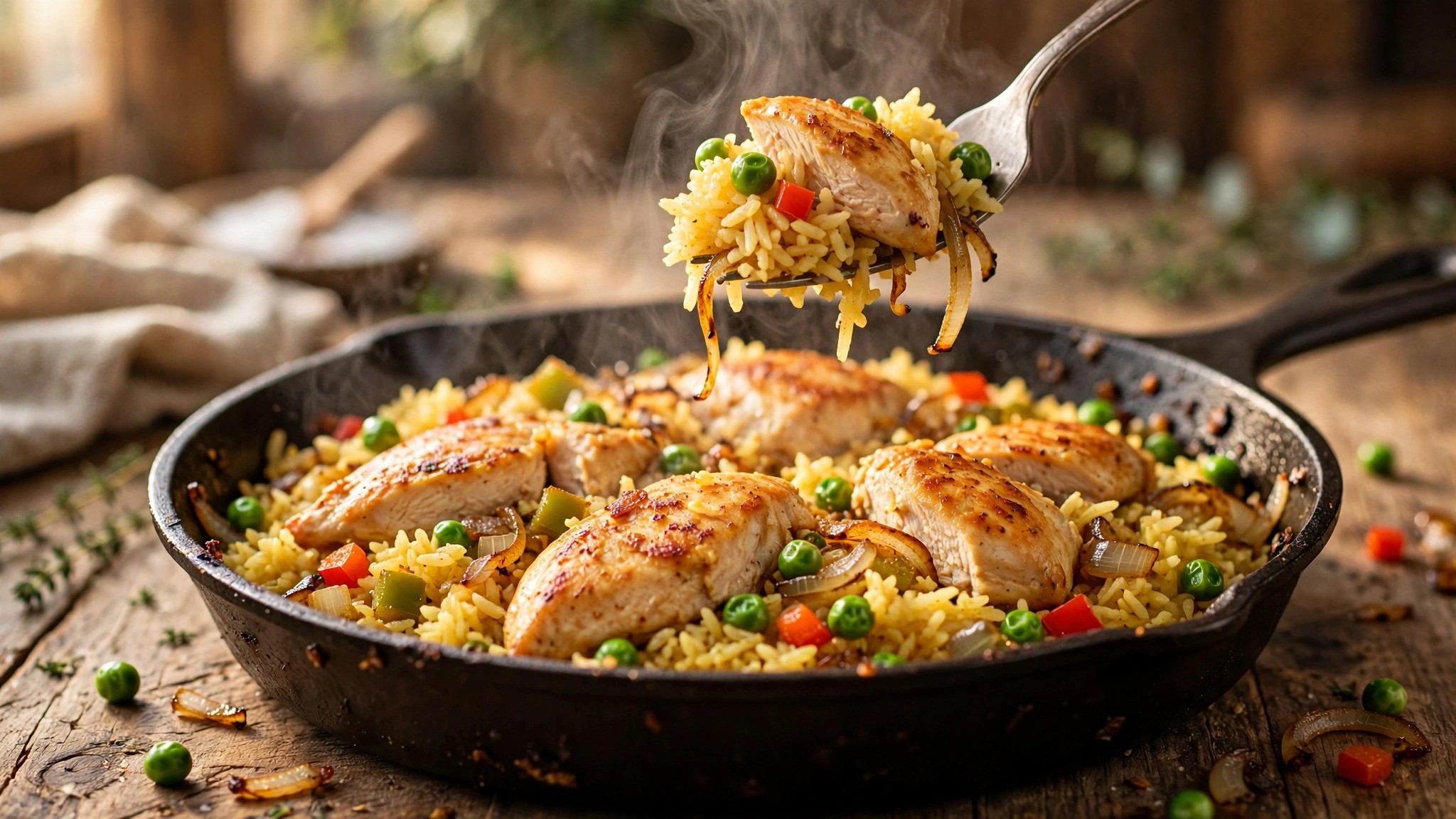
Here's the entire trick in one paragraph: chicken cut into 1-inch pieces cooks through in about 18 minutes of gentle simmering, and long-grain white rice also cooks in about 18 minutes of gentle simmering. Same pan, same liquid, same clock. The sear-first method exists to build crust on big pieces of chicken — but once the chicken is bite-size, there's no crust worth chasing and no big pieces worth protecting. The simmer does everything.
The timeline is honest: 10 minutes of prep and sautéing, 18 minutes under the lid, 5 minutes of resting while you set the table. That's 33 if you're slow and 28 if you're not. The only real rule: the lid stays on. More on that below — it's the difference between fluffy rice and a sad, wet pan.
What You Need (Exact Quantities)
- 1½ lb boneless, skinless chicken thighs (or breasts), cut into 1-inch pieces — thighs stay juicier; breasts work, just pull them at 165°F and don't look back
- 1½ cups long-grain white rice — not instant, not brown, not jasmine-for-this-one (more on the rice rule below)
- 3 cups low-sodium chicken broth — exactly double the rice. This ratio is the whole recipe.
- 1 tbsp olive oil + 1 tbsp butter — oil for the heat, butter for the flavor
- 1 medium yellow onion, diced, and 1 red bell pepper, diced
- 3 garlic cloves, minced
- 2 tsp smoked paprika, 1 tsp garlic powder, 1 tsp onion powder, 1 tsp dried oregano — the spice blend that makes it taste like you tried harder
- 1½ tsp kosher salt, ½ tsp black pepper — divided between the chicken and the rice
- 1 cup frozen peas — stirred in at the end, no thawing
- Lemon wedges + 2 tbsp chopped parsley (optional) — the brightness that makes the whole pan pop
Broth check: if your broth is the regular (not low-sodium) kind, drop the salt to 1 tsp total and taste at the end. Broths vary wildly — some taste like a salt lick and some taste like tea. The recipe assumes the low-sodium kind.
The No-Sear Method, Step by Step
- Brown the bite-size chicken (5 minutes). Heat the oil and butter in a large deep skillet or Dutch oven over medium-high. Spread the chicken in a single layer, hit it with half the salt and pepper, and cook 5 minutes, stirring once or twice, until the outsides are no longer pink. It will not be cooked through. It is not supposed to be.
- Soften the vegetables (3 minutes). Stir in the onion and bell pepper and cook until they start to soften. Then the garlic, smoked paprika, garlic powder, onion powder, and oregano — 30 seconds, until it smells like you know what you're doing.
- Toast the rice (1 minute). Add the rice and the rest of the salt and pepper. Stir until every grain is coated in the seasoned fat and looks a little pearly at the edges. This minute is free insurance against mushy rice.
- Add broth, lid on, hands off (18 minutes). Pour in the 3 cups of broth, give one stir to scrape up the browned bits, and bring it to a boil. Drop the heat to a low simmer, put the lid on tight, and walk away for 18 minutes. Do not lift the lid to peek. Do not lift the lid to "check." The lid is a contract.
- Peas, rest, fluff (5 minutes). Off the heat. Stir in the frozen peas, re-cover, and rest 5 minutes — the peas thaw in the steam and the rice finishes in the trapped heat. Fluff with a fork, finish with lemon and parsley, serve from the pan.
Why It Works: Two Rules, Zero Skill Required
Rule 1: The 1:2 ratio is sacred. 1½ cups rice, 3 cups broth. Long-grain white rice absorbs roughly twice its volume in liquid during a covered simmer — the math was decided by the grain, not by us. Add extra "just to be safe" and you get soup. Skimp and the top layer stays chalky. If you scale the recipe, scale the ratio: 1 cup rice = 2 cups broth, 2 cups rice = 4 cups broth. The chicken pieces release a little liquid too, which is exactly why you don't pad the broth.
Rule 2: Small pieces, single timeline. A 1-inch chunk of chicken cooks through in the rice's 18-minute window. A 2-inch chunk doesn't — it arrives at the table with a pink surprise in the middle. This is the entire difference between the no-sear method working and failing: cut the chicken small, and the simmer time that the rice demands is exactly the simmer time the chicken needs. Two timelines collapse into one.
"The lid is a contract. Every peek costs you two minutes of steam, and the rice is counting."
3 Variations That Keep It Interesting
Mediterranean: swap the smoked paprika for 2 tsp Italian seasoning, stir in ½ cup chopped sun-dried tomatoes and ½ cup sliced black olives with the peas, and crumble feta over the top. Suddenly it's a Greek vacation in a skillet.
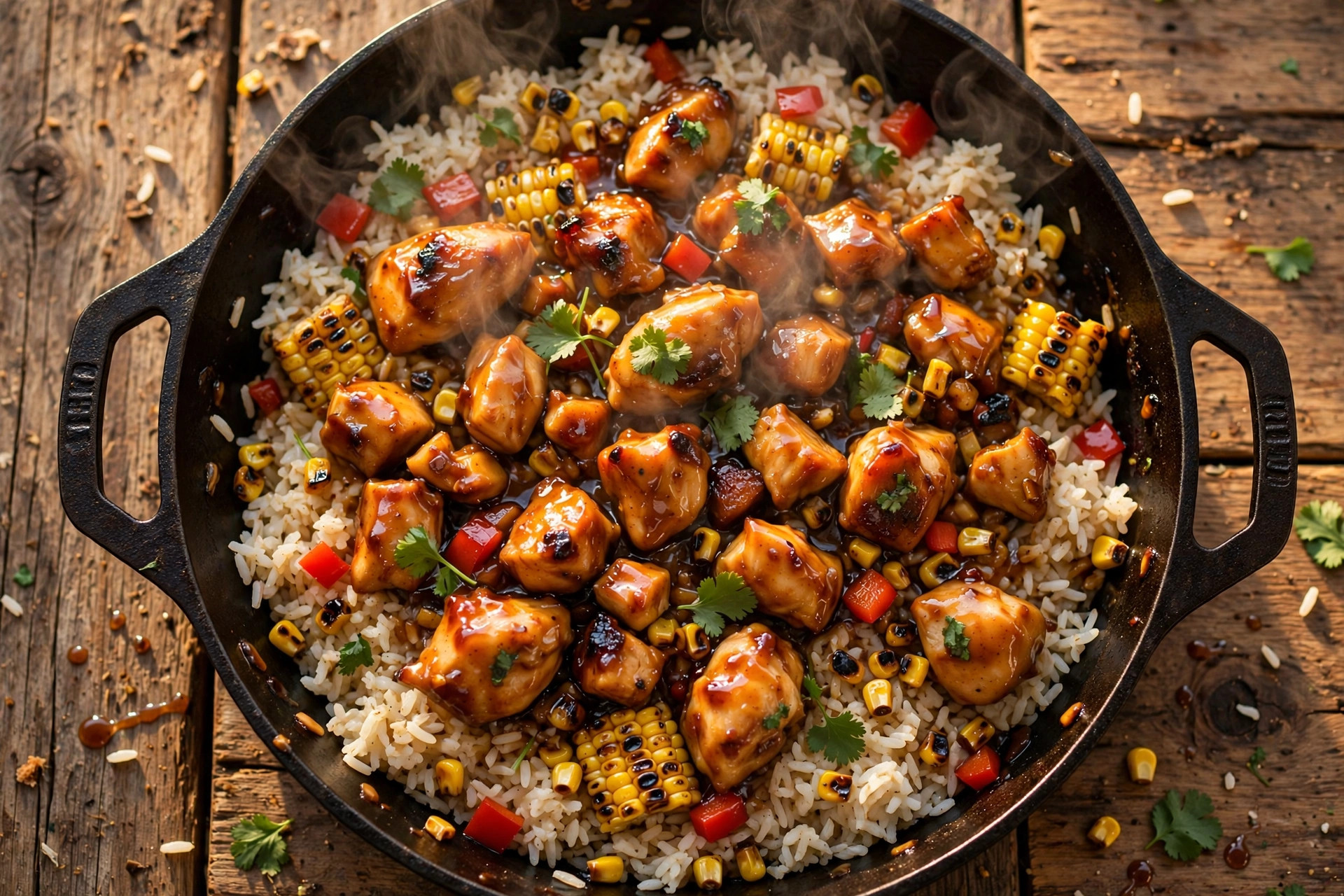
Chipotle-lime: swap the smoked paprika for 1 tsp chipotle powder + 1 tsp cumin, stir in 1 cup frozen corn with the peas, and finish with extra lime. Smoky, a little spicy, very Friday night.
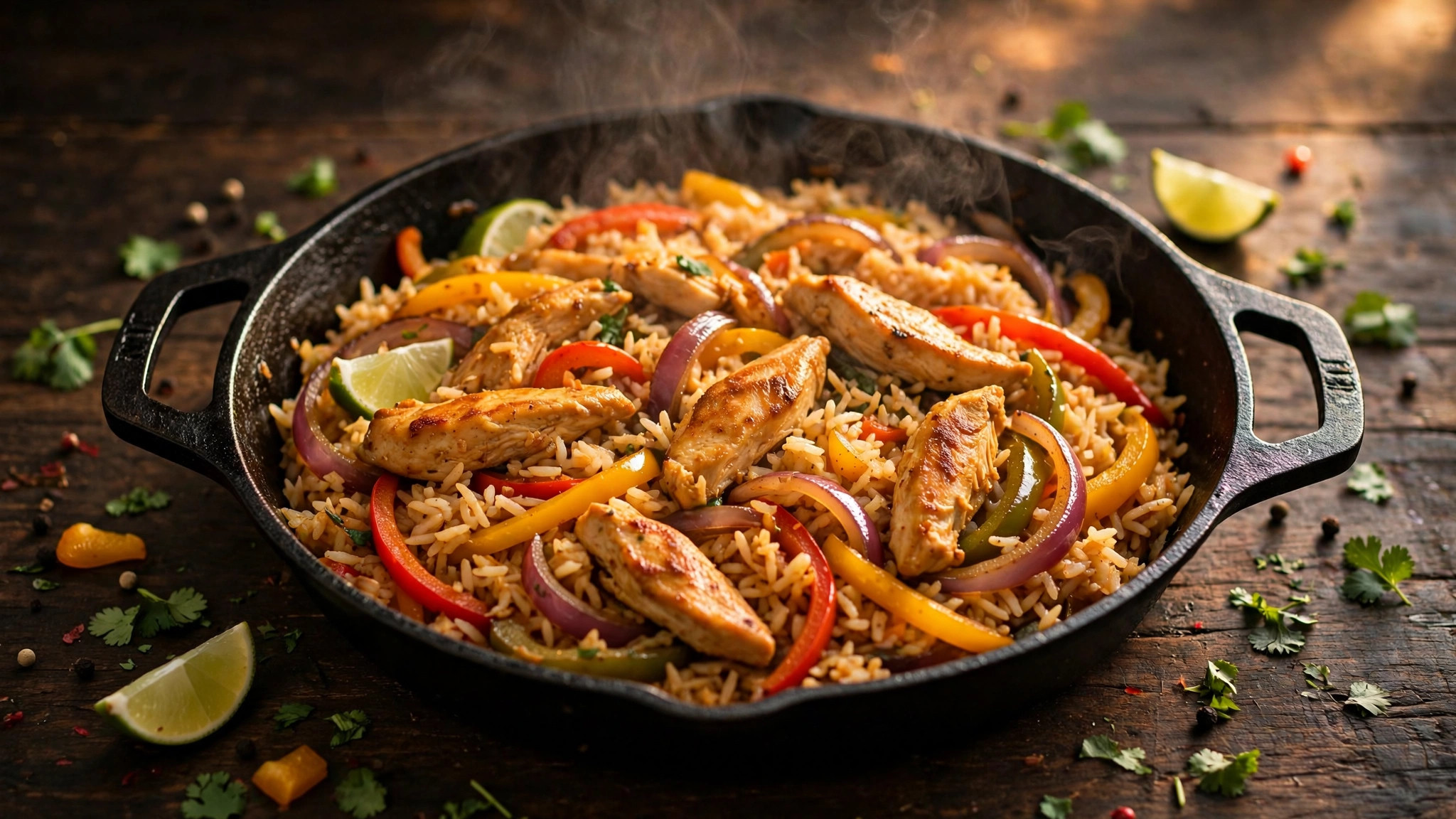
Lemon-parmesan: skip the bell pepper, stir in ½ cup grated parmesan with the peas, and be generous with the lemon. Creamy-adjacent comfort food. Want the actual sear-first experience with big flavor? Our one-pan chicken fajita rice skillet brings charred peppers and lime, and the one-pan honey BBQ chicken rice skillet goes sticky-sweet with a caramelized glaze.
4 Mistakes That Break the 30 Minutes
Mistake 1: Chicken pieces too big. One inch. Not "rustic chunks," not "roughly." Measure the first one if you have to. Bigger pieces need longer simmering, longer simmering breaks the 30 minutes, and undercooked big pieces break the dinner.
Mistake 2: The wrong rice. Brown rice needs 40+ minutes — it laughs at your 30-minute plan. Instant rice turns to porridge in 18 minutes of simmering. Long-grain white rice (basmati works too) is the only rice that respects the clock.
Mistake 3: Lifting the lid. Every peek vents the steam the top layer of rice is depending on. The result: cooked bottom, chalky top, and you, confused, adding water and simmering another 10 minutes. Don't be that cook.
Mistake 4: Salting the broth blindly. Low-sodium broth plus 1½ tsp salt is balanced. Regular broth plus 1½ tsp salt is a salt lick. Know your broth, season to it.
Quick Questions
Can I use chicken breasts instead of thighs? Yes — same method, same timing. Breasts are leaner, so check a piece at the 18-minute mark: it should read 165°F (74°C) or show no pink when cut. Thighs are more forgiving if you overshoot by a few minutes; breasts are less so.
Can I make it with brown rice? Not in 30 minutes. Brown rice needs about 40 minutes of simmering, which means the chicken overcooks. If brown rice is non-negotiable, add the chicken in 1½-inch pieces and simmer 40 minutes — good dinner, different recipe.
Why is my rice gummy? One of three things: the heat was too high (it should be a lazy simmer, not a rolling boil), the rice wasn't toasted in step 3, or the ratio was off. Also — fluff with a fork, not a spoon. Spoons mash; forks lift.
Does it reheat well? Beautifully, for 3–4 days in the fridge. Sprinkle a tablespoon of water over a portion before microwaving to re-steam the rice. The peas hold up, the chicken stays tender, and the flavors actually deepen overnight.
This skillet is one entry in a bigger system: our 7 one-pan dinners that taste better than takeout runs the same one-pan philosophy across a whole week of nights like this one. Master the lid, master the ratio, and weeknight dinner stops being a negotiation.